Every construction site in Sweden operates under two key regulations from the Swedish Work Environment Authority (Arbetsmiljöverket): AFS 1999:3 ‘Construction and Civil Engineering Work’ with amendments up to AFS 2014:26, and AFS 2020:1 ‘Workplace Design,’ which came into effect on January 1, 2021, replacing AFS 2009:2. For developers, main contractors, and subcontractors, these are not just reference documents but the basis for site access and occupational safety inspections. Non-compliance regarding welfare facilities results not only in fines but also in administrative fees and work stoppages. Below is what is inspected and how the waterless urinal meets regulatory requirements.
Requirements of AFS 1999:3 and AFS 2020:1
AFS 1999:3 regulates construction and installation work and requires the developer to appoint a safety coordinator during the planning stage (BAS-P) and a safety coordinator during the execution stage (BAS-U). BAS-P incorporates sanitary infrastructure into the safety plan before work begins; BAS-U is responsible for the actual presence, maintenance, and suitability of welfare facilities on site.
AFS 2020:1 sets requirements for toilets and washbasins in sections on personal hygiene and welfare facilities: separate facilities for men and women if the crew size and composition require it; adequate ventilation; frost protection; hygienic surfaces. On temporary construction sites without permanent water and sewage connections, these requirements are met by site cabins and units from Cramo, Ramirent, Skanska Rental, Toalettbutiken, Toi Toi Sverige.
Calculation of Toilets and Urinals
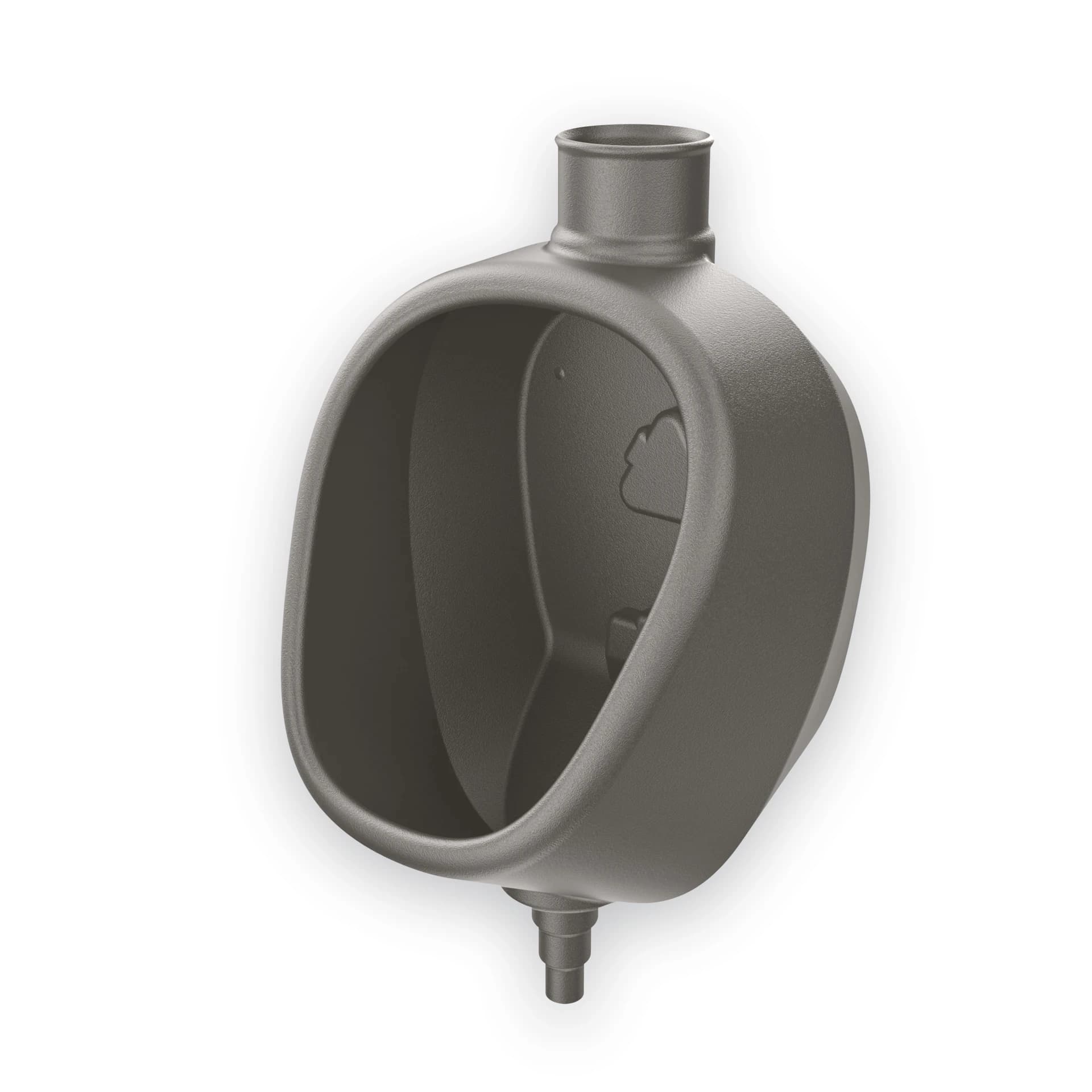
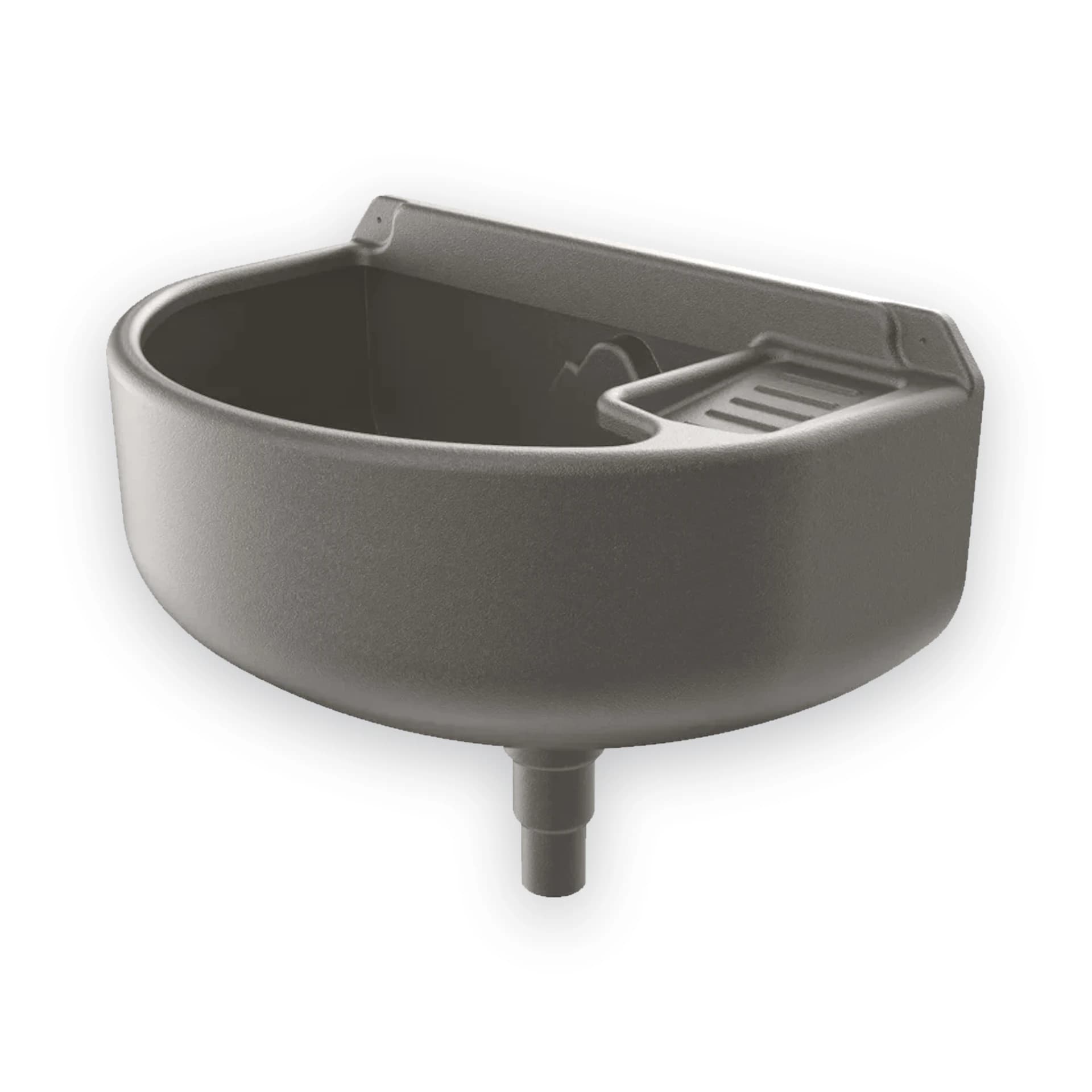
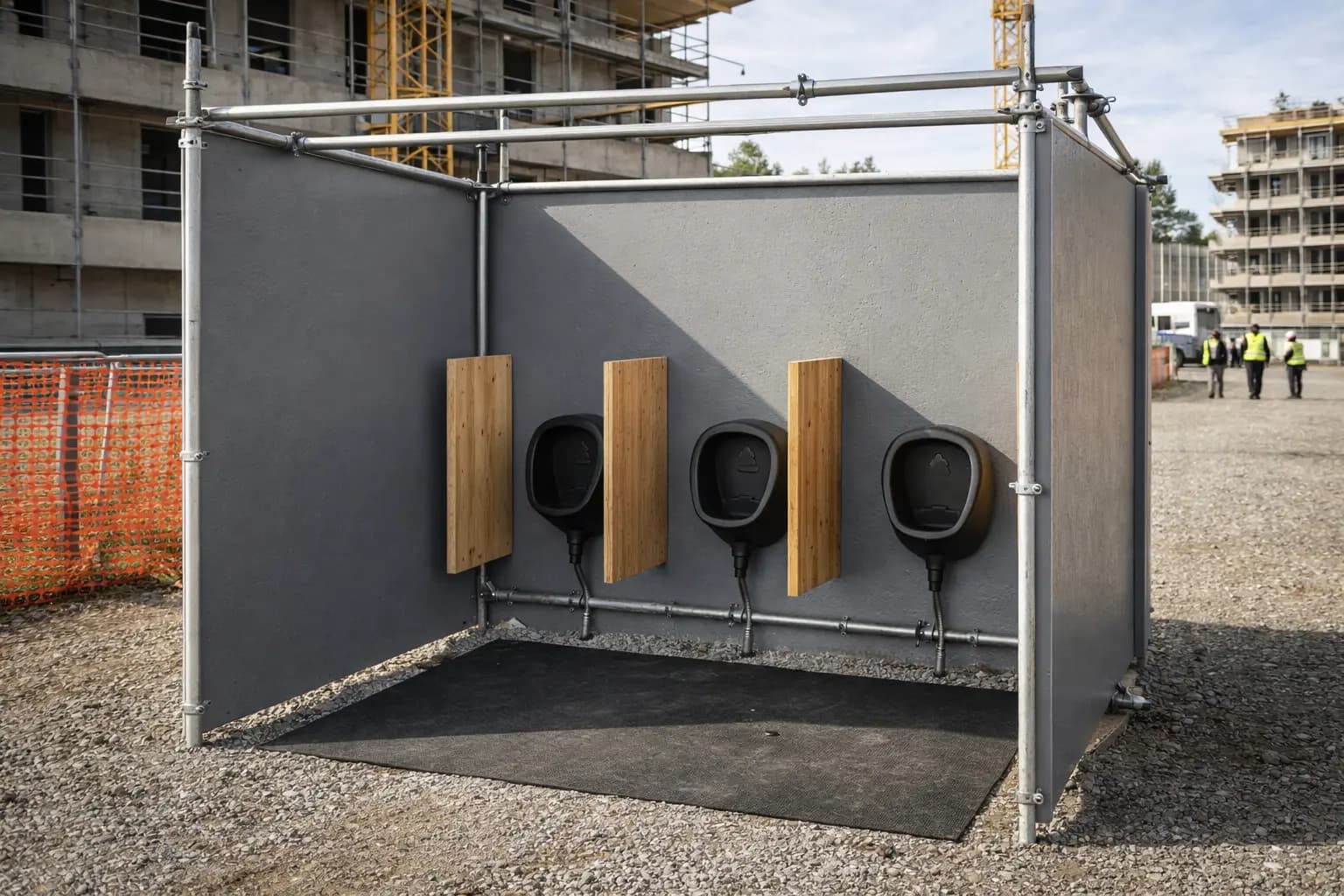
AFS 2020:1 does not specify a strict formula of ‘one toilet per N workers,’ but in practice, the Work Environment Authority inspection and the Byggnads union’s collective agreement guide towards one cabin per 10–15 workers and allow replacing some toilets with urinals in male-dominated crews, typical for concrete, installation, and roofing work. One urinal per 15–20 people is the standard calculation for large projects by Skanska, NCC, Peab, and Veidekke. The Pi-Pi Standard mounts on the wall of an existing cabin or inside a welfare unit without plumbing alterations: a stepped connector Ø24/32/40 mm connects to the cabin’s standard tank. The Standard Plus version with a top inlet Ø70 mm is used where ventilation or flushing water connection is required.
Safety Plan, BAS-P, and BAS-U
In the safety plan prepared by BAS-P before work starts, the welfare facilities section must include a layout of cabins, calculation of toilets and urinals, and a maintenance plan. The standard Pi-Pi package for the safety plan includes: LLDPE technical passport, REACH, RoHS, a photo of the installed urinal, and a connection diagram to the tank. Documents are emailed by the subcontractor to BAS-U, who presents them to the inspector during inspections.
Safety Representative and Inspections
The safety representative from the union (most often Byggnads) has the right to stop work if personal hygiene standards are violated – cold or non-functional cabins in winter, insufficient number of toilets, lack of washbasins. The inspector checks for the presence of a safety plan, actual site compliance with the plan, and equipment documentation. A urinal that cracks from frost or is not connected to a tank is a specific issue for BAS-U.
Frost Resistance for Norrland
Sweden has a varied climate: mild winters in Skåne and Götaland, while in Norrland (Norrbotten, Västerbotten) and on LKAB projects in Kiruna and Gällivare, construction operates at −25…−35°C. Polypropylene (PP) in budget urinals becomes brittle around 0°C and cracks from handling or loading between sites. LLDPE Pi-Pi remains flexible down to −40°C. A fleet that has spent winter in Kiruna moves to Stockholm or Malmö in summer without loss due to defects.
Compatibility with Cramo, Ramirent, Skanska Rental, Toi Toi
The Swedish market for rental welfare units and sanitary cabins includes Cramo, Ramirent, Skanska Rental, Toalettbutiken, Toi Toi Sverige, and regional operators. All use tanks with 32 or 40 mm inlets. The Pi-Pi stepped connector (24/32/40) connects to any of them without adapters. For a main contractor operating a mixed fleet from different rental companies, this means one spare part item and one installation protocol for crews.
What the Urinal Does Not Do
Pi-Pi is a component of a welfare facility, not a complete solution for AFS standards. The regulation requires a toilet, washbasin, lighting, cabin heating, and a changing room. Pi-Pi addresses one point – separate collection of urine from men standing in a cabin or welfare unit.
Conclusion
AFS 1999:3 and AFS 2020:1 are the framework within which every Swedish construction site from Malmö to Kiruna operates. Pi-Pi is tailored to this framework: the material does not crack in Norrland’s winter, the connector is compatible with Cramo, Ramirent, Skanska Rental, and Toi Toi Sverige fleets, and documents (LLDPE technical passport, REACH, RoHS, installation diagram) are ready for the safety plan and inspection. Installation takes 5–7 minutes by a single installer. For project-specific calculations and supply terms for 100 units or more, contact us – we will send a calculator, material passport, and specification for BAS-P.