Every construction site in Germany is subject to the ASR A4.1 regulation, which specifies the number of toilets required per shift, their equipment standards, and who is responsible for their maintenance. For contractors, this is not just a reference document but a basis for inspection by BG-Bau (the construction industry’s insurance association) and for site access. On large projects, non-compliance with ASR A4.1 results not in fines, but in work stoppages. Below is what is specifically checked and how Pi-Pi addresses specific points of the regulation.
ASR A4.1 Requirements
‘ASR A4.1 Sanitary Facilities’ mandates that employers provide separate toilets for men and women: at least one toilet for every 10 workers for groups of up to 20 people, with proportionally more for larger crews. On construction sites, mobile toilet cabins or sanitary containers are almost always used. The regulation does not specify a particular manufacturer but requires that the equipment be hygienic, maintainable, have odor traps, and not pollute the surrounding area.
Additionally, DGUV Information 215-410 (a document from the German Social Accident Insurance) specifies requirements for sanitary facilities: ventilation, lighting, temperature control, and the absence of sharp edges. For urinals, this means a smooth surface without stagnant areas, proper connection to a storage tank, and resistance to disinfectants.
Urinal-to-Toilet Ratio
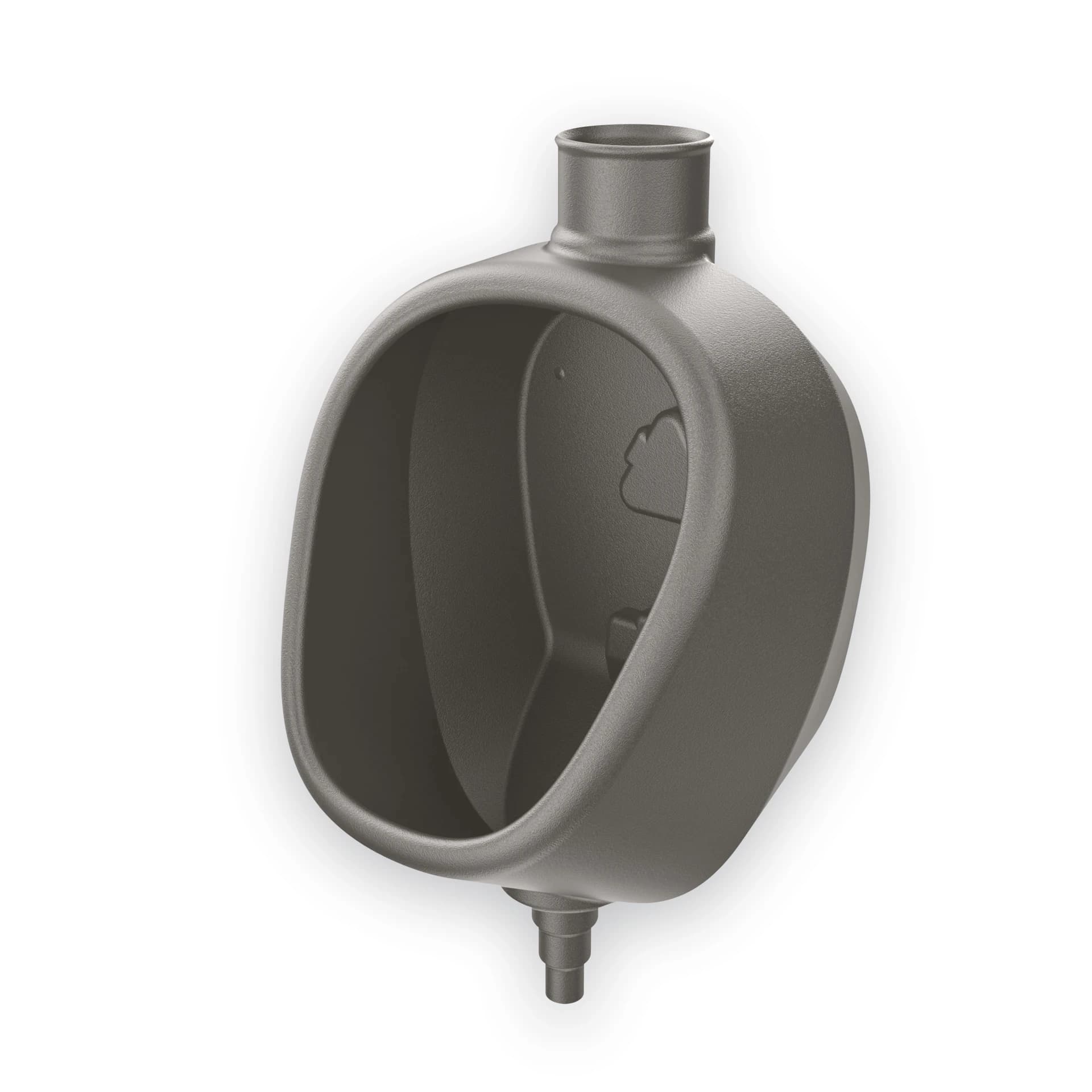
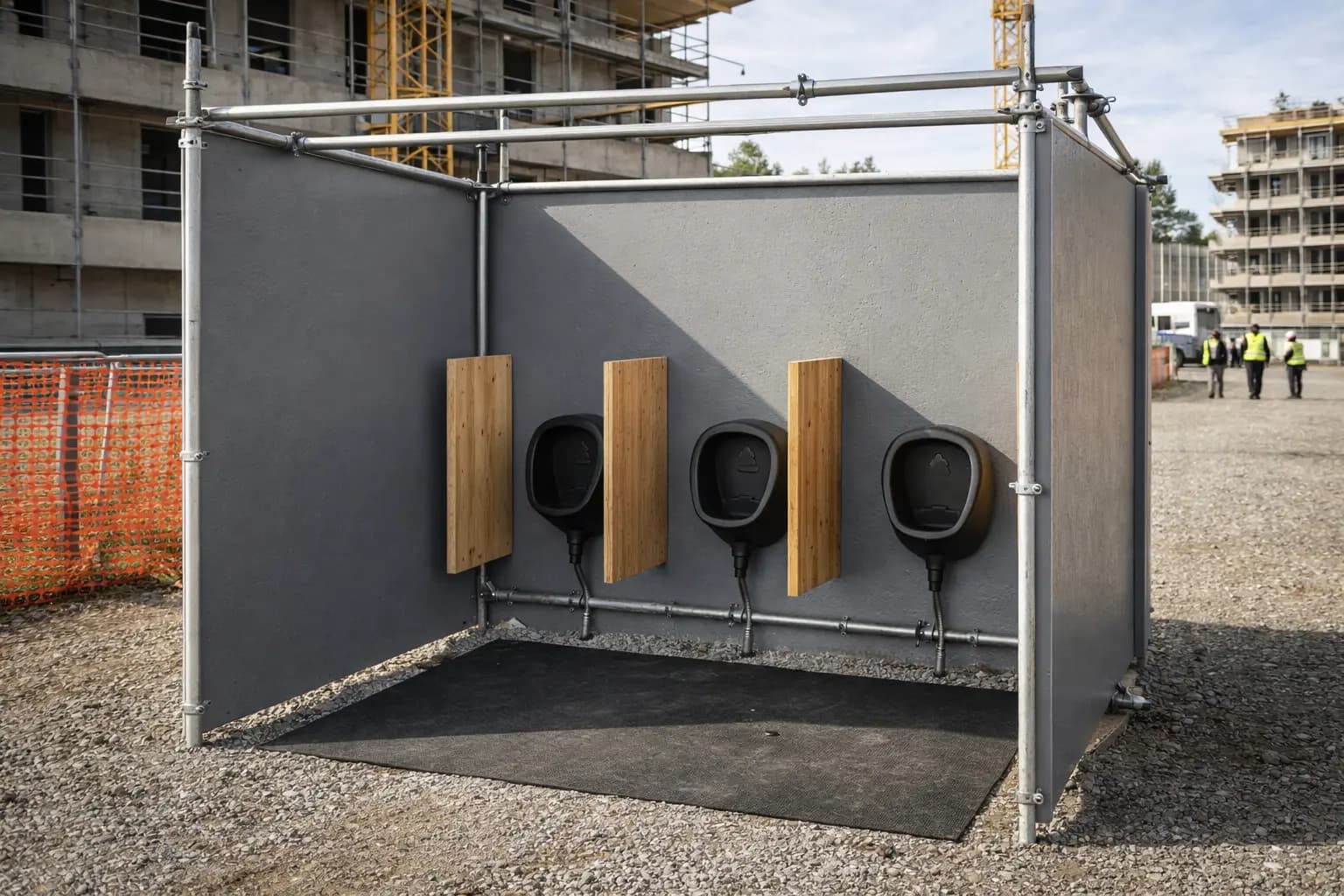
In crews predominantly composed of men (typical for construction), ASR A4.1 allows up to 50% of seated toilets to be replaced with urinals. This reduces the load on a single cabin and shortens queues during shifts. One urinal per 15–20 workers is a typical calculation for construction sites in Germany and Austria. Pi-Pi can be installed in an existing cabin or sanitary container directly on the wall without plumbing alterations: a stepped connector Ø24/32/40 mm connects to an existing storage tank.
Winter Frost Resistance
Construction in Germany and Austria continues through winter. ASR A4.1 requires that sanitary equipment remains functional under working conditions. For urinals, this means not cracking when stored in freezing temperatures and not deforming from an installer’s impact. Standard polypropylene (PP) becomes brittle around 0 °C and cracks upon impact. LLDPE Pi-Pi retains elasticity down to −40 °C.
Documents for BG-Bau Inspection
During a site inspection, BG-Bau requests documentation for sanitary equipment. Pi-Pi provides an LLDPE technical passport, REACH and RoHS compliance confirmation, and a material conformity declaration. A complete package is sent for tender documentation – sufficient for contractor qualification and ASR A4.1 compliance reporting.
What the Urinal Does Not Do
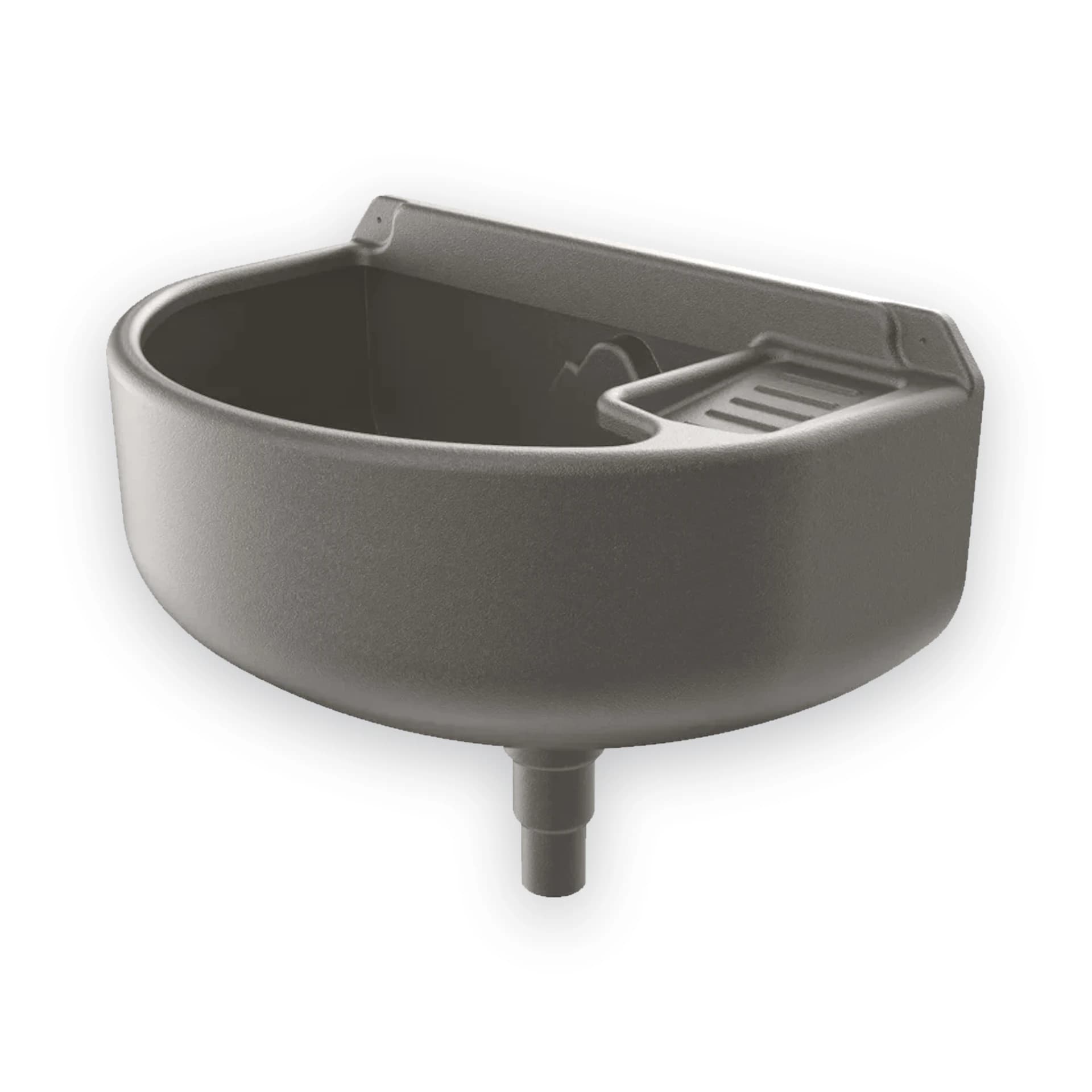
Pi-Pi is a component of the sanitary unit, not a complete ASR A4.1 solution. The regulation also requires a seated toilet, a handwashing sink, lighting, and cabin heating. Pi-Pi addresses one point – separate urine collection for men standing in a toilet cabin or sanitary container. The rest is provided by the cabin itself and the contractor servicing the storage tank.
Conclusion
ASR A4.1 is the framework within which every German construction site operates. Pi-Pi is tailored to this framework: the material does not crack in winter, the fitting is compatible with standard storage tanks, and documents are ready for BG-Bau. Installation takes 5–7 minutes, maintenance involves a smooth surface and rinsing with water between shifts. For calculating the number of urinals for a specific site, contact us – we will send a calculator and bulk supply terms.