Every construction site in France falls under the Code du travail (Labour Code), articles R.4228-10 and onwards, which regulate toilets and washbasins for workers. For contractors – general or subcontractors – this is not just a reference but a basis for inspection by the Inspection du travail (labour inspection) and for site access through the PPSPS (Plan Particulier de Sécurité et de Protection de la Santé – specific safety and health plan). On sites under SPS coordination, non-compliance with R.4228 results not in a fine but in a work stoppage by the safety coordinator. Below is what is specifically checked and where a waterless urinal addresses particular points.
What R.4228-10 and onwards require
Article R.4228-10 obliges the employer to provide toilets in proportion to the number of workers: at least one toilet and one urinal per 20 men, with separate toilets for women in the same proportion. Article R.4228-11 specifies that toilets must be equipped with a flush tank or an equivalent removal system, and R.4228-13 states that the facilities must be ventilated and heated in the cold season. On construction sites where water and sewage connections are temporary or absent, these requirements are met by mobile portable toilets with a holding tank.
Additionally, decree n° 94-1159 on SPS coordination imposes the obligation on the client to ensure sanitary conditions for all participants on the site, not just their own employees. This elevates the issue from the level of a single company to the level of the entire operation.
Urinal-to-toilet ratio for crews
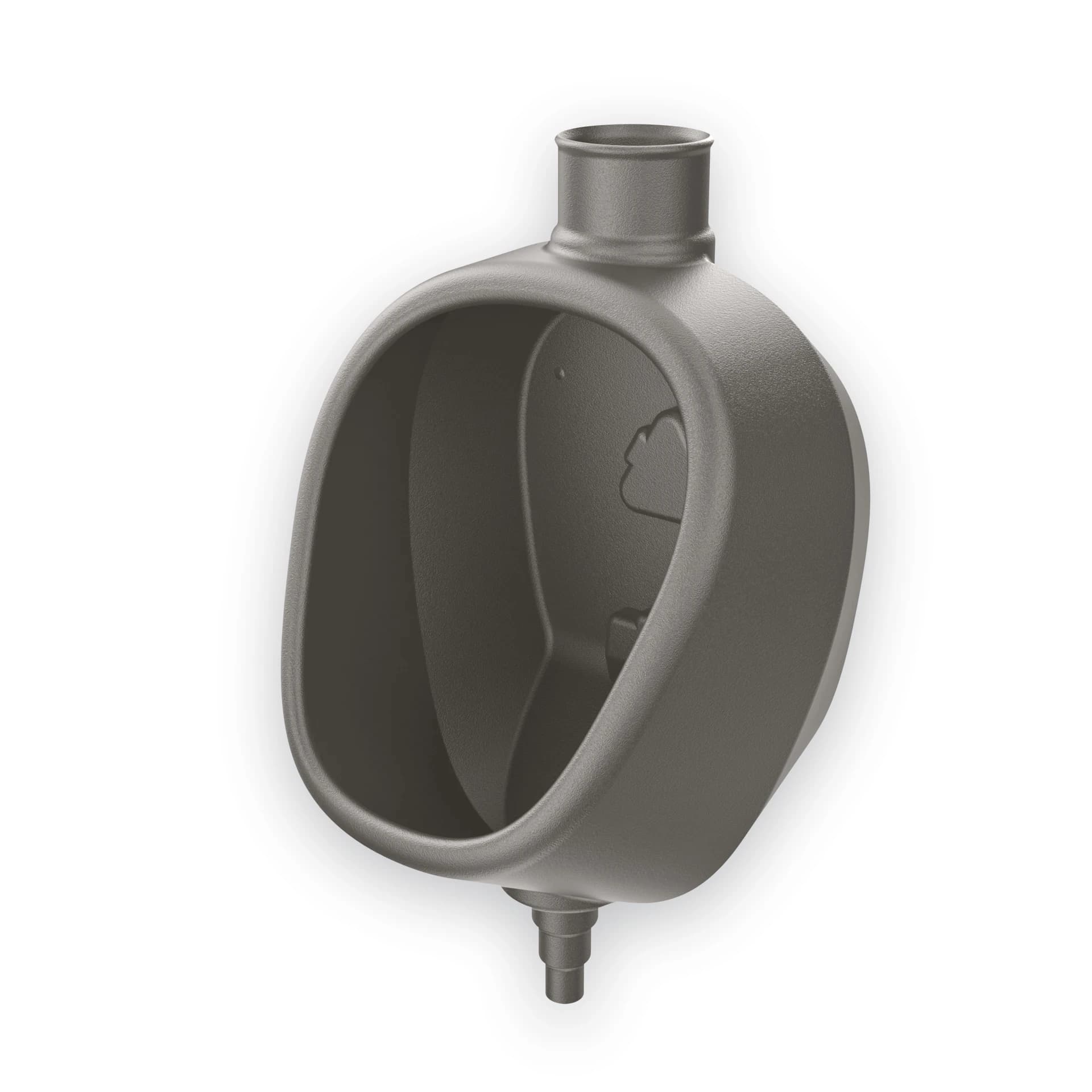
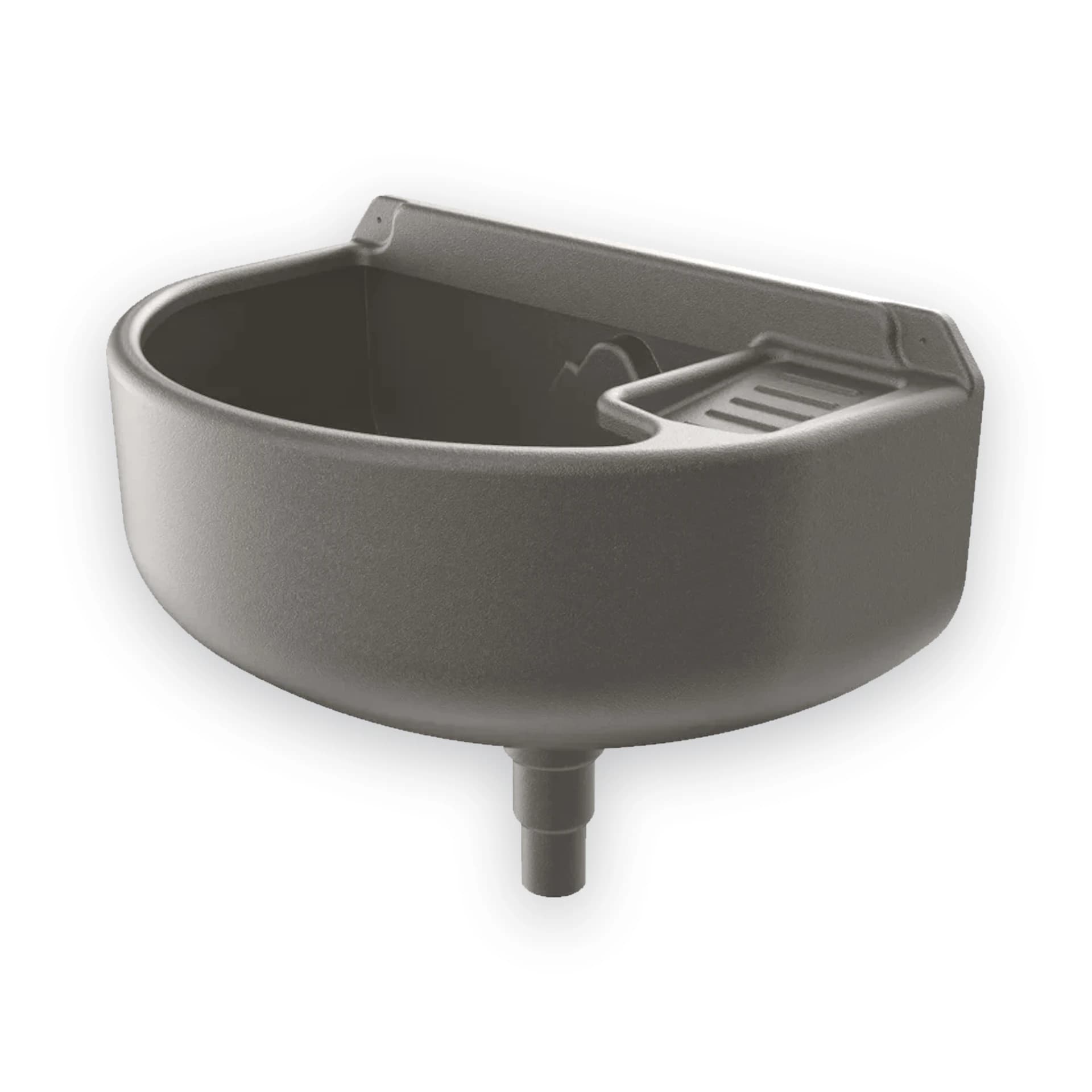
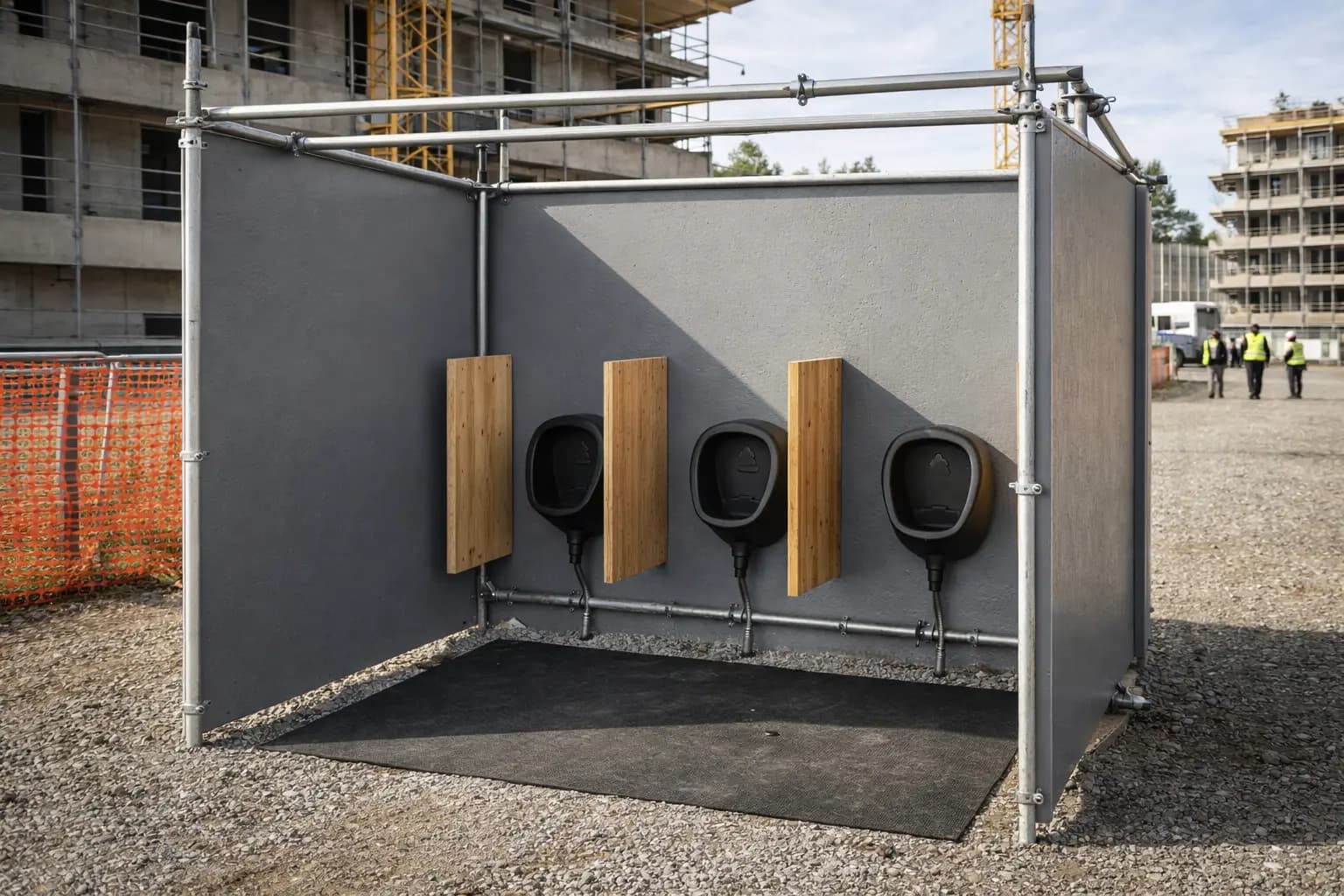
In crews predominantly male – typical for general construction, roofing, and framing work – it’s permissible to replace some toilets with urinals while maintaining the overall calculation according to R.4228-10. One urinal per 15–20 workers is standard practice on large sites. This reduces queues at a single cabin and minimizes time loss during peak times – shift start and lunch break. Pi-Pi mounts on the wall of an existing portable toilet cabin or inside a permanent sanitary module without plumbing alterations: a stepped connector Ø24/32/40 mm connects to a standard holding tank from any French cabin manufacturer.
OPPBTP and on-site control
OPPBTP (Organisme professionnel de prévention du bâtiment et des travaux publics – industry organization for construction prevention) audits the site to check if cabins meet R.4228 requirements and DTU standards. Documents required on-site include the actual calculation of the number of cabins, the service contract (pumping and cleaning), and technical data on the equipment. Pi-Pi provides an LLDPE technical passport, REACH and RoHS certificates, and a material conformity declaration – sufficient for PPSPS and the OPPBTP dossier.
Winter operation
Construction sites in France operate year-round – especially in northern regions (Hauts-de-France, Grand Est) and mountainous areas (Alps, Massif Central, Pyrenees). The Code du travail requires that sanitary equipment remains operational regardless of the season. Standard budget polypropylene (PP) becomes brittle around 0 °C and cracks from an installer’s impact or during cabin loading/unloading. Pi-Pi’s LLDPE retains elasticity down to −40 °C.
Compatibility with French cabin manufacturers
The French mobile toilet market is represented by companies like Sebach, WC Loc, Loxam Sanit, and Ecolotoilettes. All use standard holding tanks with 32 mm or 40 mm inlets. Pi-Pi’s stepped connector (24/32/40) is compatible with any of them without adapters. This is a key feature for rental companies that update their fleet gradually and cannot afford urinals tied to a single cabin manufacturer.
Documents for PPSPS
The PPSPS, which the subcontractor submits to the SPS coordinator before starting work, includes a ‘sanitary installations’ section. Pi-Pi’s standard package for this section includes the product’s technical passport indicating material and temperature range, REACH/RoHS, a photo of the installed urinal, and a connection diagram to the tank. The complete package is provided on request and does not require additional agreements to be signed.
What the urinal does not do
Pi-Pi is a component of the sanitary block, not a complete solution for R.4228. The regulation also requires a toilet with a flush or equivalent, a washbasin, heating, and lighting. Pi-Pi addresses one point – separate collection of male urine standing in a portable toilet cabin or in a permanent sanitary module. The rest is provided by the cabin itself and the company responsible for pumping.
Conclusion
R.4228 is the framework within which every construction site in France operates. Pi-Pi is tailored to this framework: the material does not crack in winter, the connector is compatible with standard tanks from Sebach, WC Loc, and Loxam, and documents are ready for PPSPS and OPPBTP. Installation takes 5–7 minutes, maintenance involves the smooth LLDPE surface and rinsing with water between shifts. For calculating the number of urinals for a specific construction site and trade pricing from 100 units, contact us – we’ll send a calculator and supply terms.