Urban gardens / community gardens – Portuguese urban and community gardens – are a rapidly growing trend. In Lisbon alone, the city municipality (Câmara Municipal de Lisboa) manages around twenty garden parks under the Programa de Hortas Urbanas de Lisboa, including Chelas, Telheiras, Quinta da Granja, Vale de Chelas, and Olivais. In Porto, the Hortas Urbanas do Porto program is managed by the city municipality. Cascais, Oeiras, Coimbra, Almada, and dozens of other municipalities have their own programs. Each gardener receives a plot (typically 25–50 m²) with minimal infrastructure – a garden shed (~6–10 m²) and a shared water point. The most common issue is the toilet: public facilities are far away, and regulations prohibit permanent structures and connections to water or sewage on the plot. Below is how to install a waterless urinal in the shed while staying within legal boundaries.
What the Regulations Allow
The regulations for Lisbon’s urban gardens and similar documents for Porto, Cascais, and Oeiras outline a general framework: plots are allocated for personal use, without commercial exploitation; permanent structures, concrete pouring, and water or sewage connections are prohibited on the site. Allowed are lightweight inventory sheds made of wood or metal, composters, and rainwater collectors. This does not mean a ban on toilets – it means the toilet must operate without water and sewage connections. Waterless urinals, dry toilets, and toilets with separate collection (urine and feces) fit within this framework – none of these systems require network connections.
Water Scarcity as an Argument
Portugal is one of the driest countries in the EU. Periodic droughts and water stress are not rhetoric but the context of the past decade: the Portuguese Environment Agency (APA) regularly declares water-saving regimes for Alentejo, Algarve, and Greater Lisbon. In this logic, a waterless urinal is not exotic but an obvious choice: one person saves about 30–40 liters of water per day compared to a conventional flushing urinal. For a park with 200 plots, this amounts to tens of thousands of liters per year – precisely the argument that the city municipality can include in its annual sustainable development report.
Why Separate Collection
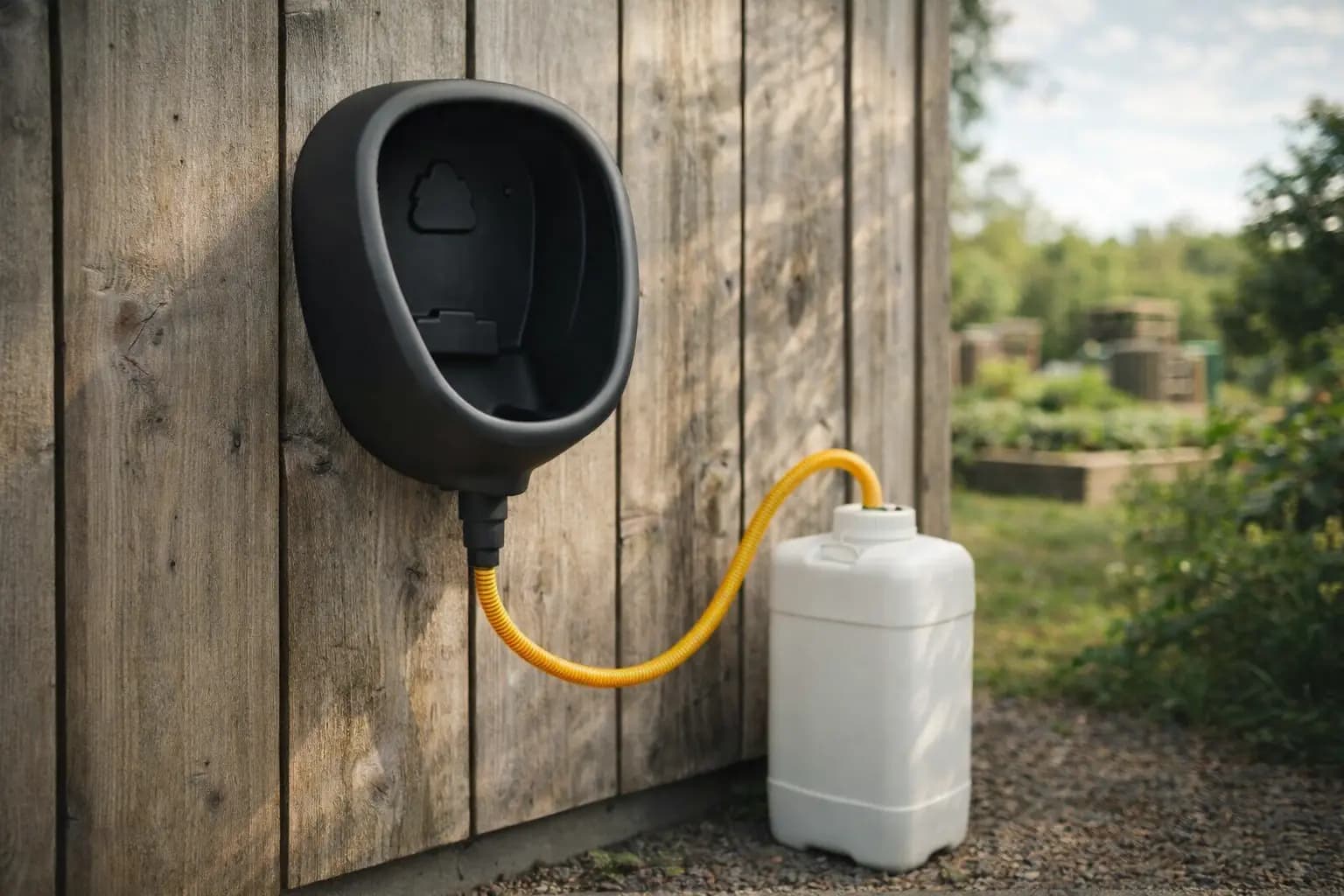
The source of odor in a toilet is the ammonia reaction when urine contacts feces. A toilet with separate collection eliminates this reaction: urine goes into one container, feces with sawdust or rice husks into another. This is not biochemistry but the physics of flow separation. Pi-Pi is a wall-mounted urinal added to a dry toilet for standing users; the liquid compartment of a regular dry toilet overflows by midday with active use, and a separate urinal alleviates this burden.
What You Need for Installation
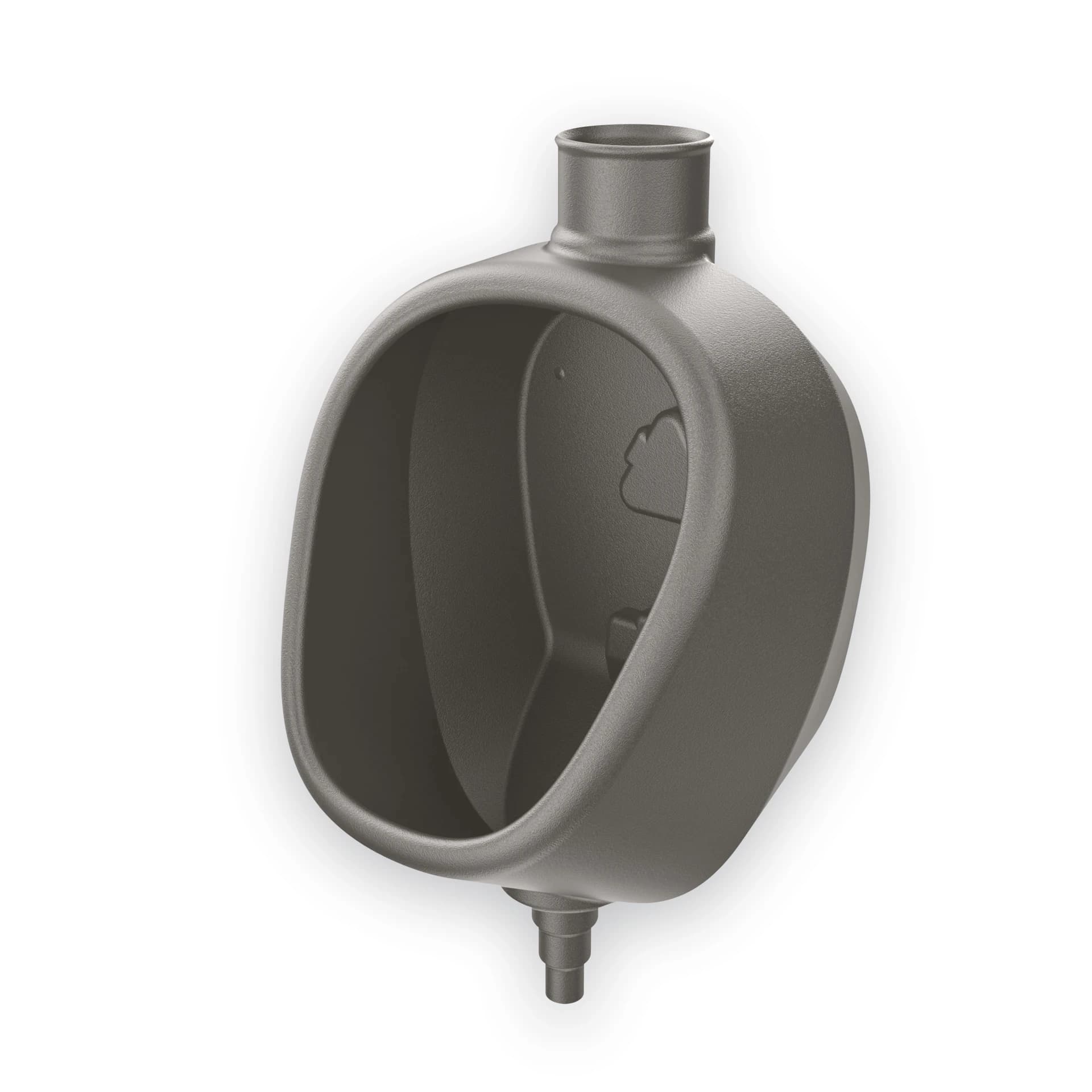
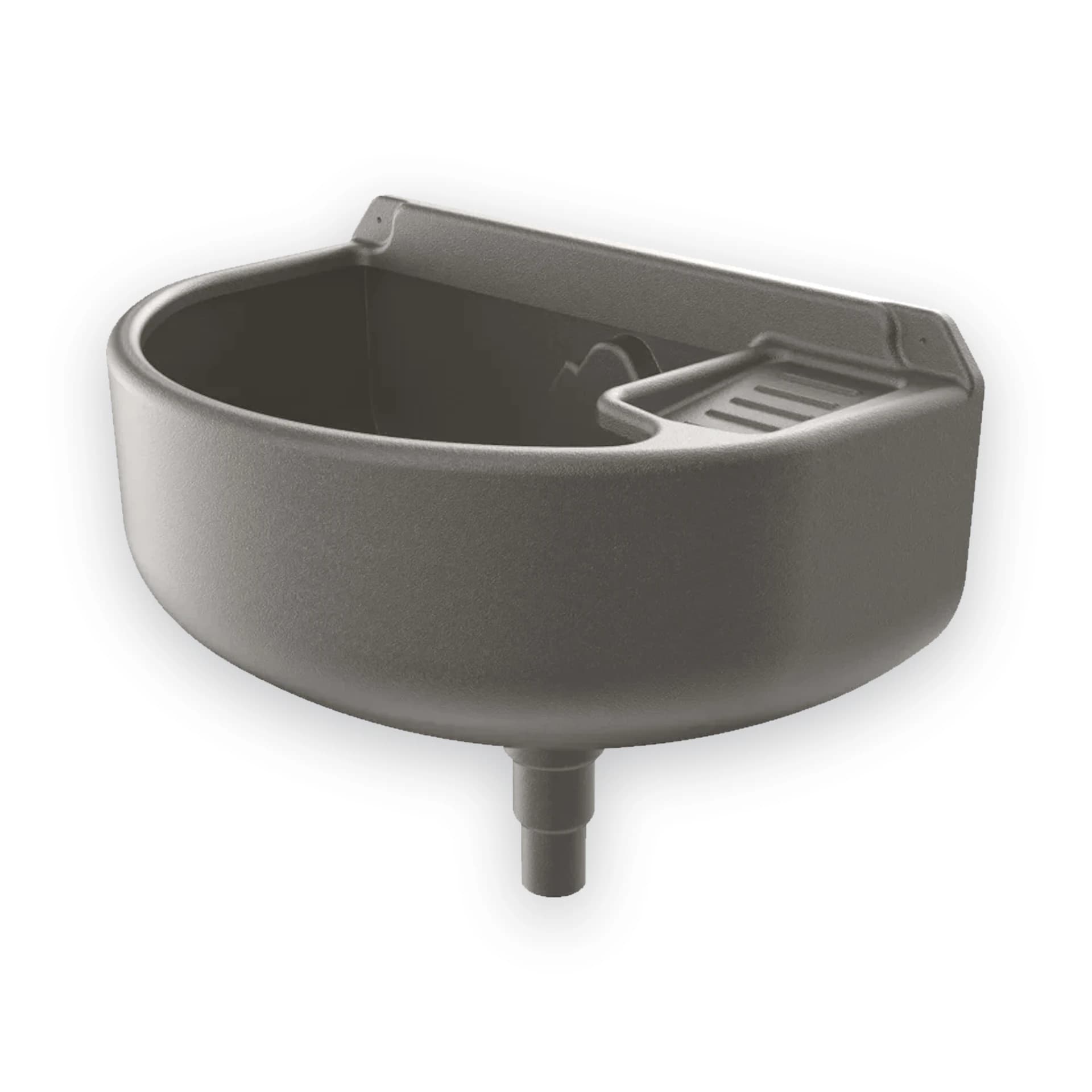
The minimum set: Pi-Pi urinal, fixings into the shed wall, a 10–20 liter canister or barrel, a 32 mm hose section for connection to a stepped fitting Ø24/32/40 mm. A standard garden hose fits without adapters. Installation takes 5–7 minutes, and no plumber is needed. Weighing 1.4–1.5 kg is critical for the typical gardener in Portuguese urban programs: the average age of participants in garden parks in Lisbon and Porto is over 50, and heavy ceramic urinals are not an option here.
Where to Dispose of Collected Urine
Three options compatible with regulations. First: dilute 1:10 with water and use for watering tomatoes, zucchinis, lettuce – urine contains 88% available nitrogen and 66% phosphorus, making it a complete fertilizer, known in Portuguese permaculture as ‘diluted urine as fertilizer.’ Second: mix with sawdust 6:1 for composting – nitrogen binds with carbon, preventing odor formation. Third: a sealed barrel with periodic removal by local sanitation services – for parks where the municipality prefers centralized disposal. None of the options involve discharge into the soil or storm drains.
City Municipality as a Customer
When it comes to a garden park with 100–300 plots, individual procurement makes no sense – the city municipality purchases equipment centrally for all sheds at once. For such a scenario, key parameters include a unified specification (LLDPE, stepped fitting 24/32/40 mm), stable batch sizes, delivery in a single shipment to the municipality’s warehouse, EU origin (Estonia, EU). Standard and Standard+ with a 70 mm ventilation port cover both scenarios: single shed and group dry toilet.
Winter and Summer Storage
Portugal’s climate is mild: winters rarely drop below 0°C even in the mainland (Bragança is an exception). Summer +35°C in Alentejo is the other extreme. Pi-Pi made of LLDPE retains elasticity from −40°C to +60°C, does not deform in the sun, and does not crack in rare frosts. No seasonal disassembly is required.
What Not to Do
Do not connect water to the urinal – Pi-Pi operates waterlessly, and in the context of Portuguese water scarcity, this is a plus. Do not direct drainage into open soil without dilution – concentrated urine harms the soil. Do not use chemical disinfectants in the barrel – they disrupt composting and are unnecessary with separate collection.
Conclusion
A waterless urinal in urban gardens is a practical solution within the regulations of urban garden programs in Lisbon, Porto, Cascais, Oeiras, and similar municipal initiatives. Pi-Pi addresses the ‘standing male’ scenario, which overflows the liquid compartment of any dry toilet. Standard and Standard+ with a 70 mm ventilation port, delivery to Portugal in 5–7 business days; for bulk orders from city municipalities – separate terms and unified batch specification. Questions and specification requests – via the contact form below.