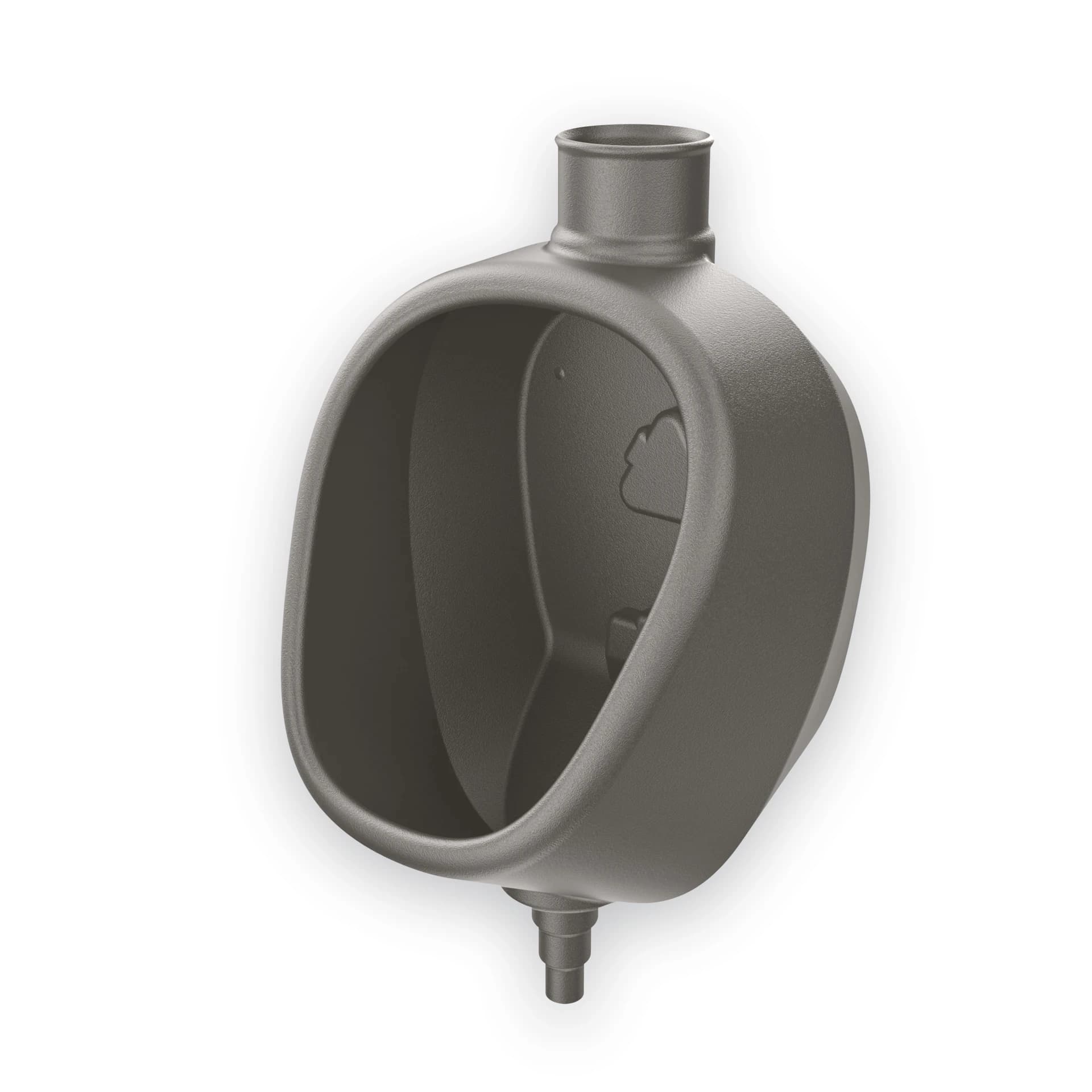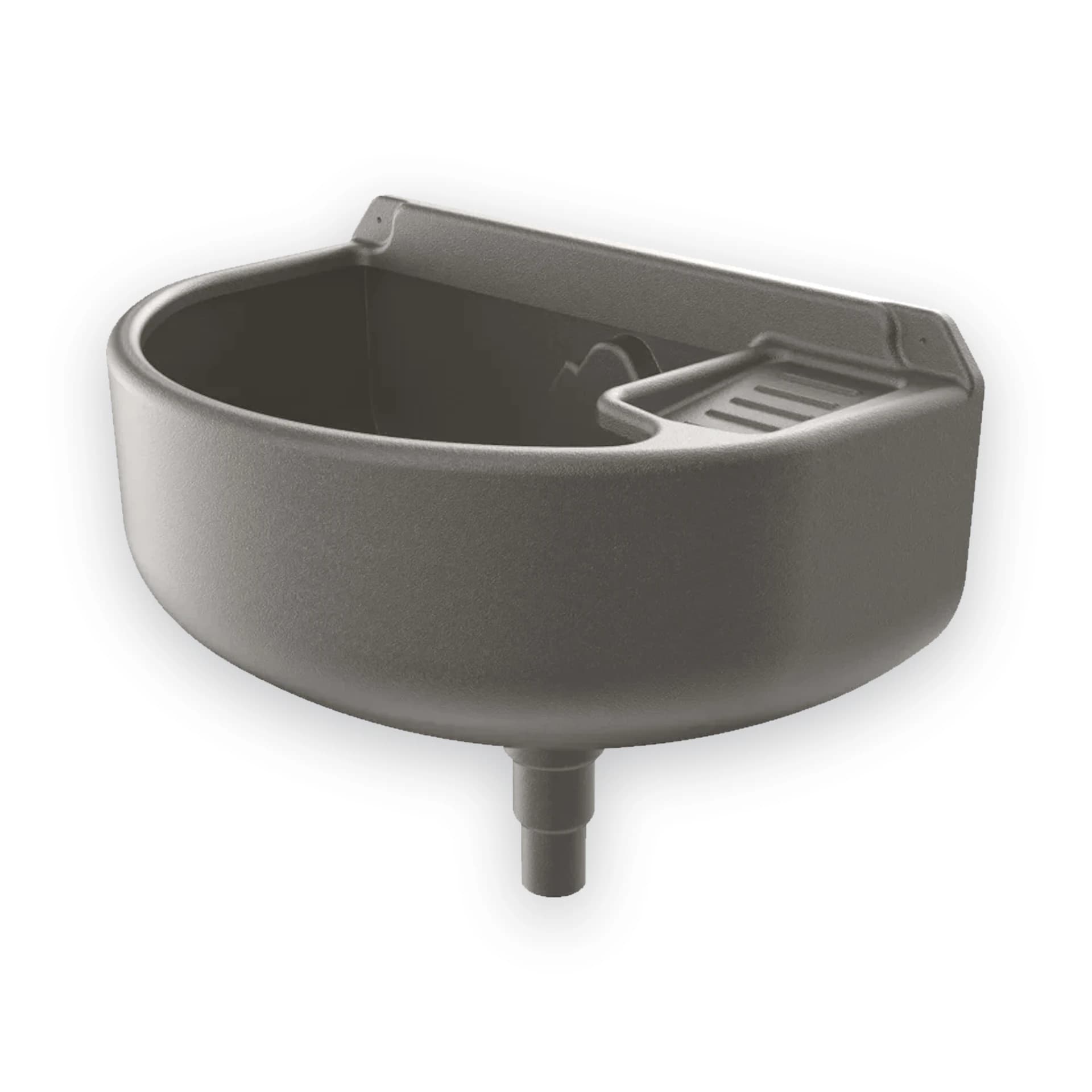
Spanish urban and community gardens (huertos urbanos and huertos comunitarios) have evolved over the past decade from local initiatives into a part of municipal policy. Madrid manages a network of over 55 sites across 20 districts through the ‘Red de Huertos Urbanos Comunitarios de Madrid’ program. Barcelona runs the ‘Xarxa d’Horts Urbans Municipals’ – around 15 municipal gardens with additional programs for gardeners over 65 years old (more than 200 plots). Valencia and Bilbao are developing similar networks. Everywhere, the same practical issue arises: a toilet on the site, where municipal regulations prohibit permanent structures and water connections. Below is how a waterless urinal addresses this scenario.
What Municipal Regulations Say
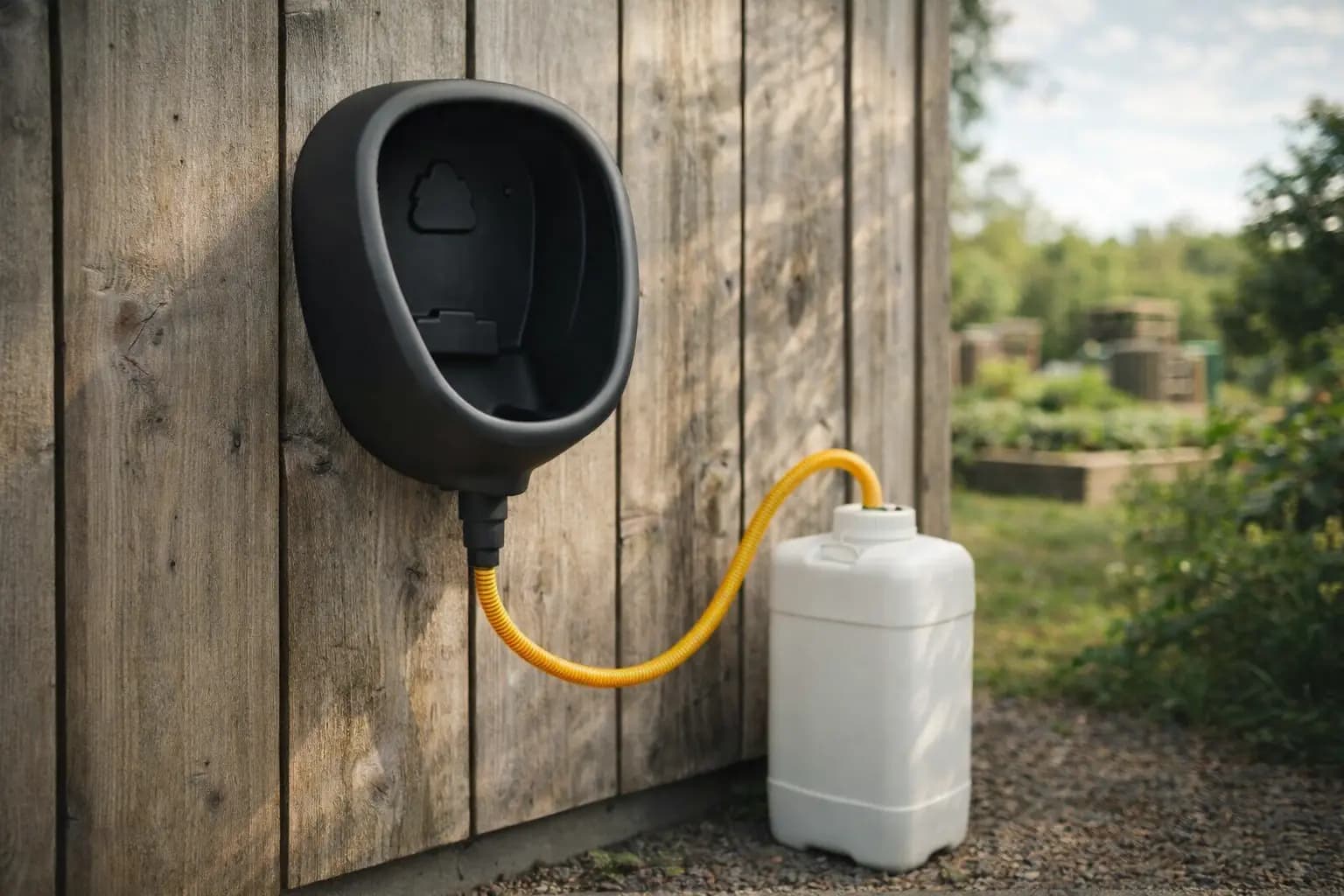
A typical municipal regulation for urban gardens in Spain revolves around three prohibitions: no permanent structures, no connection to the water supply or sewage system, and no agrochemicals on site. Garden sheds for tools are usually allowed – lightweight, dismantlable, up to 4–6 m². Toilets are not explicitly mentioned in these regulations, but any system with water or drainage into the ground is automatically prohibited. The solution that complies is a waterless urinal or a dry toilet with a collection tank. Pi-Pi is mounted on the wall of a garden shed, without a tank and without water supply – formally, it is not a structure but equipment.
Water Scarcity – Why a Waterless Solution is Policy, Not Marketing
The Iberian Peninsula has been experiencing water scarcity for decades. Basin authorities (Confederaciones Hidrográficas) regularly impose irrigation restrictions in Andalusia, Murcia, Catalonia, and Valencia. The National Climate Change Adaptation Plan prioritizes water conservation for municipal procurement. In this context, a waterless toilet is not a ‘green gesture’ but compliance with municipal policy. One urinal saves about 15–25 liters per day compared to a water-based counterpart – for 50 sites in Madrid, this amounts to hundreds of thousands of liters annually, a figure worth presenting to the environmental advisor.
Mediterranean Sun and Ultraviolet
The main issue with cheap plastic urinals from marketplaces on Spanish sites is ultraviolet degradation. Polypropylene and regular polyethylene without stabilizers lose color and become brittle under direct Mediterranean sun within 2–4 seasons. Pi-Pi is made from LLDPE with 2.5% carbon black – the standard UV stabilization for outdoor use. Its lifespan outdoors is 7–10 years without visible degradation. For a municipality purchasing through a tender with an amortization horizon of 5+ years, this is the difference between a one-time purchase and a replacement cycle every two years.
Weight and Elderly Gardeners
The demographics of community gardens in Spain are heavily skewed towards retirees – in Barcelona, the garden program for those over 65 serves 200+ plots, with the average gardener age in Madrid being 55+. Pi-Pi weighs 1.4–1.5 kg. For an elderly user who installs the urinal in a shed or takes it down for winter, this is a practical feature, not just a specification number. Installation takes 5–7 minutes, without a plumber, without special tools. In winter, the urinal comes off the wall and is stored in the garden shed with the tools.
What to Do with Collected Urine
Three options, all compliant with typical regulations. First – dilute 1:10 with water and irrigate ferns, squash, tomatoes: urine contains nitrogen and phosphorus in plant-available forms, its use as liquid fertilizer is documented by Spanish agroecologists. Second – mix with straw or wood shavings 6:1 for compost: carbon binds nitrogen, no odor forms. Third – a sealed 10–20 liter canister with periodic removal. Direct discharge into open ground is not recommended: concentrated urine salts the soil, and municipal regulations formally prohibit this.
Procurement for Garden Networks
A city municipality (Ayuntamiento) supplying 50+ sites works directly with a supplier through a small contract (contrato menor) or open tender. Pi-Pi is shipped from Estonia (EU), simplifying the procurement process: internal market, no customs, delivery to Spain in 7–10 working days, material certification according to EU standards. For a garden network, this means one contract for the entire network instead of local purchases for each site. The environmental department gets a uniform product, the gardener gets a functional urinal, the regulation gets compliance.
Conclusion
A waterless urinal in an urban garden is a practical solution within the municipal regulations of Madrid, Barcelona, Valencia, and Bilbao, aligning with water scarcity policy and suitable for elderly gardeners. Pi-Pi is a wall-mounted urinal made of UV-resistant LLDPE, designed for 7–10 years outdoors, with a stepped nozzle Ø24/32/40 mm for connection to a canister or dry toilet. Standard and Standard+ with a 70 mm vent port. For bulk purchase by a municipality or garden federation – send a request, and I will respond with specifications, timelines, and terms for the garden network.