Every construction site in Poland operates under two occupational safety acts (BHP – bezpieczeństwo i higieny pracy): the Regulation of the Minister of Infrastructure of February 6, 2003, on occupational safety and health during construction work (Dz.U. 2003 nr 47 poz. 401) and the Regulation of the Minister of Labour and Social Policy of September 26, 1997, on general occupational safety and health regulations (Dz.U. 1997 nr 129 poz. 844), Appendix No. 3 – requirements for premises and sanitary facilities. For contractors and subcontractors, this is not a guidebook but a basis for site access through the BIOZ plan (Plan Bezpieczeństwa i Ochrony Zdrowia – Safety and Health Protection Plan) and for PIP inspections (Państwowa Inspekcja Pracy – State Labour Inspectorate). Below is what is inspected and where the waterless urinal meets the requirements.
Requirements of the February 6, 2003 Regulation
The BHP-2003 regulation obliges the construction manager (kierownik budowy) to provide workers with sanitary facilities throughout the construction period. Specific parameters – number of cabins, distance from workplaces, gender separation, heating, and lighting – are determined by Appendix No. 3 to Dz.U. 1997 nr 129 poz. 844. Standard practice: one toilet for 10 men or 10 women, an additional urinal for a crew of ≥ 20 men, distance from the workplace to the sanitary cabin – no more than 75 m (or 125 m for outdoor work).
On a construction site with temporary sewer and water connections or without them, these requirements are met by renting sanitary cabins (TOI TOI) from TOI TOI Polska, mTOILET, WC SERWIS, or Sanit Trade.
Urinal-to-Toilet Ratio in Male-Dominated Crews
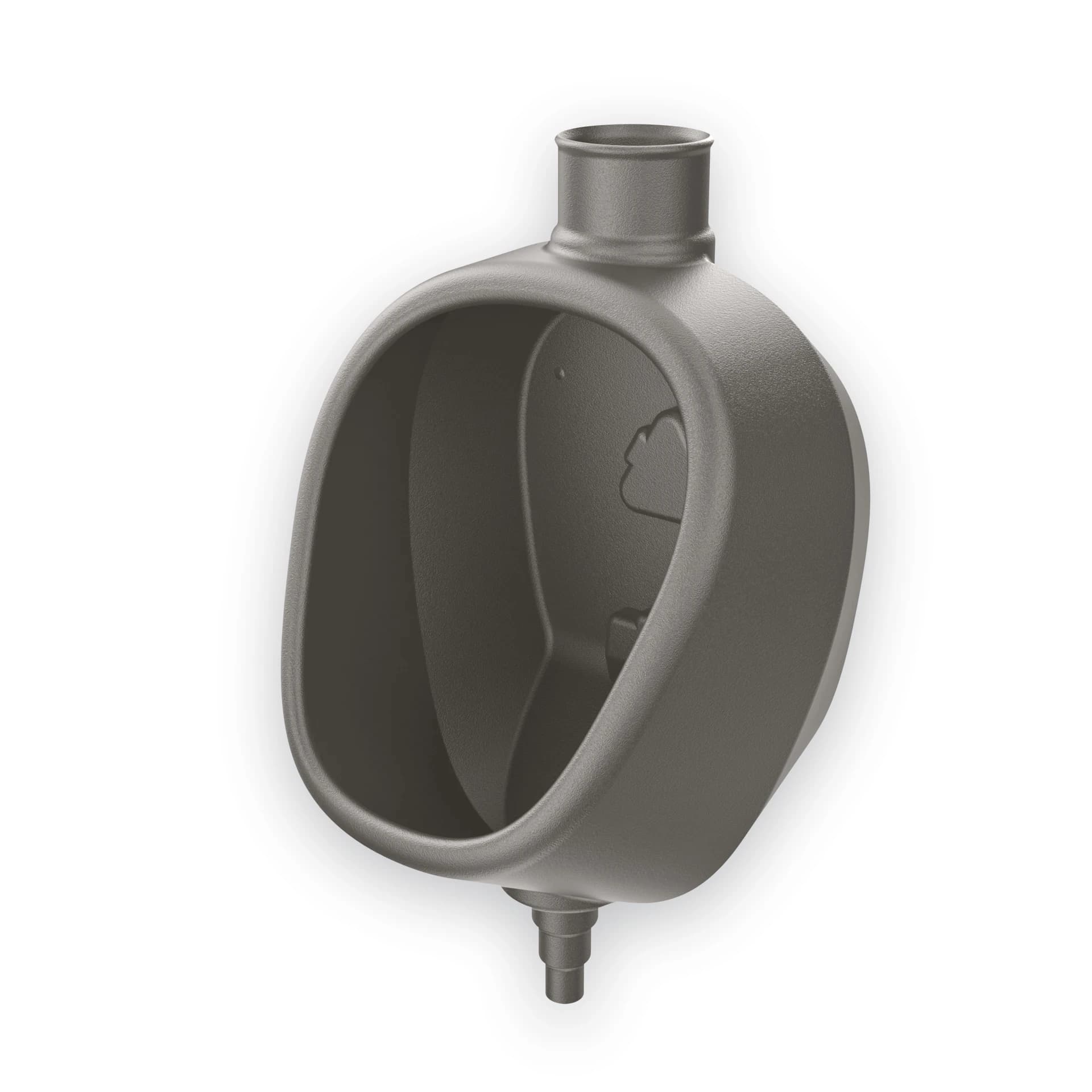
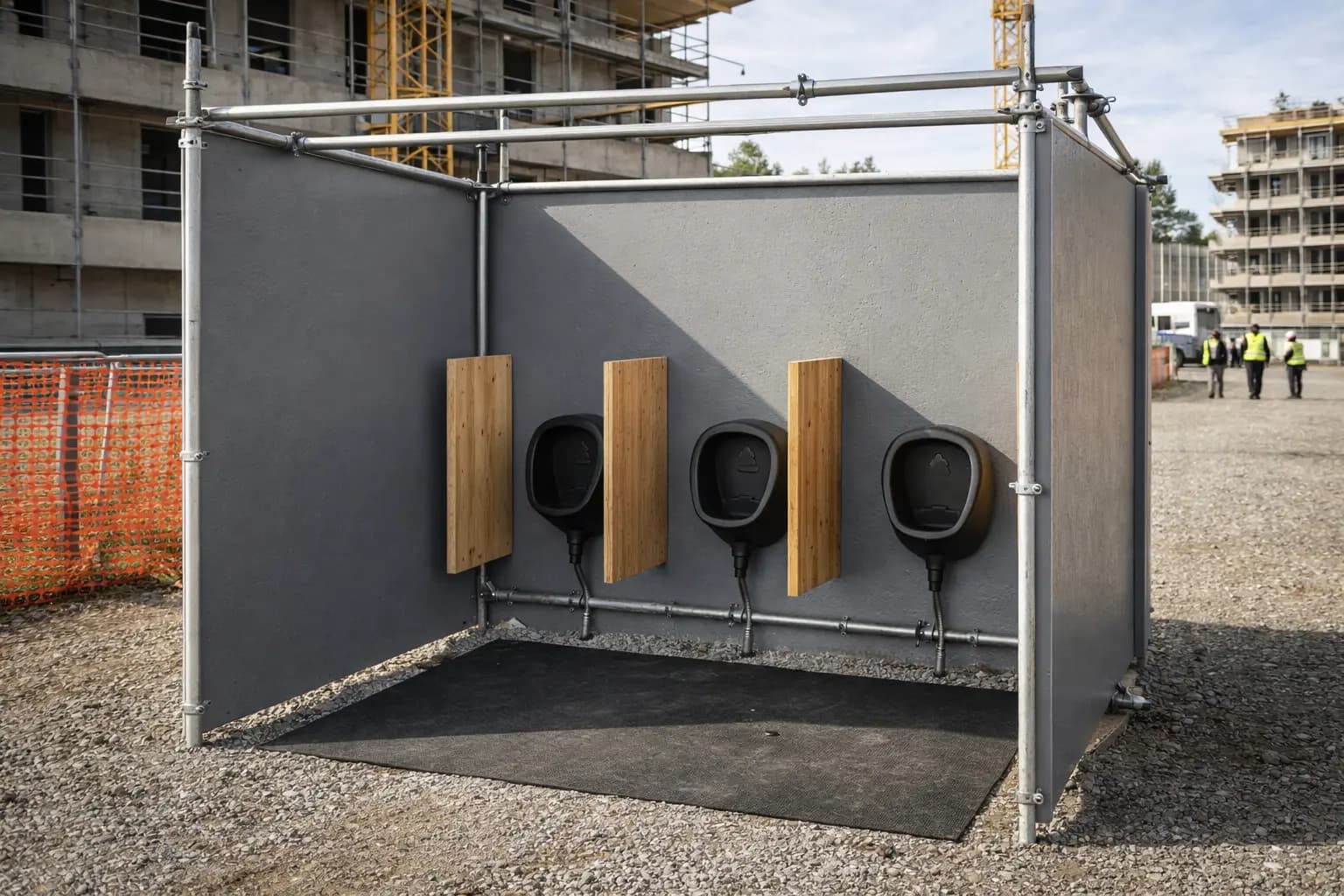
In crews predominantly male – typical for reinforced concrete, carpentry, roofing work – part of the toilets can be replaced with urinals while maintaining the overall calculation according to Appendix No. 3. One urinal for 15–20 workers is standard on large construction sites. This reduces queues at a single cabin and time lost during breaks and shifts. Standard is mounted on the wall of an existing sanitary cabin or inside a welfare unit without plumbing alterations: a stepped connector Ø24/32/40 mm connects to a standard tank of any Polish cabin manufacturer.
BIOZ Plan, Construction Manager, and PIP Inspections
The BIOZ plan, developed by the construction manager or designer before work begins, includes a section on ‘sanitary facilities.’ Pi-Pi’s standard package: LLDPE technical data sheet, REACH/RoHS declaration, photo of installed urinal, connection diagram to the tank. This is sufficient for BIOZ and State Labour Inspectorate inspections.
Frost Resistance for Winter Construction: Masuria, Foothills, Bieszczady
Poland’s climate varies: construction sites in Masuria, the Carpathian foothills, Bieszczady, and Pomerania operate in winter at −15°C…−25°C, with some nights reaching −28°C annually. Polypropylene (PP) in budget urinals becomes brittle around 0°C and cracks from installer impact or during loading/unloading. LLDPE Standard Plus remains flexible down to −40°C. On a winter construction site, this means the urinal does not require replacement after the first sub-zero night.
UV Resistance for the Summer Season
Summer sun in Lesser Poland and Lublin Voivodeship is a limiting factor for urinals in open cabins. The surface of a PP urinal degrades over 2–4 seasons: color fades, surface becomes rough, and dirt accumulates in micro-cracks. LLDPE Pi-Pi contains 2.5% technical carbon black in the mass of the product (not applied on top), delaying photodegradation beyond 7–10 years.
Compatibility with TOI TOI Polska, mTOILET, WC SERWIS, Sanit Trade
The Polish sanitary cabin rental market is represented by TOI TOI Polska, mTOILET, WC SERWIS, Sanit Trade, and regional operators. All use tanks with 32 or 40 mm inlets. Pi-Pi’s stepped connector (24/32/40) connects to any without adapters. For contractors operating a mixed fleet, this is a single spare part item.
What the Urinal Does Not Do
Pi-Pi is a component, not a complete solution according to Appendix No. 3. The regulation requires a toilet, washbasin, lighting, and heating of the cabin in the winter season. Pi-Pi covers one point – separate collection of urine from men standing.
Conclusion
The BHP-2003 regulation (Dz.U. 2003 nr 47 poz. 401) and Appendix No. 3 to Dz.U. 1997 nr 129 poz. 844 provide the framework within which every construction site in Poland operates. Pi-Pi is tailored to this framework: the material does not crack in winter in Masuria and does not degrade from UV in the summer in Lublin Voivodeship, the connector is compatible with the fleet of TOI TOI Polska, mTOILET, and WC SERWIS, documents are ready for the BIOZ plan and State Labour Inspectorate inspections. Installation takes 5–7 minutes.
For calculations on a specific construction site and supply conditions from 100 units, request a quote – we will send the technical data sheet, REACH/RoHS declaration, and connection diagram.