Every construction site in Italy operates under Decreto Legislativo 9 aprile 2008 n. 81 (D.Lgs 81/08) – a unified law on workplace health and safety. Annex XIII (Allegato XIII) sets the requirements for sanitary facilities on construction sites, including toilets and changing rooms. For contractors or subcontractors, this is not just a guideline but a basis for inspections by ASL (Azienda Sanitaria Locale – local health authority) and the Ispettorato Nazionale del Lavoro (National Labour Inspectorate), and for site access through the PSC (Piano di Sicurezza e Coordinamento – safety coordination plan) and POS (Piano Operativo di Sicurezza – contractor’s operational safety plan). Non-compliance with Annex XIII leads to work suspension, not just fines. Below is what is inspected and how a waterless urinal meets the requirements.
What Annex XIII Requires
Annex XIII of D.Lgs 81/08, the section on sanitary facilities, mandates that employers provide a sufficient number of toilets separately for men and women, sinks in reasonable proximity, and adequate ventilation. The standard practical calculation, reflected in the guidelines of territorial parity committees in the construction industry and the CCNL Edilizia (national construction collective agreement), is one toilet and one urinal per 10–15 workers. Annex IV (Allegato IV) further regulates workplaces in general – specifying requirements for lighting, heating, and sanitary cleaning.
On construction sites with temporary water and sewage connections or without them, these requirements are met with chemical portable toilets – a standard solution from Sebach Italia, Sanesi, WC Service, Mevi.
Calculation of Urinals and Toilets
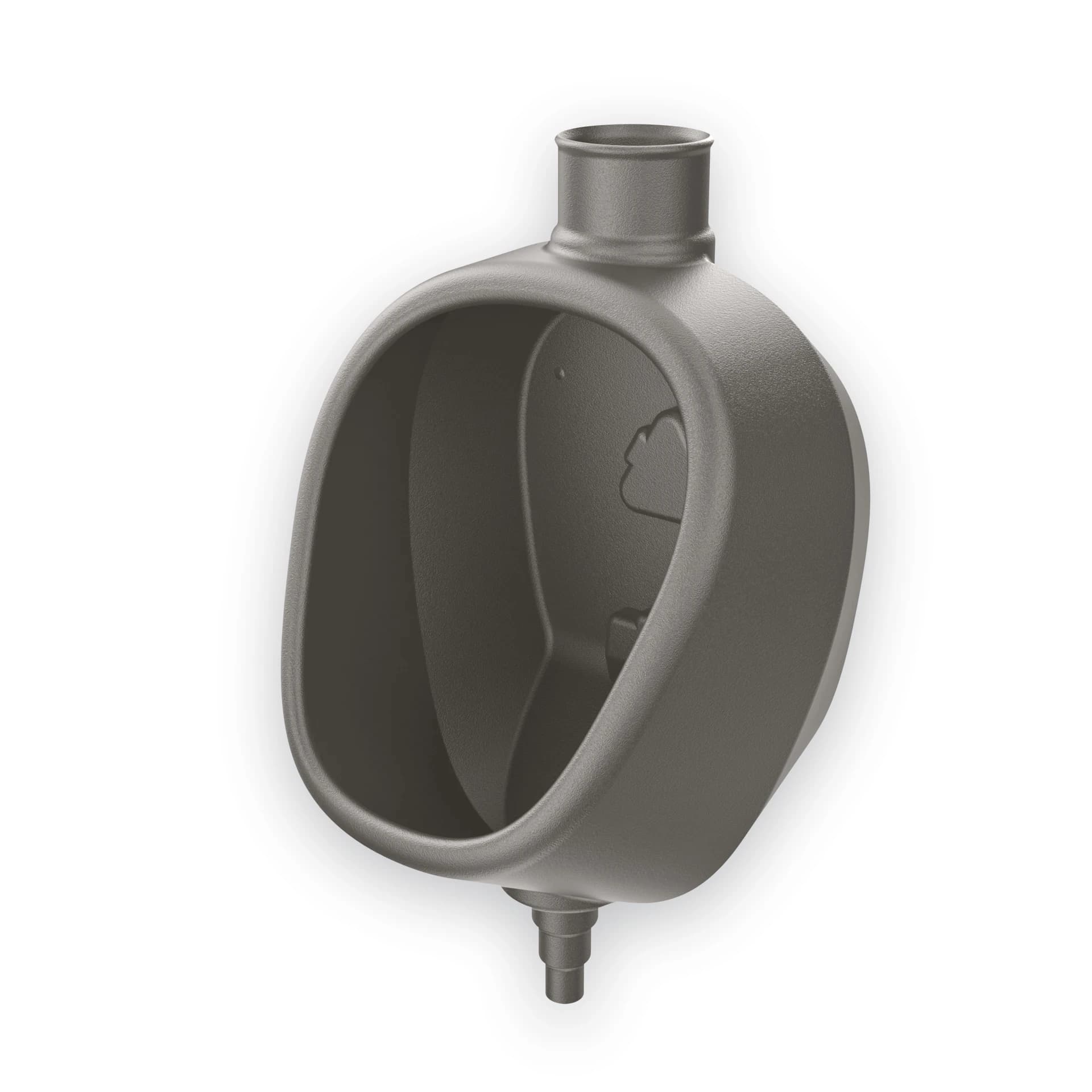
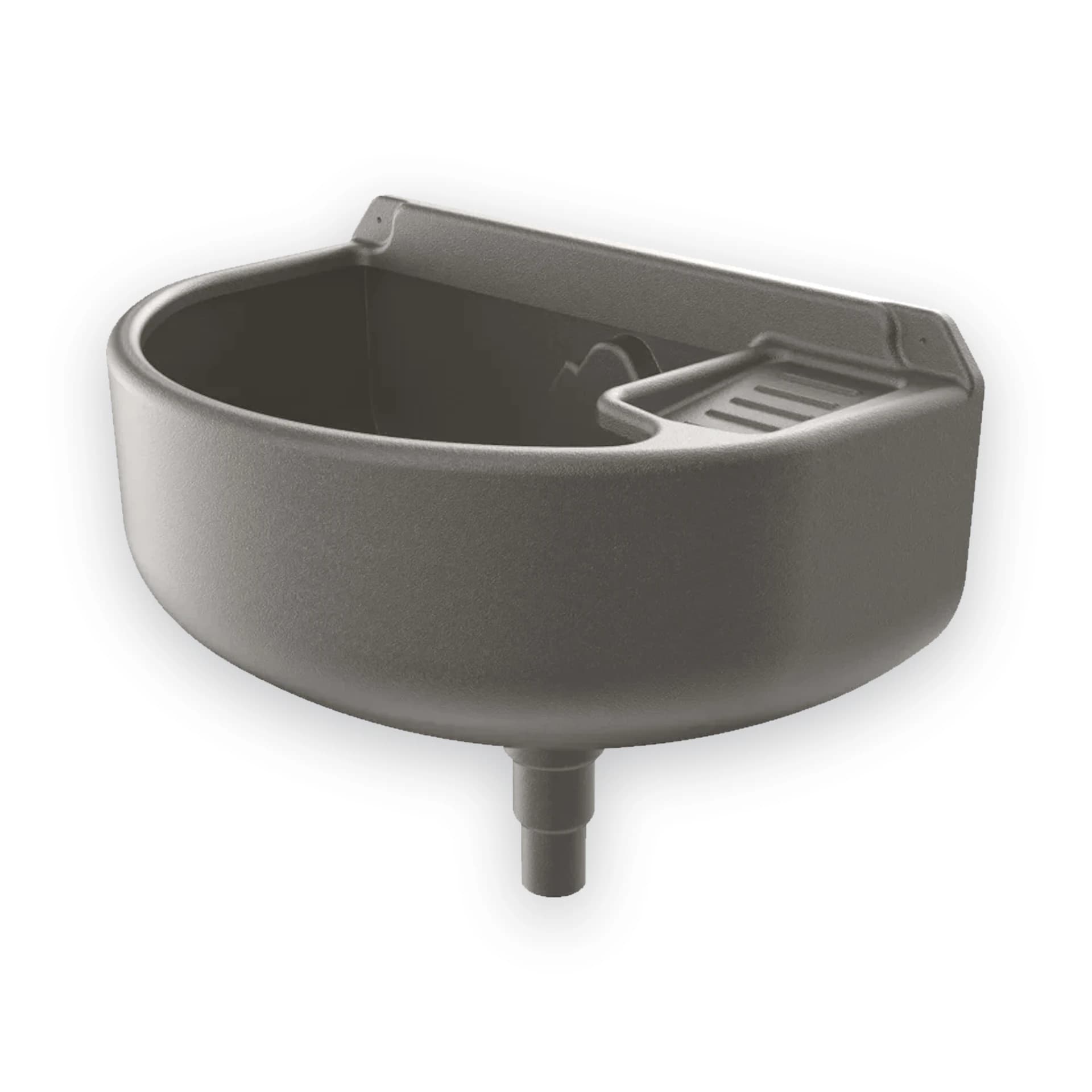
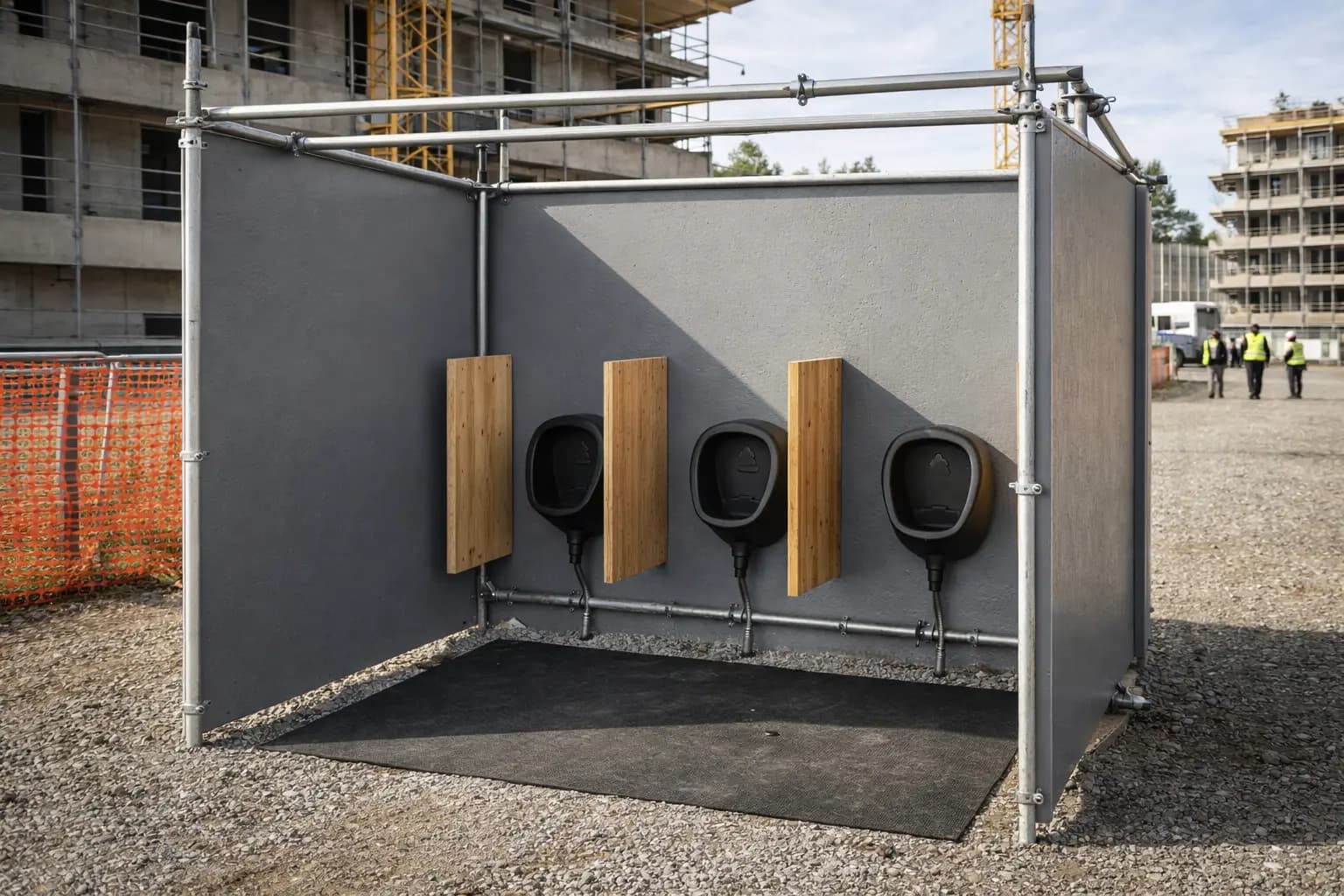
In crews predominantly male – typical for structural, carpentry, and roofing work – it is permissible to replace some toilets with urinals while maintaining the overall calculation per Annex XIII. One urinal per 15–20 workers is standard on large sites. This reduces queues at a single cabin and minimizes time lost during lunch breaks and shift changes. Pi-Pi mounts on the wall of an existing portable toilet cabin or inside a modular unit without plumbing alterations: a stepped connector Ø24/32/40 mm connects to the standard tank of any Italian cabin manufacturer.
PSC, POS Documents and ASL Inspections
The PSC, developed by the safety coordinator during the design phase before work begins, and the POS, submitted by the executing contractor to the coordinator during the execution phase, include a section on sanitary facilities. The standard package from Pi-Pi includes: LLDPE technical sheet, REACH/RoHS compliance, photo of the installed urinal, and connection diagram to the tank. This is sufficient for PSC, POS, and ASL inspections.
Frost Resistance for Mountainous and Northern Regions
Italy has a varied climate: construction sites in Trentino-Alto Adige, Valle d’Aosta, mountainous Piedmont, and parts of Lombardy operate in winter at −15°C…−25°C. The south has a milder climate, but the cabin fleet is usually shared – a cabin used in winter in Bolzano is sent to Sicily in the summer. Polypropylene (PP) in cheap urinals becomes brittle around 0°C and cracks from a worker’s impact or during loading/unloading. LLDPE Pi-Pi remains flexible down to −40°C.
UV Resistance in Southern Regions
In southern regions (Sicily, Calabria, Apulia, Sardinia), the limiting factor is solar ultraviolet. The exposed surface of a PP urinal degrades in 2–4 seasons: the color fades, the surface becomes rough, and dirt accumulates in micro-cracks. LLDPE Pi-Pi contains 2.5% technical carbon within the product mass (not just applied on top), delaying photodegradation beyond 7–10 years.
Compatibility with Sebach Italia, Sanesi, WC Service
The Italian market for portable toilet rentals is represented by companies like Sebach, Sanesi, WC Service, Mevi, and regional operators. All use tanks with 32 or 40 mm inlets. The Pi-Pi stepped connector (24/32/40) connects to any of them without adapters. For contractors with a mixed fleet, this means one part number in spare parts.
What the Urinal Does Not Do
Pi-Pi is a component, not a complete solution for Annex XIII. The regulation requires a toilet, sink, lighting, and cabin heating. Pi-Pi addresses one point – separate urine collection for men standing.
Conclusion
D.Lgs 81/08 is the framework within which every construction site in Italy operates. Pi-Pi is tailored to this framework: the material does not crack in the Alps’ winter and does not degrade from UV in Sicily, the connector is compatible with the fleets of Sebach Italia, Sanesi, and WC Service, and the documents are ready for PSC, POS, and ASL. Installation takes 5–7 minutes. For calculations on a specific site and trade pricing from 100 units, request a quote – we will send a calculator and supply terms.