Rodzinne Ogrody Działkowe (ROD) is the Polish system of family garden associations, established by the law ‘Ustawa z dnia 13 grudnia 2013 r. o rodzinnych ogrodach działkowych’ and managed by the ‘Polski Związek Działkowców (PZD)’ – the Polish Gardeners’ Association. According to PZD, there are approximately 4,900 garden associations and about 900,000 plots (działka – plot) used by gardeners and their families in the country. The most common household issue for gardeners is the toilet: there is no sewage connection, the association’s regulations limit the construction of a cesspit, and going ‘into the bushes’ is unacceptable to both neighbors and the management. Below is how to install a waterless urinal in a garden shed (altana) so that it works and remains within PZD regulations.
What the ROD Law and PZD Regulations Govern
The garden association law of December 13, 2013, came into force on January 19, 2014, and defined ROD as public interest entities with protected status. All associations in the country are part of PZD, and specific plot development rules are outlined in the ROD regulations approved by the PZD National Council. The regulations allow for a garden shed on the plot with an area of up to 35 m² and a height of up to 5 m with a gabled roof or 4 m with a flat roof.
Regarding waste disposal – § 41 of the ROD regulations permits a sealed liquid waste container only with written notification to the association’s management, accompanied by a drawing and provided there is free access for a sewage truck. So-called ‘ecological septic tanks’ with ground drainage are not explicitly provided for in the regulations and are not allowed on the plot. Thus, a classic septic tank on the plot involves bureaucracy, approvals, and the risk of rejection by the management.
Why an Autonomous Scenario is the Only Realistic Option
Most plots in the associations are not connected to sewage, and a significant portion lacks their own water source. This is not a temporary state but a design norm of ROD: the plot is for leisure and personal planting, not for permanent residence. Any sanitary solution must work without plumbing, without sewage, and without approval from the gmina.
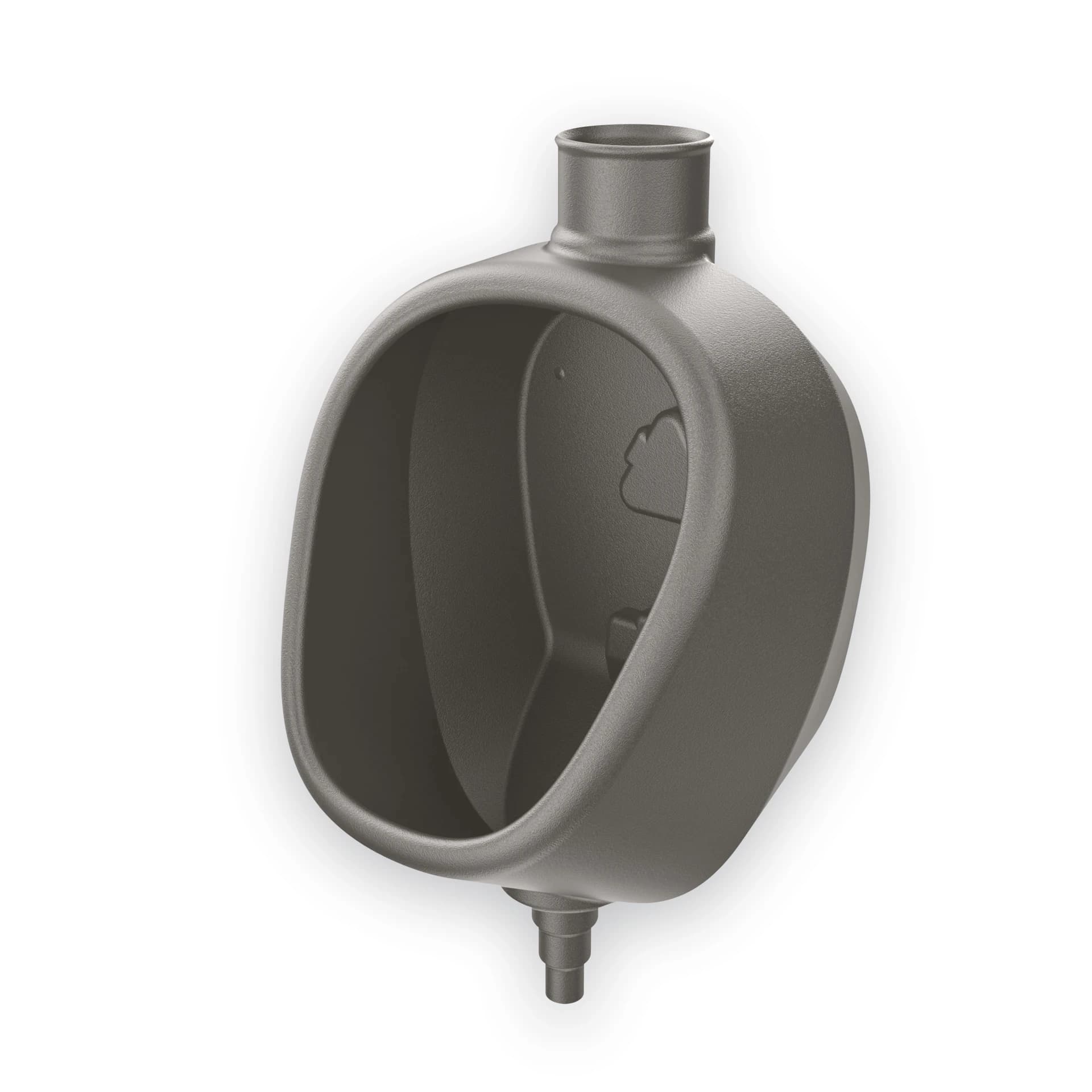
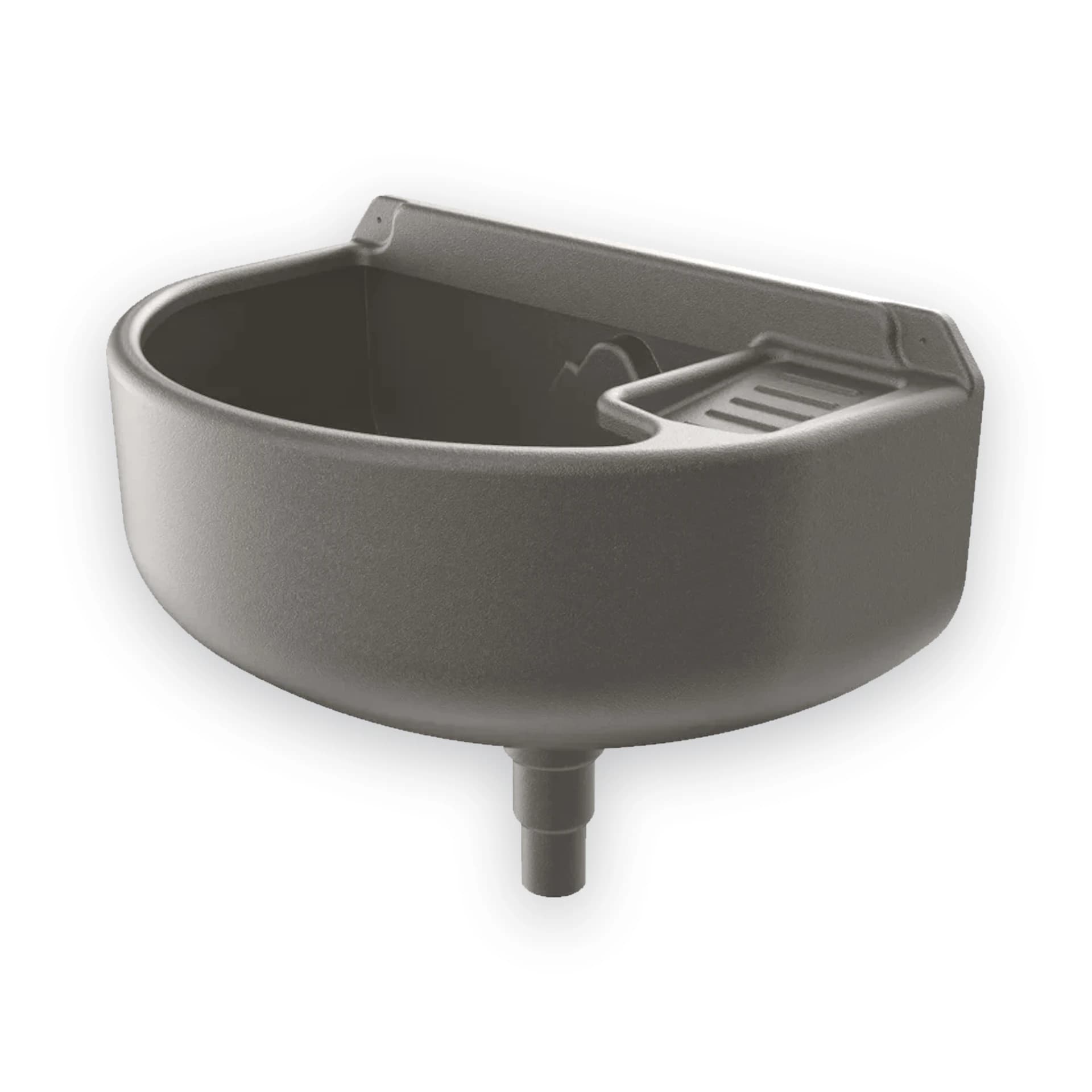
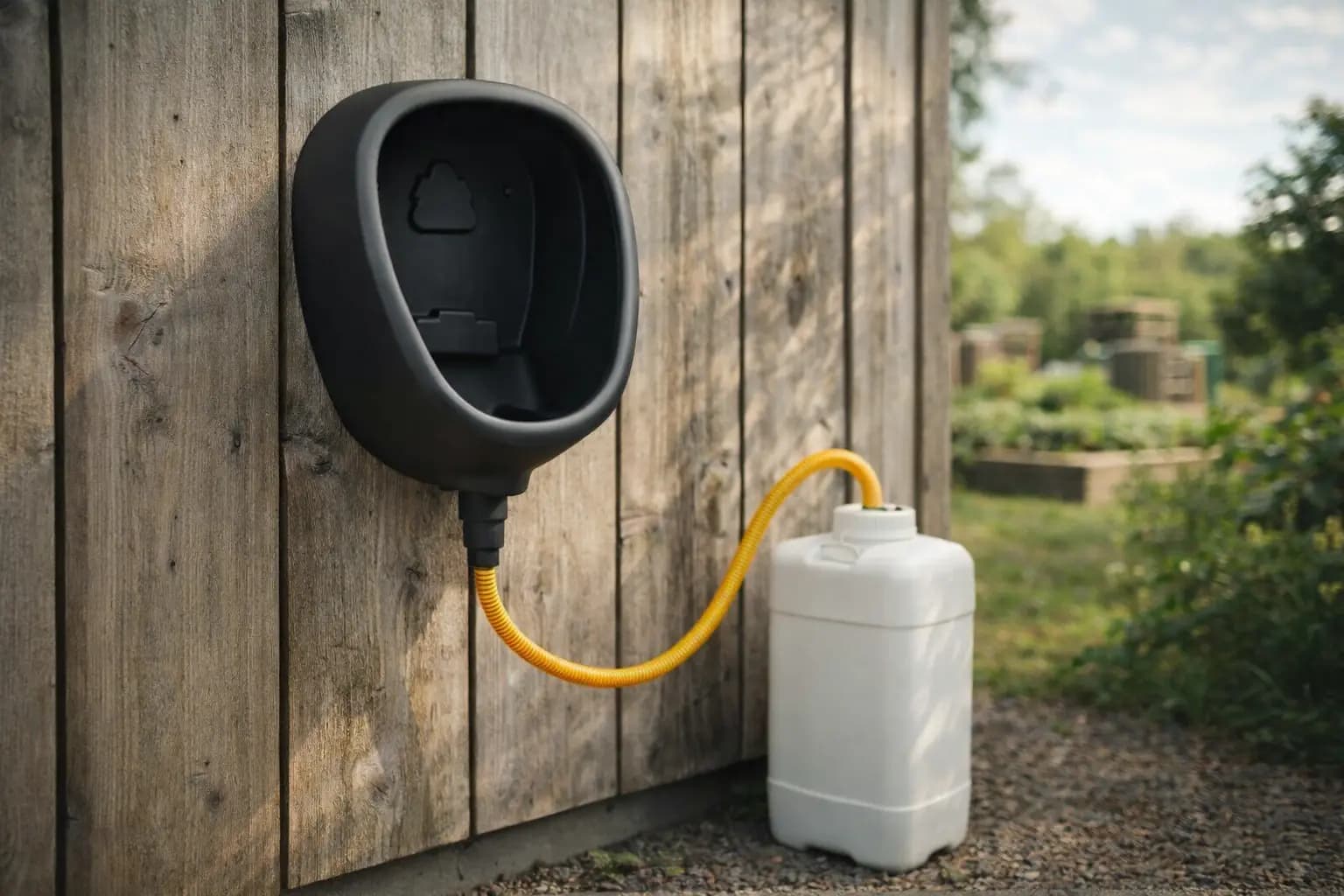
A waterless urinal addresses precisely this scenario. Standard or Standard Plus (with a Ø70 mm ventilation port) is mounted on the wall of the garden shed, and the stepped connector Ø24/32/40 mm connects to a standard garden hose or a 10–20 liter canister. A separate canister stands in the corner of the shed or in an external box – emptied into a compost bin or sealed and transported every two to three weeks. No cesspit, no management approval, no risk of inspection by the gmina.
Separate Collection and Odor
The source of odor in a toilet is the reaction of ammonia formed when urine mixes with feces. Separate collection eliminates the reaction: urine goes into one container, feces with sawdust into another. Pi-Pi handles precisely the male standing flow, which overwhelms any composting toilet. In combination with a peat or separating toilet, this is a complete sanitary solution for a gardener’s family for weekends and longer stays during the season.
Collected urine can be diluted 1:10 with water and used to water tomatoes, zucchinis, or flowers – the nitrogen and phosphorus in urine act as a complete fertilizer. This is a familiar practice for German Kleingarten, and many Polish migrants in Germany have encountered this approach there. An alternative is mixing with sawdust 6:1 for composting.
Polish Winter and LLDPE
The Polish climate ranges from oceanic in the west to continental in the east. In Podlasie, Masuria, and the mountains, winter temperatures can hold at −20 °C, with some nights dropping to −25…−40 °C. The garden shed is usually unheated, and sanitary equipment winters ‘as is.’ Polypropylene (PP) of budget urinals from marketplaces becomes brittle around 0 °C and cracks from impact or expansion of water residues. LLDPE Pi-Pi retains elasticity down to −40 °C. Winter preparation involves one action: draining residues from the hose and canister to prevent ice from bursting the container. The urinal itself on the shed wall does not require dismantling.
Sanitary Equipment for the Stowarzyszenie Ogrodowe and ROD Management
The garden association and the Stowarzyszenie Ogrodowe (garden society) are responsible for outfitting the świetlica, the dom działkowca (gardener’s house), and shared sanitary points in the common areas of the ROD where municipal sewage is absent. These facilities face the same regulatory limits as individual plots – a sealed cesspit requires written approval, ground drainage is excluded, and seasonal operation at sub-zero temperatures rules out classic plumbing.
A waterless urinal in the Standard or Standard Plus version fits these conditions for collective facilities: one or two urinals in the świetlica or by the dom działkowca, installation without plumbing rework, documentation (REACH/RoHS, LLDPE technical sheet, installation schematic) ready for the Krajowa Rada PZD protocol and district managements. Association managements equipping new members in bulk or outfitting shared zones can request group-order terms – VAT invoice, delivery from 100 units, and a uniform installation standard across the association that simplifies inspection and parts replacement.
What This Offers the Individual Gardener
For a single shed, Pi-Pi is a component that mounts the same way on any garden shed, requires no approval from the management, and is compatible with any composting toilet the gardener chooses later.
What Not to Do
Do not attempt to connect the urinal to open ground without dilution – concentrated urine salts the soil. Do not use chemical disinfectants in the canister – they block composting. Do not build a cesspit ‘just in case’ without written approval from management – this is a violation of ROD regulations and grounds for terminating the plot lease agreement.
Conclusion
A waterless urinal on an ROD plot is an autonomous scenario that fits within the 2013 ROD law and PZD regulations without approvals and without a cesspit. Pi-Pi is made of LLDPE – it withstands Polish winter, installs in a garden shed in 5–7 minutes, and is compatible with any composting toilet via a stepped connector Ø24/32/40 mm. Individual gardeners order through the website; association managements equipping new members in bulk can request group order terms and a package of documents (REACH/RoHS, LLDPE technical sheet) for the PZD protocol through the form on the website.