Every construction site in Romania operates under government decree HG 300/2006 on minimum safety and health requirements on temporary and mobile construction sites – this act transposes the European Directive 92/57/CEE. Along with Law 319/2006 on occupational safety (Legea 319/2006), it is a fundamental regulation for general contractors and subcontractors. For sanitary facilities, HG 300/2006 is not a reference document but a basis for admission and inspection by Inspecţia Muncii (ITM, the state labour inspection). Non-compliance results not only in fines but also in work suspension. Below is what is inspected and where the waterless urinal meets the regulatory requirements.
What HG 300/2006 Requires
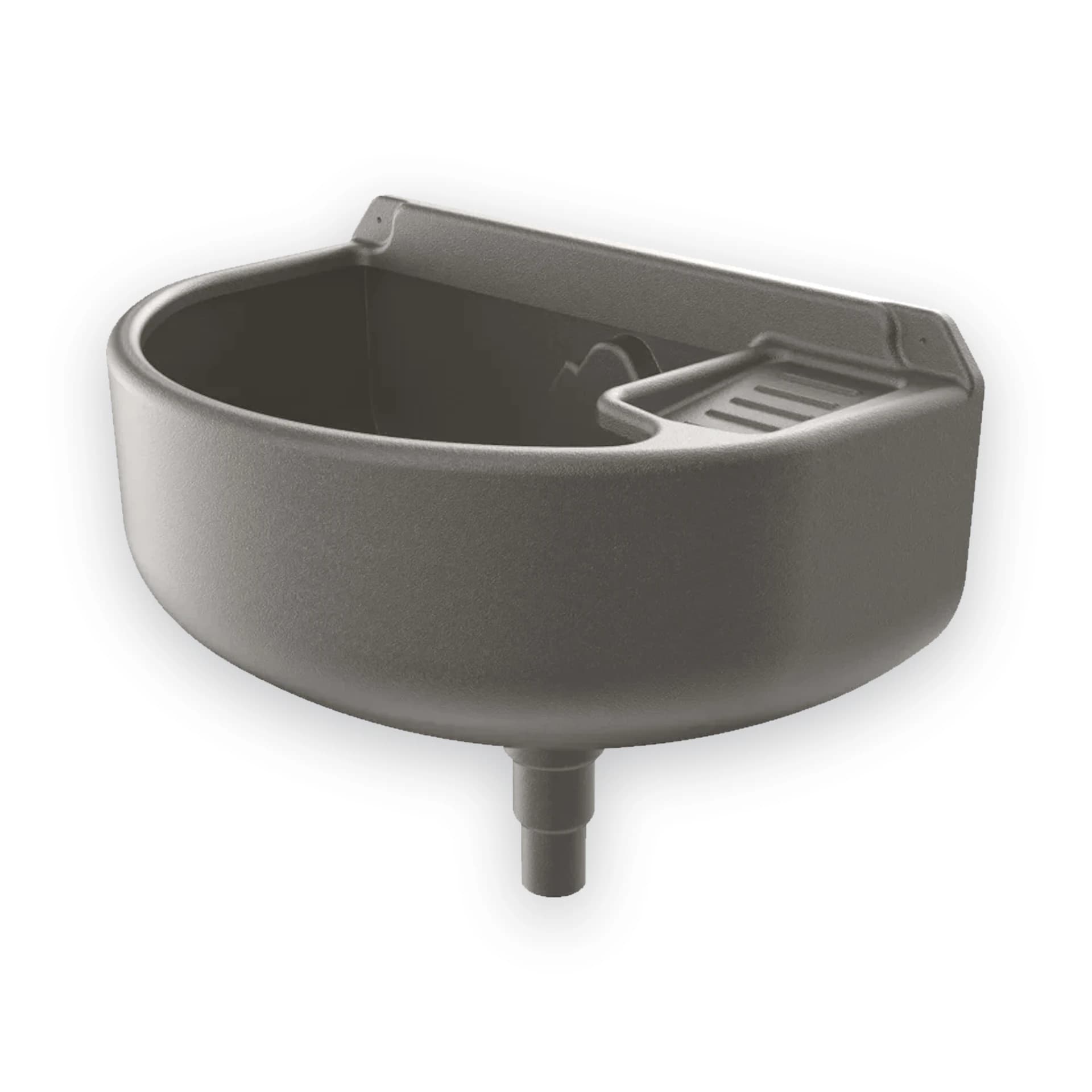
HG 300/2006, appendix 4, obliges the client and contractor to provide a sufficient number of toilet cabins separately for men and women, washbasins with running water, changing rooms, and adequate ventilation on the construction site. The standard practical calculation, reflected in ISCIR internal procedures and collective agreements in the construction industry, is one cabin and one urinal per 10–15 workers. For crews predominantly male – typical for monolithic works, masonry, roofing – it is permissible to replace some cabins with urinals while maintaining the overall calculation according to appendix 4.
On construction sites with temporary water and sewage connections or without any connection, these requirements are met by mobile portable toilets from TOI TOI România, Pisoar Mobil, EcoToalete, ROMTRANS Sanitar.
Safety Plan and Coordinator
HG 300/2006 introduces the role of a safety and health coordinator – mandatory for construction sites involving two or more companies. The coordinator during the design phase prepares the safety and health plan (SHP, in Romanian Plan de securitate şi sănătate) before work begins; the coordinator during the execution phase monitors its compliance. The SHP includes a section on sanitary facilities with calculations according to appendix 4, a layout of cabins, and equipment specifications.
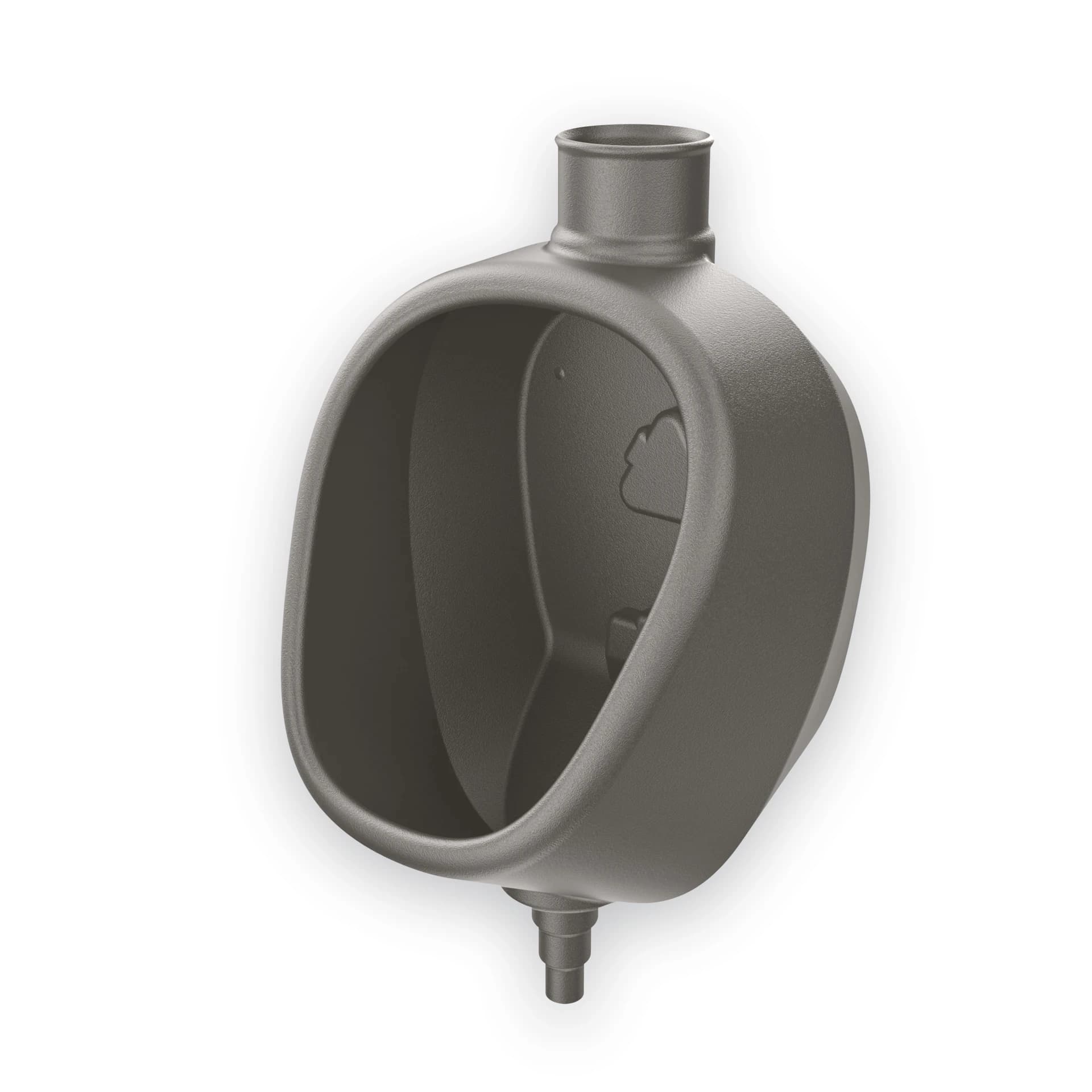
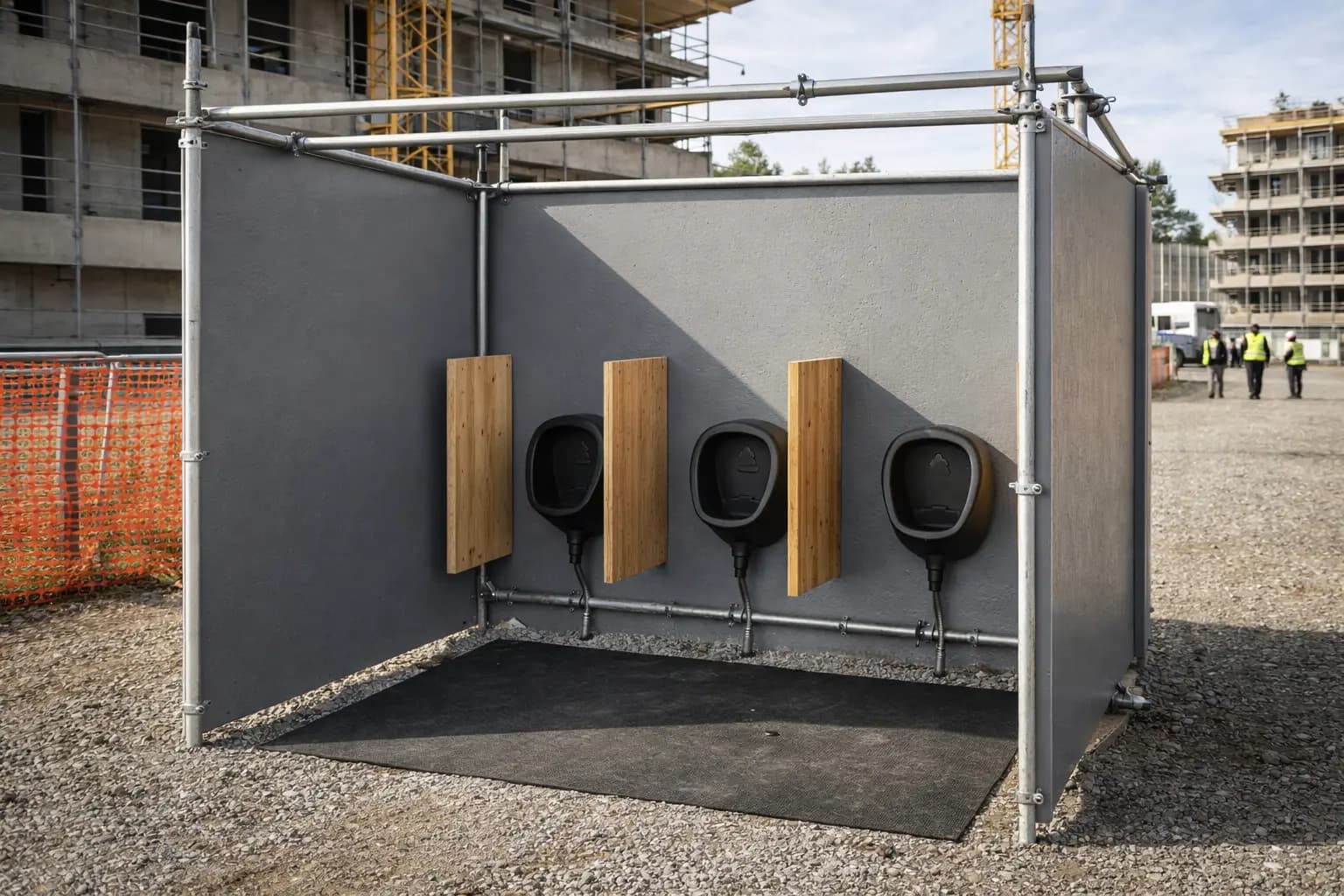
The standard document package from Pi-Pi for SHP includes: LLDPE technical sheet, REACH/RoHS compliance declaration, photo of the installed urinal in the cabin, and a connection diagram to the tank. This is sufficient for SHP and ITM inspection.
ITM Inspections
ITM (Inspecţia Muncii – state labour inspection) conducts unscheduled inspections on construction sites, especially in Bucharest, Cluj, Timișoara, Constanța, and on major road projects. The inspector checks the presence of SHP, the compliance of the number of sanitary cabins with the calculation, the condition of the cabins, heating, and lighting. The waterless urinal passes inspection as a component of an already installed cabin – it does not require separate authorization but must be listed in the SHP.
Frost Resistance for the Carpathians
Romania has a varied climate: construction sites in the Southern Carpathians (Sinaia, Predeal, Brașov), the Apuseni Mountains, and Bukovina operate in winter at −15…−25 °C. In the south (Romanian Plain, Dobruja), winters are milder, but the rental operators’ fleet is shared – a cabin that withstood winter in Brașov is used in Constanța in summer. Polypropylene (PP), used for budget urinals, becomes brittle around 0 °C and cracks from an installer’s impact or when overloaded on a truck. LLDPE Pi-Pi remains flexible down to −40 °C.
Compatibility with TOI TOI România
The Romanian portable toilet rental market is represented by TOI TOI România (part of the TOI TOI & DIXI group), Pisoar Mobil, and regional operators. All use tanks with 32 or 40 mm inlets. The Pi-Pi stepped connector (24/32/40) connects to any of them without adapters. For a company with a mixed fleet, this is a single spare part item.
Abroad: Romania → Italy → Spain
Romanian builders have been working abroad significantly for the past fifteen years. The deployment of Romanian crews to Italy (construction sites from Milan to Palermo) and Spain (projects in Madrid, Valencia, Barcelona) is widespread; a company registered in Cluj or Timișoara simultaneously manages projects in Bologna and Zaragoza. Regulatory frameworks differ – D.Lgs 81/08 in Italy, Real Decreto 1627/1997 in Spain – but the requirements for sanitary facilities are the same and rely on the same Directive 92/57/CEE.
Pi-Pi is one item for all three jurisdictions. The same Standard or Standard Plus purchased in Romania for a construction site in Brașov works the next season on a site near Bergamo and a project in Zaragoza. Compatibility with TOI TOI extends to its Italian and Spanish subsidiaries. Documents are translated for the local SHP / PSC / Plan de Seguridad y Salud – without replacing equipment.
What the Urinal Does Not Do
Pi-Pi is a component, not a complete solution under HG 300/2006. The regulation requires a cabin, washbasin, heating, and lighting. Pi-Pi covers one point – separate urine collection for men standing – and reduces the queue during lunch breaks and shift changes.
Conclusion
HG 300/2006 is the framework within which every construction site in Romania and every Romanian crew abroad operates. Pi-Pi is tailored to this framework: LLDPE does not crack in winter in the Carpathians and Alps, the connector is compatible with the fleet of TOI TOI România and its European subsidiaries, documents are ready for SHP, ITM, Italian PSC, and Spanish Plan de Seguridad. Installation takes 5–7 minutes, without special tools. To get a calculation for a specific construction site and supply terms in Italy and Spain, request a quote – we will send the technical sheet and calculation according to appendix 4.