Family gardens – the French system of family garden associations – is a legal category established by the ‘loi du 10 novembre 1976’ and codified in the ‘Code rural et de la pêche maritime’. Approximately 130,000 plots across the country are managed by two federations: FNJFC (Fédération Nationale des Jardins Familiaux et Collectifs – National Federation of Family and Collective Gardens) and LJF (Ligue Française du Coin de Terre et du Foyer – French League of Garden Plots and Family Hearths). The most common household issue for association members is the toilet: a bucket smells, a chemical portable toilet is heavy, and connecting to public sewage is not allowed. Below is how to install a waterless urinal in a garden shed so that it works long-term and remains within the legal framework.
What the 1976 law and association regulations allow
The ‘loi du 10 novembre 1976’ defines a garden association as a plot for family consumption without commercial exploitation. The area is usually 100–400 m², and the garden shed is up to 12 m² (depending on the association’s internal regulations and the local urban planning plan of the commune). Connection to public sewage is not provided in most associations. This does not mean a ban on toilets – it means the toilet must operate without plumbing and sewage. Dry toilets, toilets with urine separation, and waterless urinals fall into a category explicitly approved by FNJFC and most internal regulations.
Why separate collection
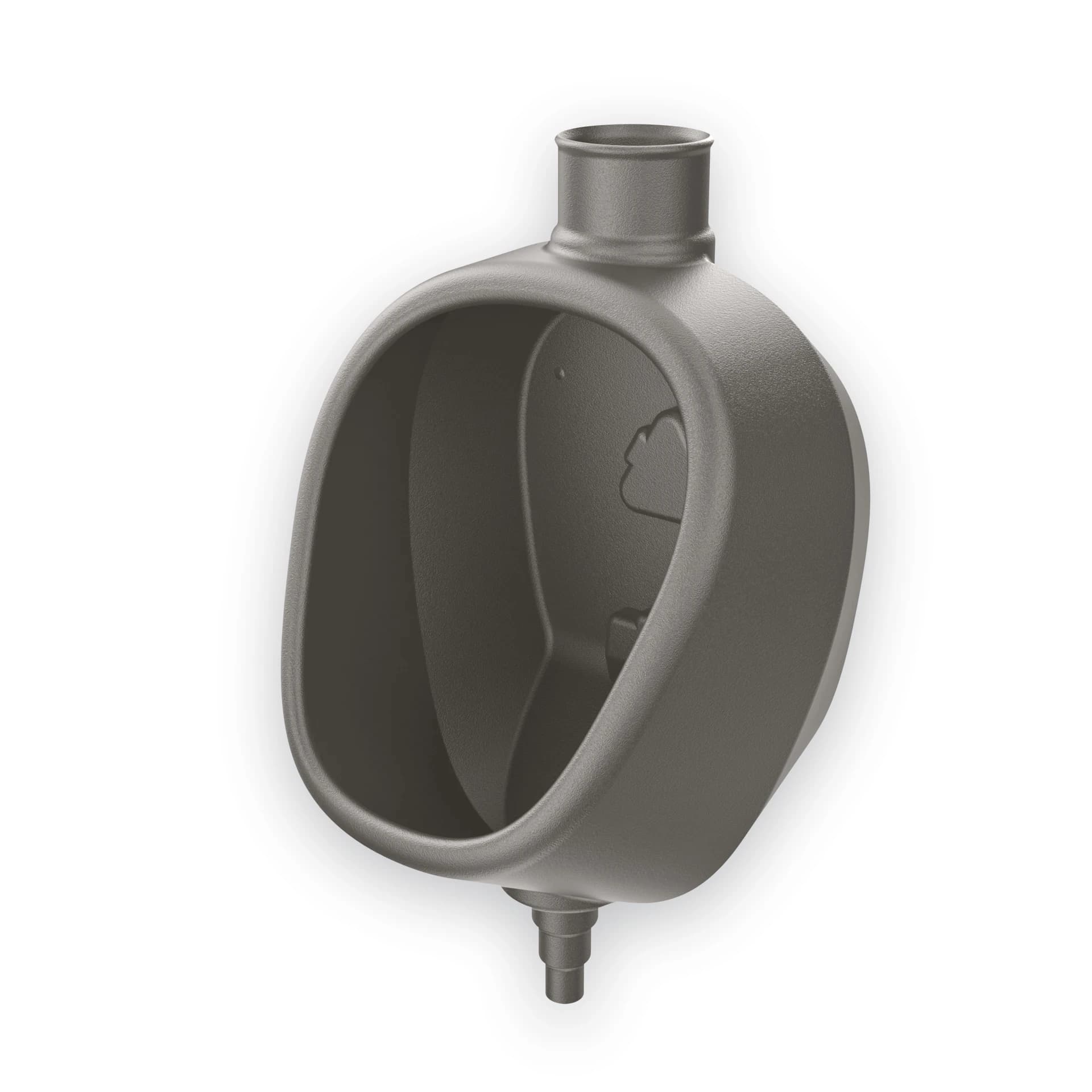
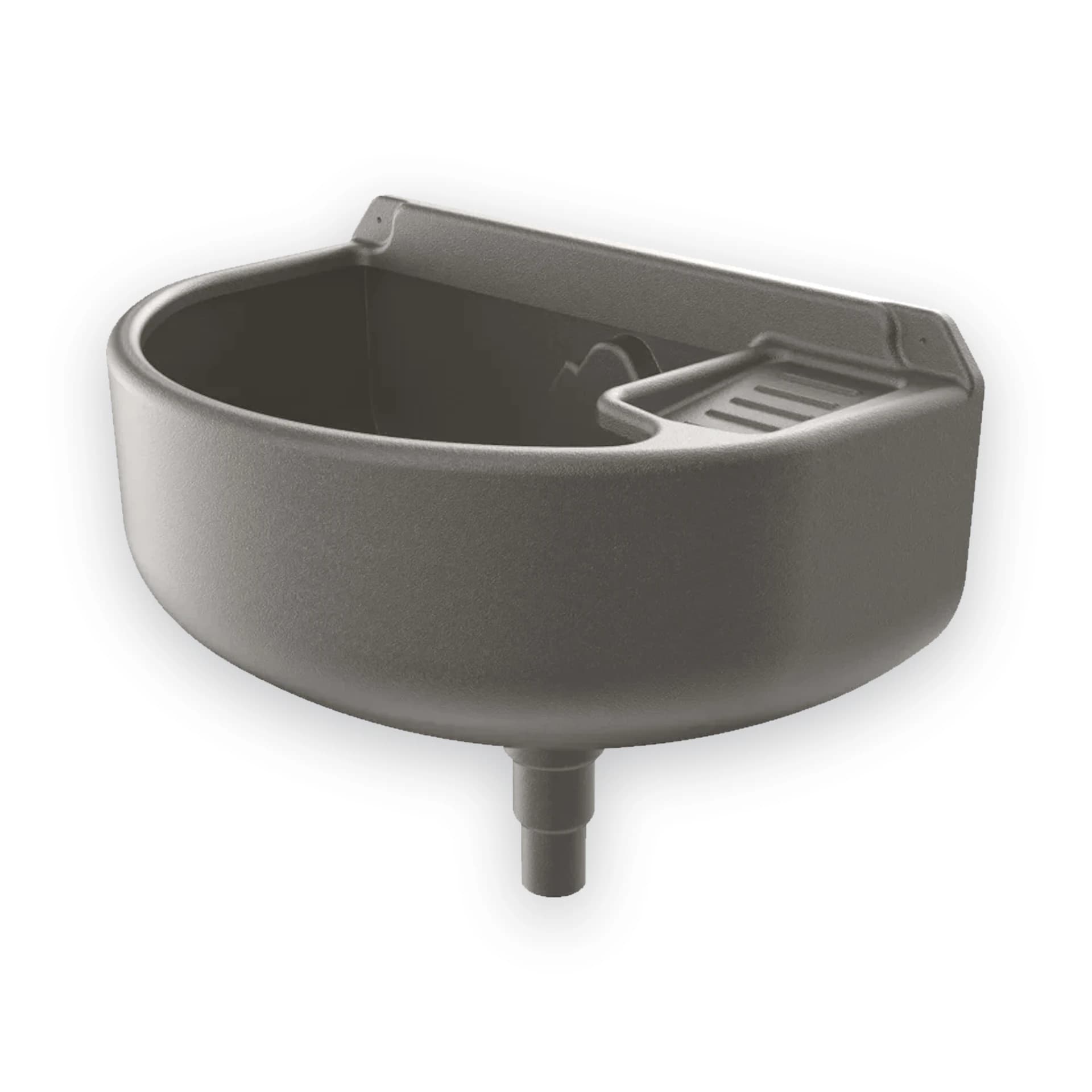
The source of odor in a toilet is the ammonia reaction that occurs when urine contacts feces. Separate collection eliminates this reaction: urine goes into one container, feces with wood chips or sawdust into another. This is not biochemistry but the physics of flow separation. French dry toilet manufacturers (Lécopot, Jolijardin, Le Trône) and European ones (Trelino, Kildwick, Separett) implement this principle in the form of a complete toilet. Standard and Standard Plus are wall-mounted urinals added for standing users.
What is needed for installation
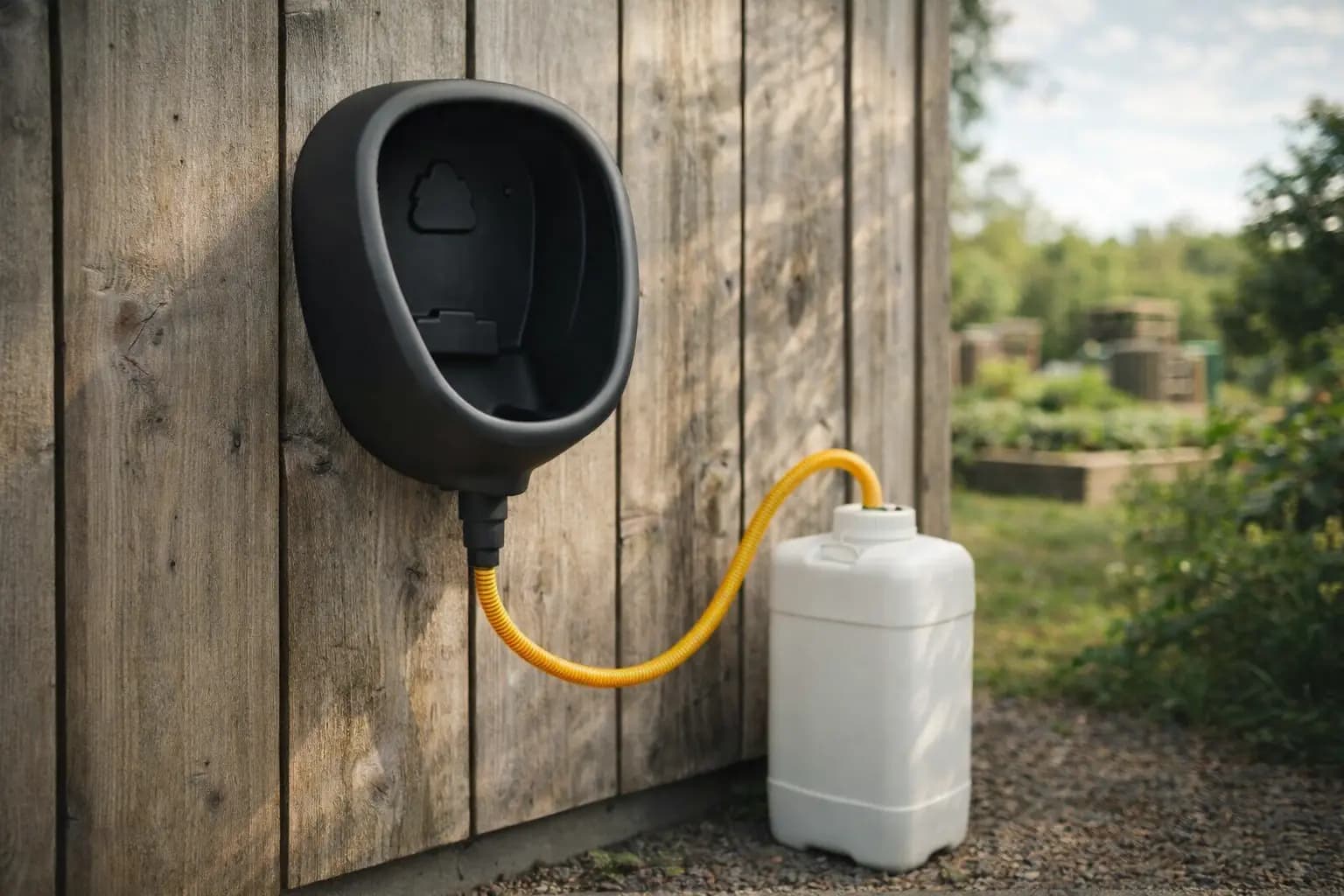
The minimum set: Pi-Pi urinal, fixings into the garden shed wall, a 10–20 liter collection canister, a 32 mm hose section for connection to a stepped fitting Ø24/32/40 mm. A regular garden hose fits without adapters. Installation takes 5–7 minutes, no plumber needed.
Where to dispose of collected urine
Three practical options, all compliant with FNJFC regulations. The first is dilution 1:10 with water and watering tomatoes, zucchini, and flowers: urine contains 88% available nitrogen and 66% phosphorus, making it a complete fertilizer known in France as ‘engrais liquide d’urine humaine’ (liquid fertilizer from human urine). The second is mixing with wood chips in a 6:1 ratio for compost: nitrogen binds with carbon, and no odor forms. The third is a sealed canister with periodic removal by a sanitation service, for those who do not want to deal with composting. All three options do not involve discharge into sewage or open ground, which meets regulatory requirements.
Winter storage
The garden shed is usually unheated. In continental zones (Grand Est, Burgundy) and mountainous areas, temperatures drop to −15°C. Pi-Pi made from LLDPE remains flexible down to −40°C – the material does not crack in winter, unlike cheap polypropylene counterparts from marketplaces, which become brittle around 0°C. Winter preparation involves one action: draining water from the hose and canister to prevent ice from bursting the container. The urinal on the wall does not need to be dismantled.
What the association says
FNJFC and LJF in typical internal regulations consider toilets with separate collection as a standard and approved solution. Pi-Pi combined with a dry toilet or separate canister falls into the same category. The main thing the association committee checks during the annual plot inspection: no sewage connection and no fecal odor. Separate collection addresses both points.
What not to do
Do not supply water to the urinal – Pi-Pi operates waterlessly, which is an advantage in a garden association. Do not direct drainage into open ground without dilution: even if nitrogen is valuable as a fertilizer, direct discharge concentrates salts and harms the soil. Do not use chemical disinfectants in the canister – they hinder composting and are unnecessary with separate collection.
Conclusion
A waterless urinal on a garden plot is a viable solution within the framework of the 1976 law, approved by FNJFC and LJF regulations. Pi-Pi handles the ‘standing male’ scenario, which overfills the liquid compartment of any dry toilet. Standard and Standard Plus with a 70 mm vent port, delivery to France in 5–7 business days. For compatibility with specific models from Lécopot, Trelino, or Kildwick, check the compatibility pages – they detail how the drainage connects. Questions – via the contact form below.