Volkstuinen – the Dutch allotment garden system – consists of about 240,000 plots in the Netherlands, organized into local associations and the AVVN federation (Algemeen Verbond van Volkstuinders Vereenigingen – Dutch Federation of Allotment Gardeners). The legal framework is twofold: the municipal zoning plan (gemeentelijk bestemmingsplan) dictates what can be built on the plot, while the internal regulations of the association govern domestic matters within the garden complex. The most common problem for members is the toilet: a bucket smells, a chemical toilet is heavy, and connecting to the sewage system is not allowed. Below is how to install a waterless urinal in a garden shed so that it works long-term.
What the Zoning Plan and AVVN Allow
Most garden complexes are zoned as ‘recreation – gardens’ in the municipal building plan. A garden shed (usually 18–28 m²) is allowed for daytime use and seasonal overnight stays, but not for permanent residence. Connection to the municipal sewage system is usually not provided – the plot is outside the built-up area or beyond the sewage network. This does not mean a ban on toilets – it means the toilet must operate without plumbing and sewage. Composting toilets, separating toilets (with separate urine collection), and waterless urinals fall into the category approved by AVVN and most regulations.
Why Separate Flows
The source of odor in a toilet is the ammonia reaction when urine contacts feces. A separating toilet eliminates this reaction: urine goes into one container, feces with wood shavings or coconut bedding into another. This is not biochemistry, but the physics of flow separation. The Dutch compost toilet market includes Trelino (through distributors), Separett, Kildwick, BOXIO. Pi-Pi is a wall-mounted urinal added for standing users.
What You Need for Installation
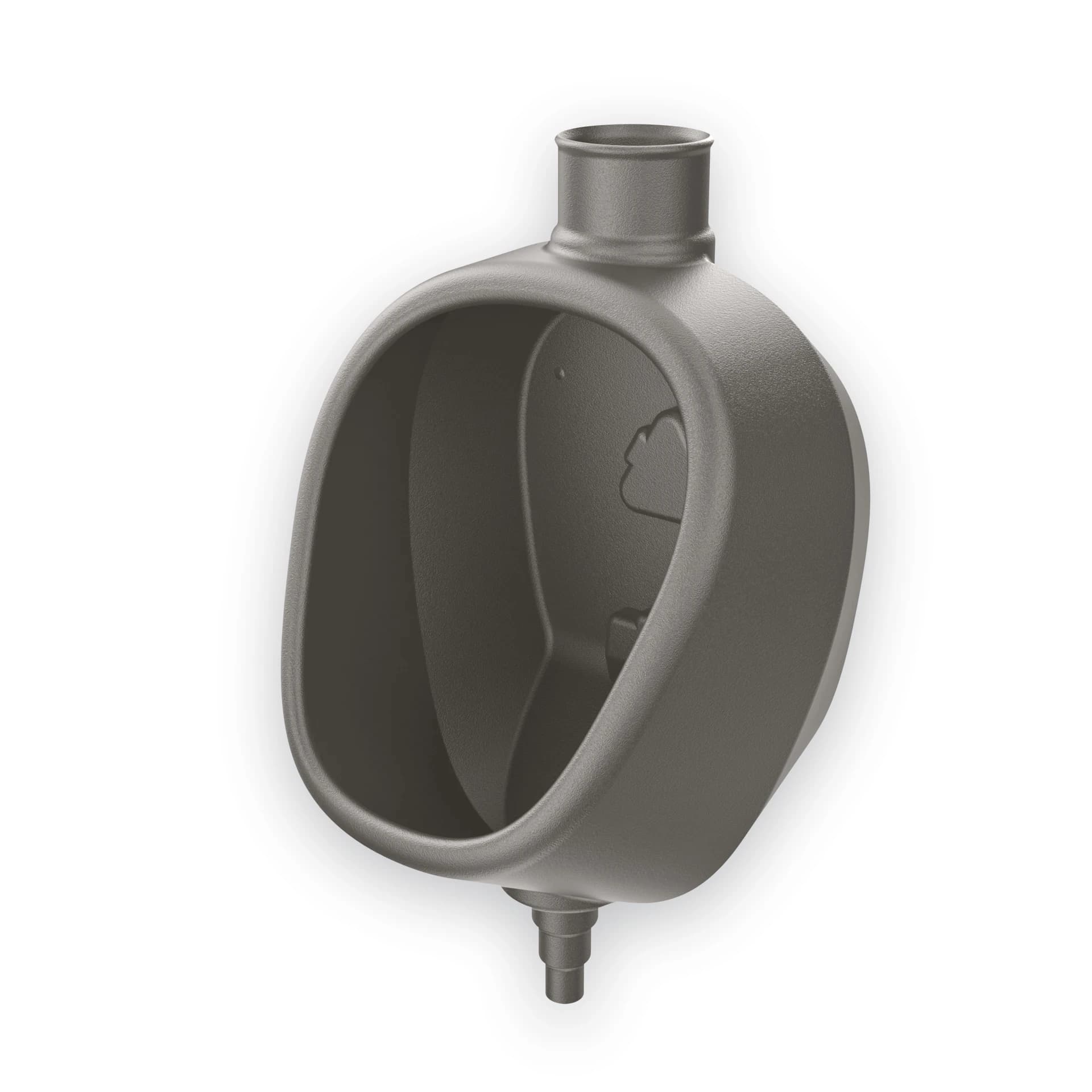
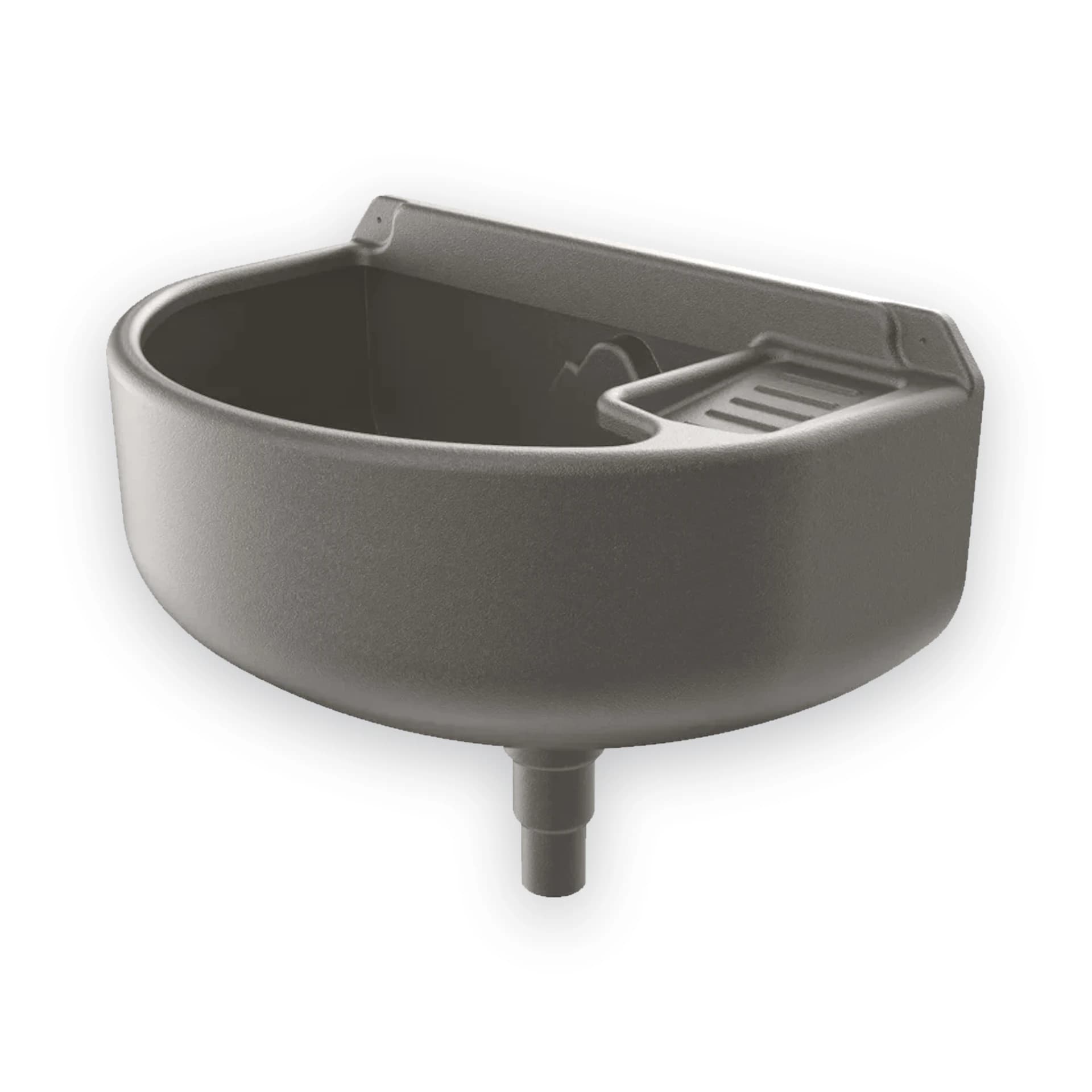
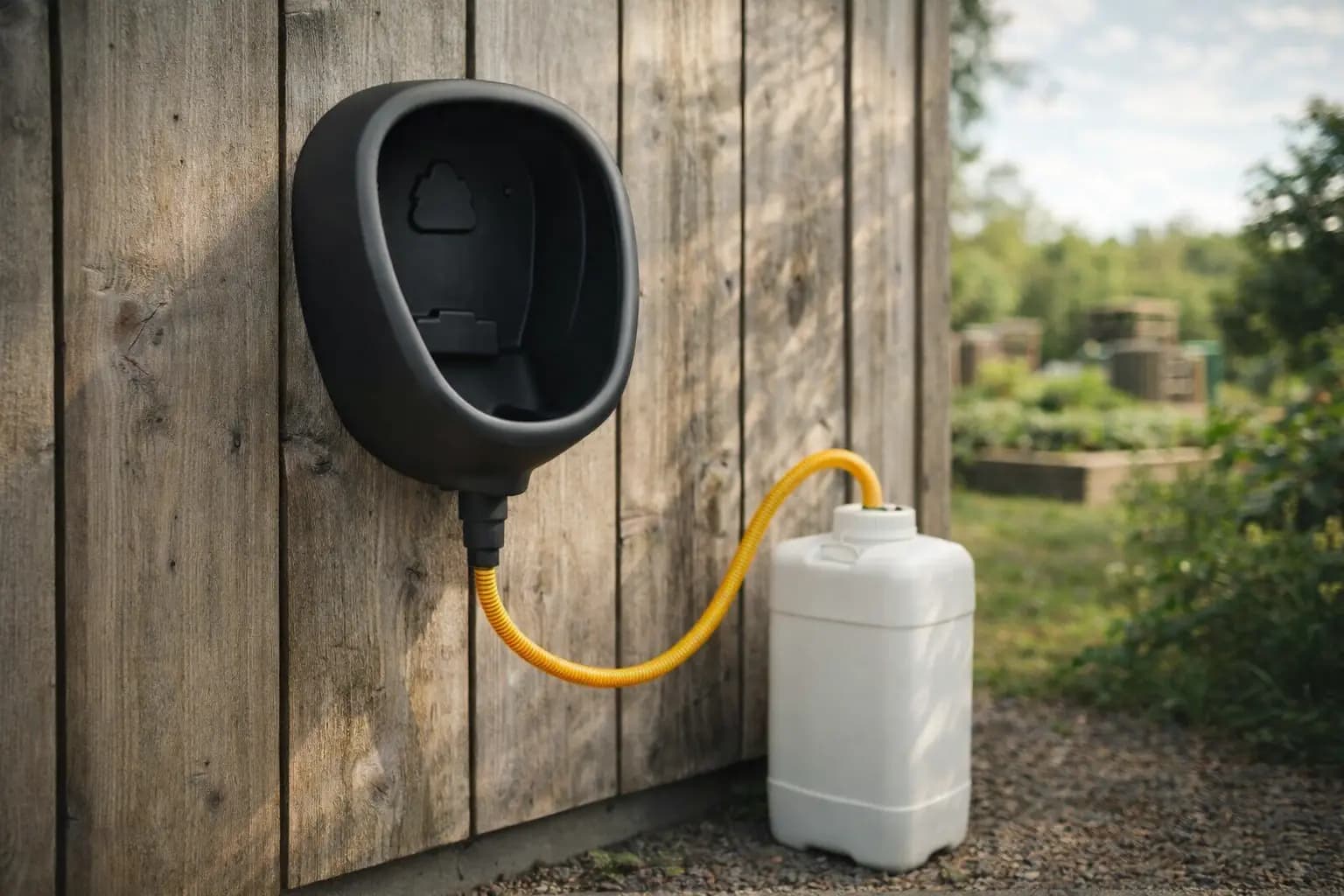
Minimum set: Pi-Pi urinal, fixings into the garden shed wall, a 10–20 liter container or canister, a piece of 32 mm garden hose for connection to a stepped fitting Ø24/32/40 mm. The standard Dutch garden hose fits without adapters. Installation takes 5–7 minutes.
Where to Dispose of Collected Urine
Three options compatible with AVVN regulations. First: dilute 1:10 with water and use for watering tomatoes, zucchini, ornamental plants – urine contains 88% available nitrogen and 66% phosphorus, a complete fertilizer known in Dutch permaculture as ‘diluted urine’ (verdunde urine). Second: mix with wood shavings 6:1 for the compost heap – nitrogen binds with carbon, no odor forms. Third: sealed canister with periodic removal – for those not working with compost. None of the options involve discharge into surface waters or untreated soil.
Winter Storage
The garden shed is usually unheated. Winters in the Netherlands occasionally drop to −15°C in the provinces of Drenthe and Friesland. Pi-Pi made of LLDPE remains flexible down to −40°C – the material does not crack in winter, unlike polypropylene counterparts from marketplaces. Winter preparation: drain water from the hose and canister to prevent ice from bursting the container. The urinal on the wall does not require removal.
What the Association Says
AVVN and most local associations in typical regulations consider a separating toilet an approved solution. Pi-Pi combined with a compost toilet falls into the same category. The main things the board checks during the annual plot inspection: no sewage connection and no fecal odor. Separate collection addresses both points.
What Not to Do
Do not supply water to the urinal – Pi-Pi operates waterlessly. Do not direct drainage into open ground without dilution – concentrated urine harms the soil and violates soil protection regulations. Do not use chemicals like sanitary fluid for portable toilets in the canister – it disrupts composting.
Conclusion
A waterless urinal on an allotment plot is a viable solution within the zoning plan and AVVN regulations. Pi-Pi handles the ‘standing male’ scenario, which overfills the liquid section of any compost toilet. Standard and Standard+ with a 70 mm ventilation port, delivery to the Netherlands in 3–5 business days. For compatibility with specific models Trelino, Separett, Kildwick, or BOXIO, see the compatibility pages. Questions – via the contact form below.