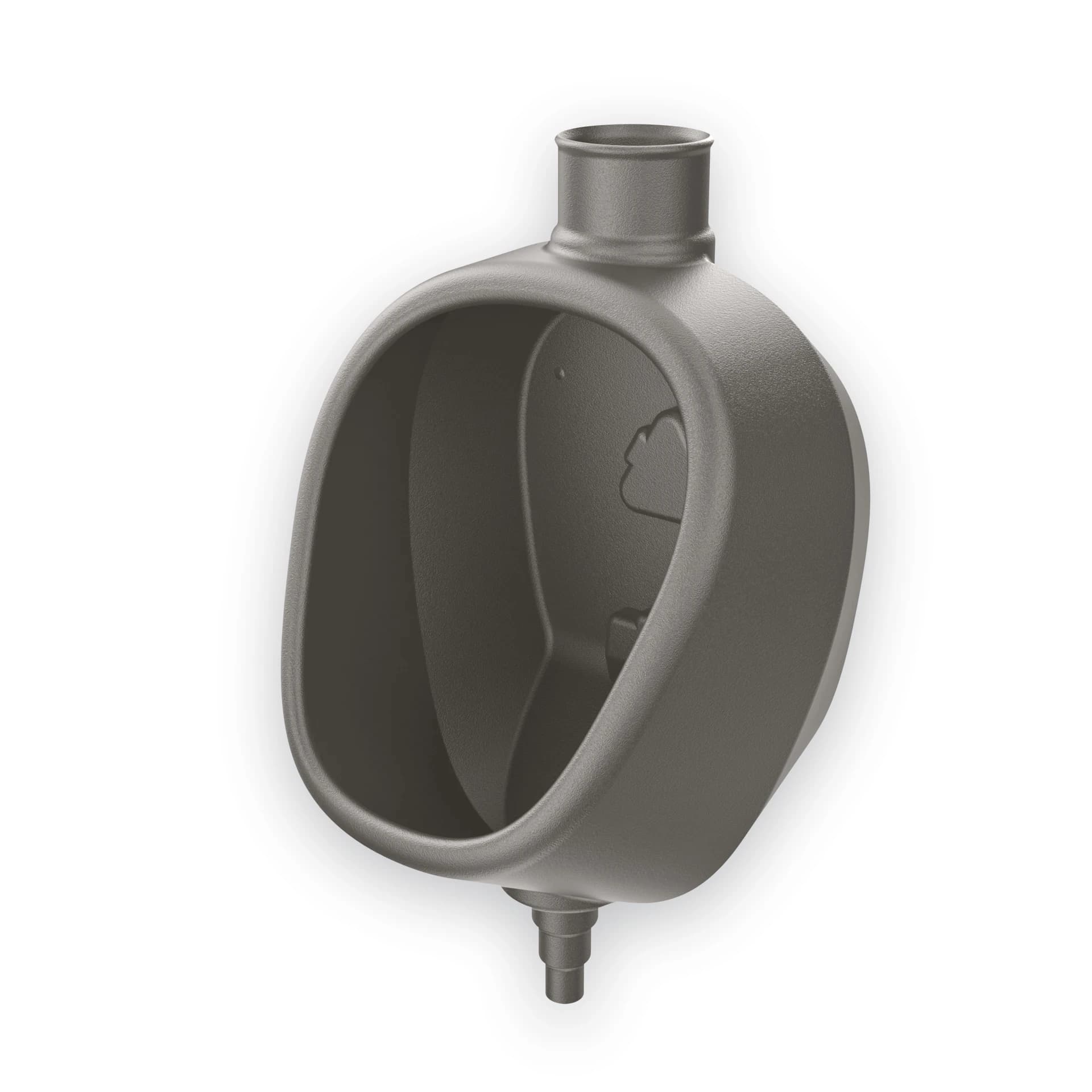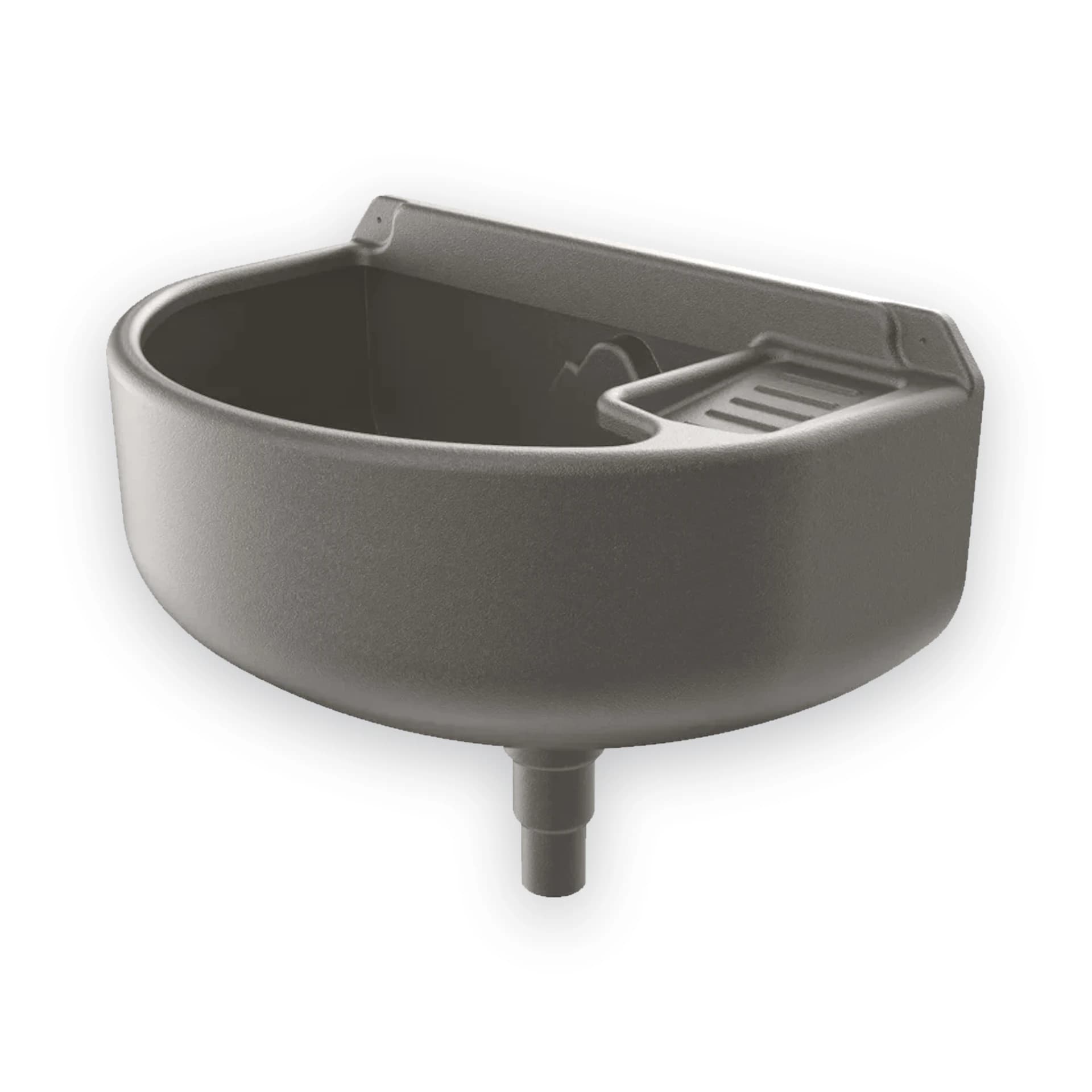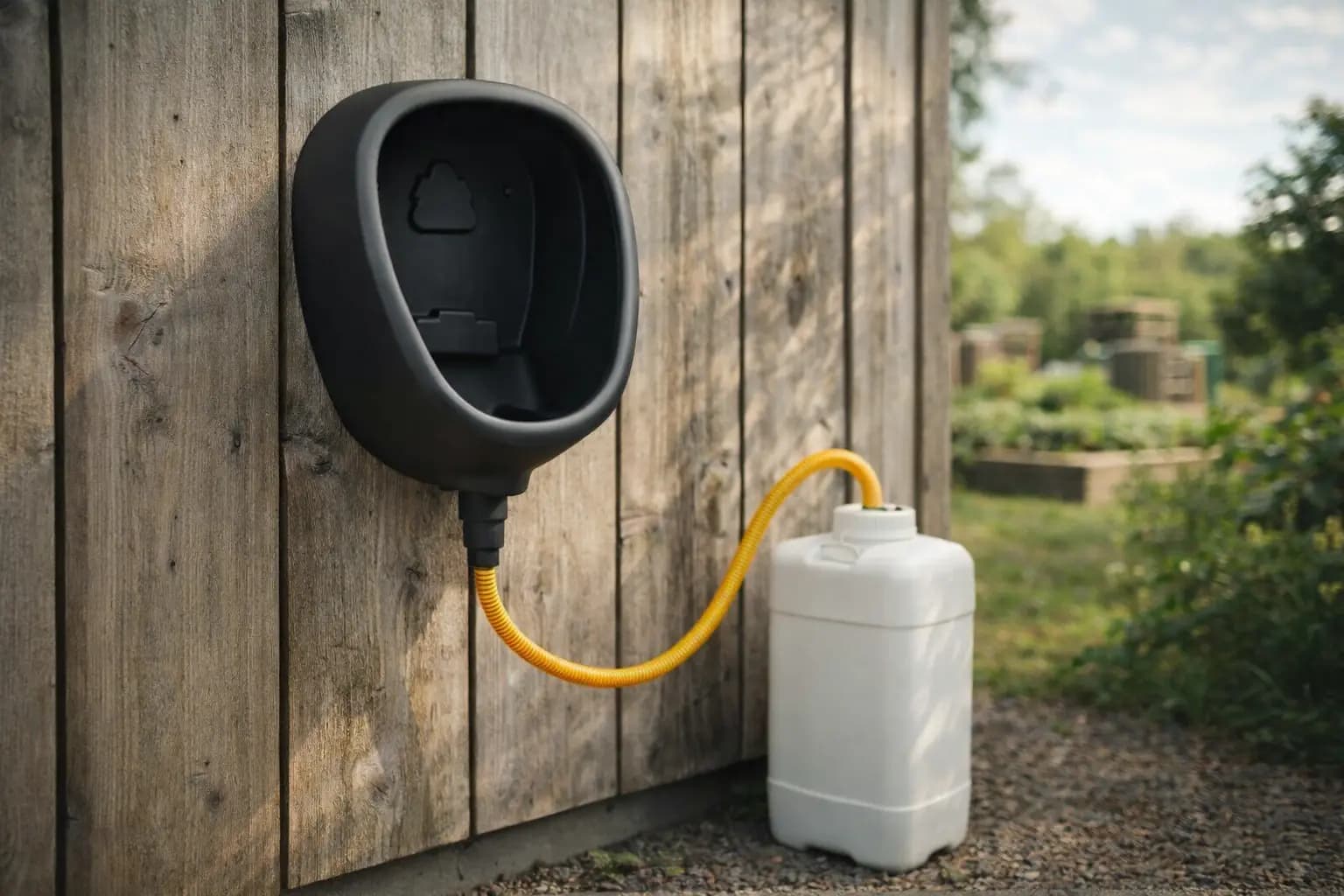
A garden plot with a small house is a format common across Europe under various names: in Germany, it’s called Schrebergarten (a garden house in a collective association), in France – jardins familiaux, in the Netherlands – volkstuinen, in Denmark – kolonihaver, in Poland – ROD (Rodzinne Ogrody Działkowe), in Spain and Portugal – huertos and hortas. The legal frameworks differ, but the basic concept is the same: a plot of six to ten acres, a light house, usually without water and sewage. The most common issue is the toilet: a bucket smells, a chemical toilet is heavy, and connecting to sewage is either not allowed or not possible. Below is how to install a waterless urinal in a garden house so that it works for years and complies with association rules.
What Association Rules Typically Allow
In most countries, the garden association’s charter directly limits the equipment of the house: it should not be suitable for permanent residence, the area is limited (in Germany – up to 24 m² according to the federal law Bundeskleingartengesetz, BKleingG, § 3 Abs. 2), and connection to public sewage is generally not provided. This does not mean a ban on toilets – it means the toilet must operate without plumbing and without sewage discharge. Dry toilets, composting toilets with separate urine collection, and waterless urinals fall into the permitted category almost everywhere.
Why Separate Dry Collection
The main source of odor in a toilet is the ammonia reaction that occurs when urine comes into contact with feces. Separate collection eliminates this reaction: urine goes into one container, feces with peat into another. No biochemistry, just pure physics of flow separation. Trelino, BOXIO, and Kildwick implement this principle in the form of a complete toilet. Pi-Pi is a wall-mounted urinal that can be added to them for standing use.
What You Need for Installation
The minimum set: a Pi-Pi urinal, fixings into the house wall, a collection tank or a 10–20 liter canister, a 32 mm hose section for connection to a stepped fitting Ø24/32/40 mm. A standard garden hose fits without adapters. Installation takes 5–7 minutes, no plumber needed.
Where to Dispose of Collected Urine
Three working options. First: dilute 1:10 with water and water cucumbers, tomatoes, or flower beds – urine contains 88% plant-available nitrogen and 66% phosphorus, making it a complete nitrogen fertilizer. Second: mix with peat 6:1 for a compost heap – nitrogen binds with carbon, preventing odor formation. Third: a buried airtight canister with periodic removal – for those who do not want to deal with composting. All three options comply with association rules, as they do not involve discharge into sewage or groundwater.
Winter Storage
The garden house is usually unheated. Pi-Pi made of LLDPE remains flexible down to −40 °C – the material does not crack in winter, unlike cheap polypropylene counterparts that become brittle around 0 °C. Winter preparation involves one action: drain water from the hose and canister to prevent ice from bursting the container. The urinal itself does not need to be removed from the wall.
What the Board Will Say
Garden association boards – whether the German Bundesverband Deutscher Gartenfreunde (BDG), Polish PZD, or Danish Kolonihaveforbundet – view separate composting toilets as a standard and approved solution. Pi-Pi, combined with a composting toilet or separate canister, falls into the same category. The main checks by the commission are: no sewage connection and no fecal odor on the plot. Separate collection addresses both points.
What Not to Do
Do not connect water to the urinal – Pi-Pi operates waterlessly, which is an advantage, not a limitation, on a garden plot. Do not direct discharge into open ground – even though the nitrogen in urine is valuable as fertilizer, direct discharge without dilution concentrates salts and harms the soil. Do not use chemical disinfectants in the canister – they disrupt the composting of collected urine and are unnecessary with separate collection.
Conclusion
A waterless urinal on a garden plot is a practical solution, tested within the legislation of most European countries and approved by garden association boards. Pi-Pi handles the ‘standing male’ scenario, which quickly fills the liquid section of any composting toilet. Models Standard and Standard Plus with a ventilation port are available, with delivery across Europe in 3–5 business days. For connection to specific models Trelino, BOXIO, or Kildwick, see compatibility pages – they detail how the drainage connects.