Every construction site in the Netherlands is subject to the Working Conditions Act – Arbeidsomstandighedenwet (Arbowet) – and its subordinate Arbobesluit, particularly articles 3.22 and 3.23, which regulate toilets and washbasins for workers. For contractors – general or subcontractors – this is not a manual but a basis for inspection by the Nederlandse Arbeidsinspectie (formerly Inspectie SZW) and for site access through the V&G-plan (Veiligheids- en Gezondheidsplan – Health and Safety Plan). On large projects under a health and safety coordinator, non-compliance with Arbobesluit can lead to a work stoppage rather than a fine. Below is what is inspected and where a waterless urinal meets specific requirements.
Requirements of article 3.22 Arbobesluit
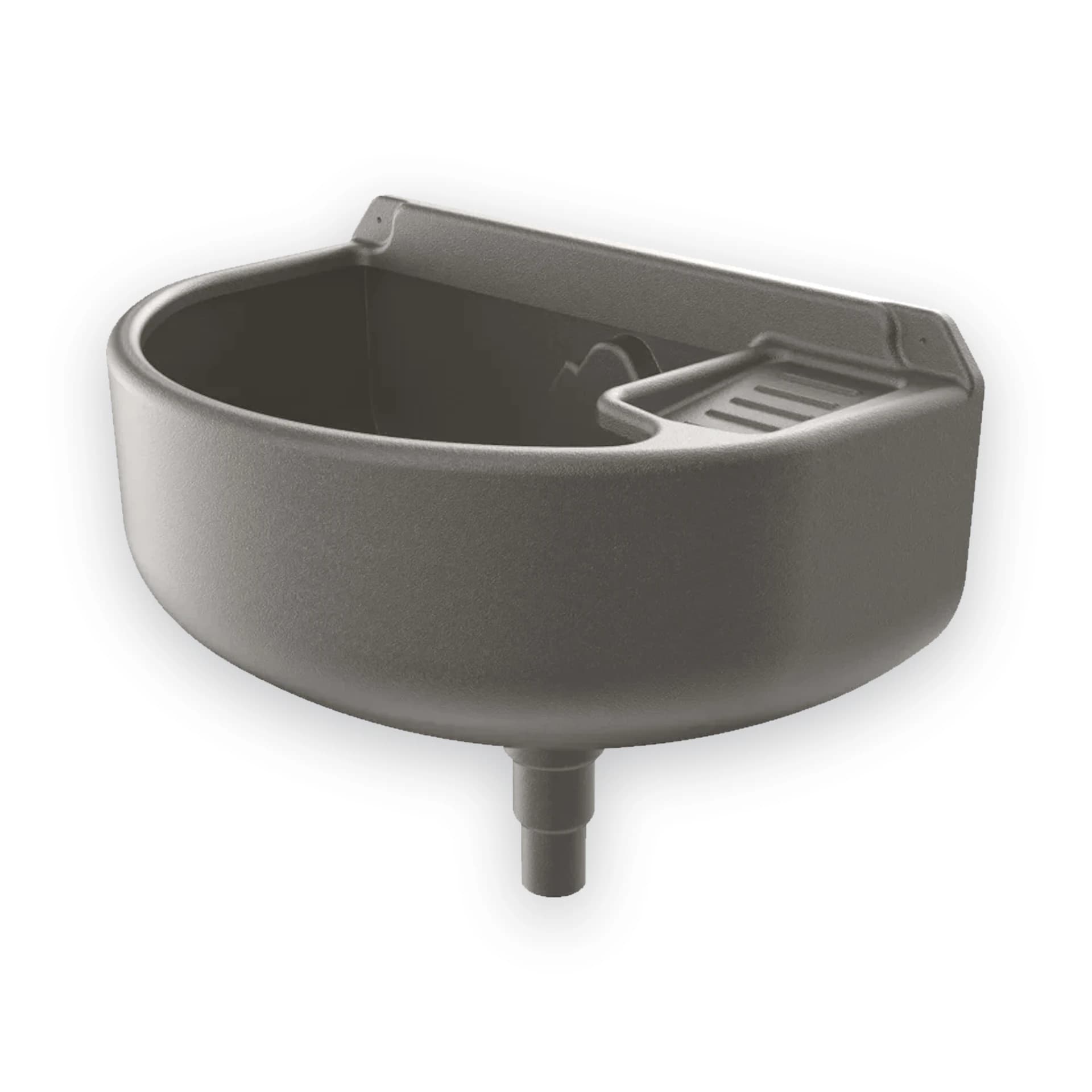
Article 3.22 Arbobesluit mandates employers to provide a sufficient number of toilets separately for men and women, reasonably close to work areas, with ventilation and the ability for hygienic cleaning. Specific calculations are provided in the Arbocatalogus Bouw & Infra industry catalog and Volandis (formerly Arbouw) practical guidelines: one toilet and one urinal per 15 workers is the typical standard for an average construction site. Article 3.23 adds the requirement of a washbasin near the toilet.
On a construction site with temporary or no connection to water and sewage, these requirements are met by mobile construction toilets with a holding tank – the standard from Dixi, Renewi, Toi Toi, Dirix.
Urinal-toilet ratio for a crew
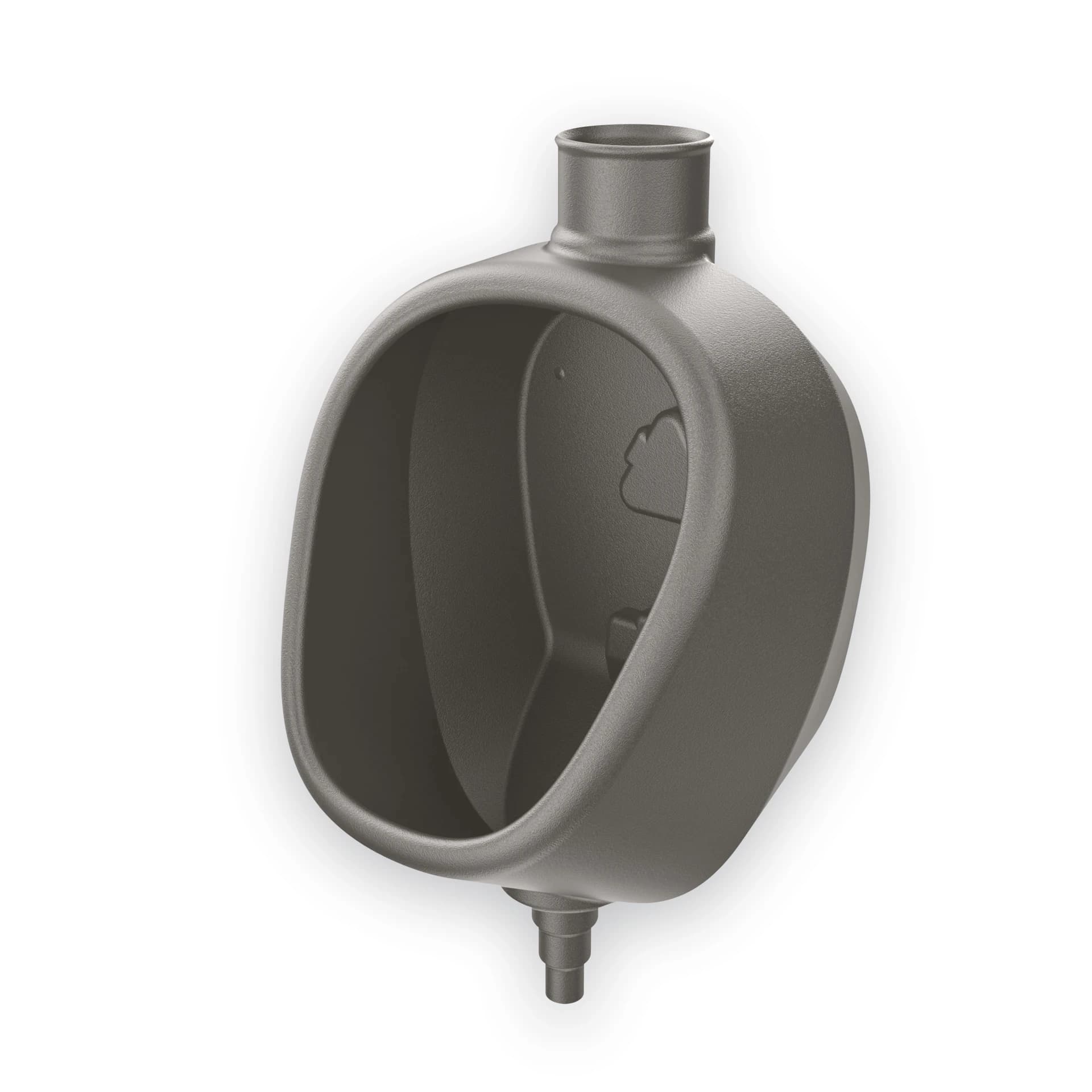
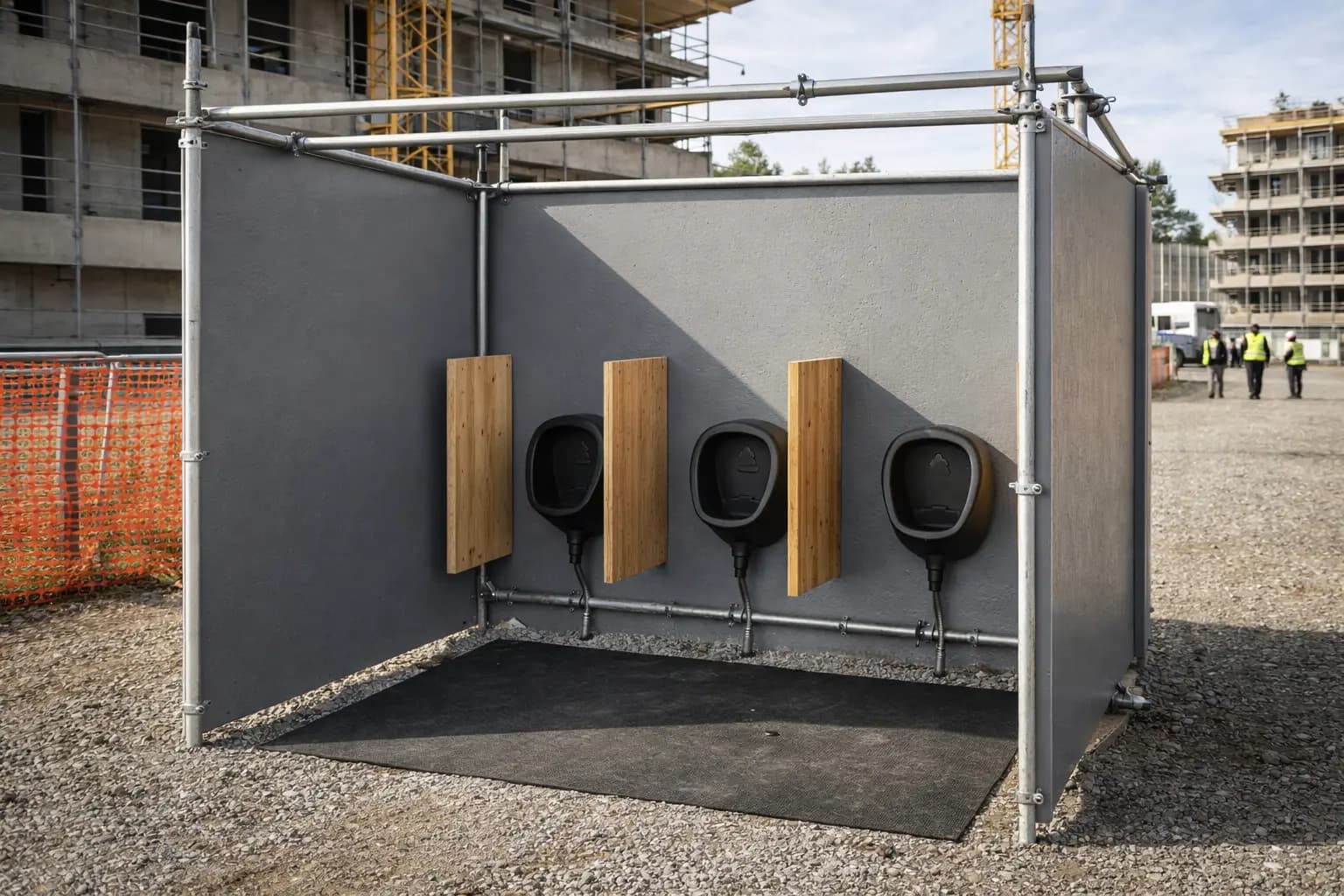
In construction crews predominantly male – typical for framework and concrete work, roofers – it is permissible to replace some toilets with urinals while maintaining the overall calculation according to Arbobesluit. One urinal per 15–20 skilled workers is standard practice. This reduces queues at a single cabin and minimizes time lost during breaks. Pi-Pi is mounted on the wall of an existing construction toilet or inside a sanitary module without plumbing alterations: a stepped connector Ø24/32/40 mm connects to the standard holding tank of any Dutch manufacturer.
V&G-plan and labour inspection check
The V&G-plan, which the subcontractor submits to the coordinator before starting work, includes a section on sanitary conditions. The standard package from Pi-Pi: LLDPE technical passport, REACH/RoHS, photo of the installed urinal, connection diagram to the holding tank. This is sufficient for the V&G-plan and the Nederlandse Arbeidsinspectie dossier during inspection.
Winter operation in the Dutch climate
Winter in the Netherlands is mild compared to Germany or France, but occasional frosts of −10 °C…−15 °C are regular, especially in the provinces of Drenthe, Friesland, and Overijssel. Polypropylene (PP) of budget urinals becomes brittle around 0 °C – this is a material property, not a defect of a specific manufacturer. LLDPE Pi-Pi retains elasticity down to −40 °C. For a rental company, this means a urinal that survives winter in storage and five transportation cycles, not just two.
Compatibility with Dixi, Renewi, Toi Toi, Dirix
The Dutch rental market for construction toilets is consolidated: Dixi, Renewi (formerly Shanks), Toi Toi, and regional operators Dirix, Dusseldorp. All use a holding tank with a 32 or 40 mm inlet. The Pi-Pi stepped connector (24/32/40) connects to any without adapters. For a contractor operating a mixed fleet, this means one part number for spare parts.
Logistics in the Benelux
Delivery from Pi-Pi to the Netherlands takes 3–5 working days via standard carrier (Estonia – Netherlands via Poland and Germany). For project orders of 100 units or more, direct delivery to the contractor’s warehouse or construction site is possible.
What the urinal does not do
Pi-Pi is a component of the sanitary block, not a complete solution for Arbobesluit. The regulations also require a toilet, washbasin, lighting, and cabin heating. Pi-Pi addresses one point – separate urine collection for men standing. The rest is provided by the construction toilet itself and the company responsible for waste removal.
Conclusion
Arbowet and Arbobesluit are the framework within which every construction site in the Netherlands operates. Pi-Pi is tailored to this framework: the material does not crack in winter, the connector is compatible with the Dixi, Renewi, Toi Toi, and Dirix fleet, and documents are ready for the V&G-plan and labour inspection. Installation takes 5–7 minutes. For calculating the number of urinals for a specific construction site and project pricing from 100 units, request a quote – we will send a calculator and supply terms.