
Why Pi-Pi Plastic is Frost-Resistant and Doesn’t Crack
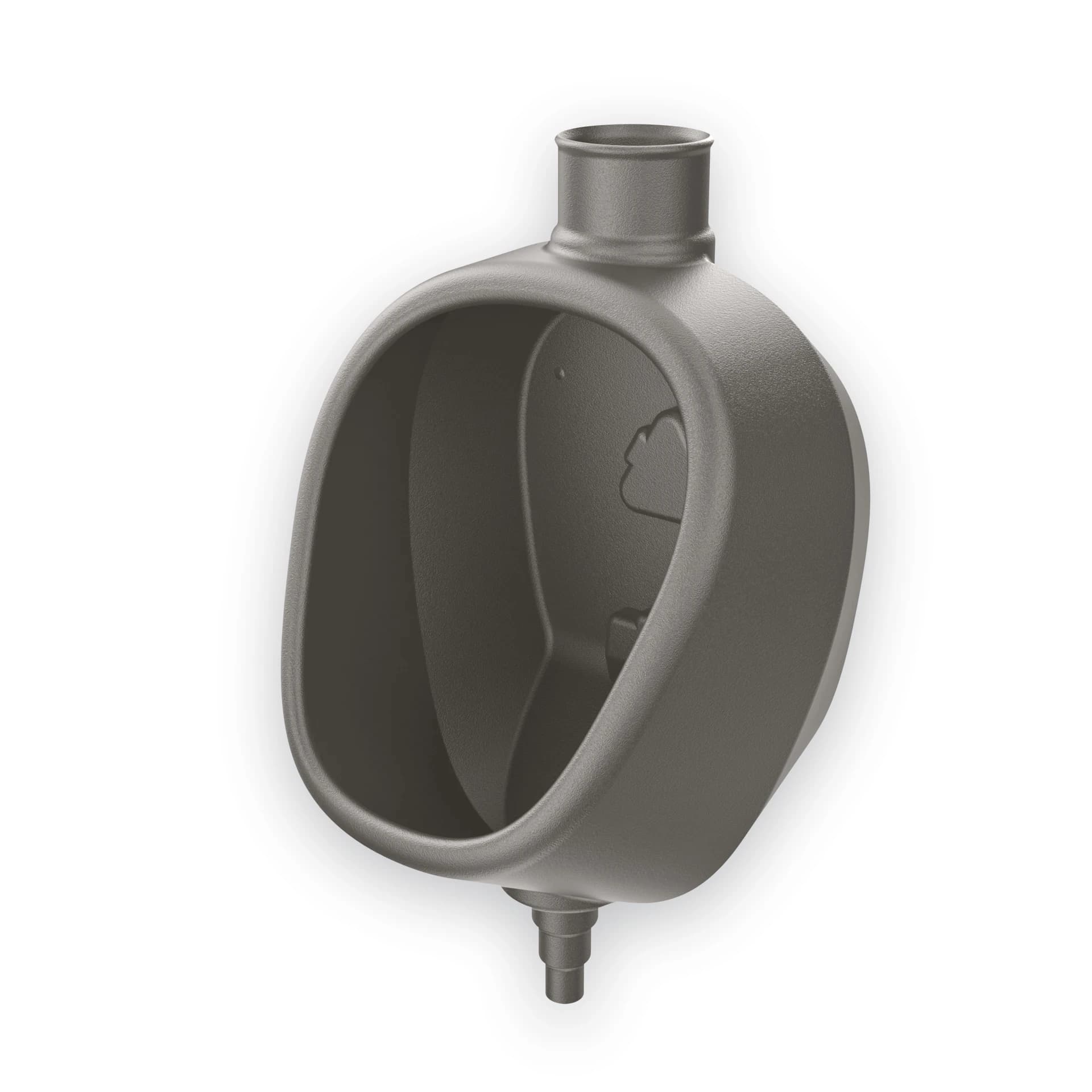
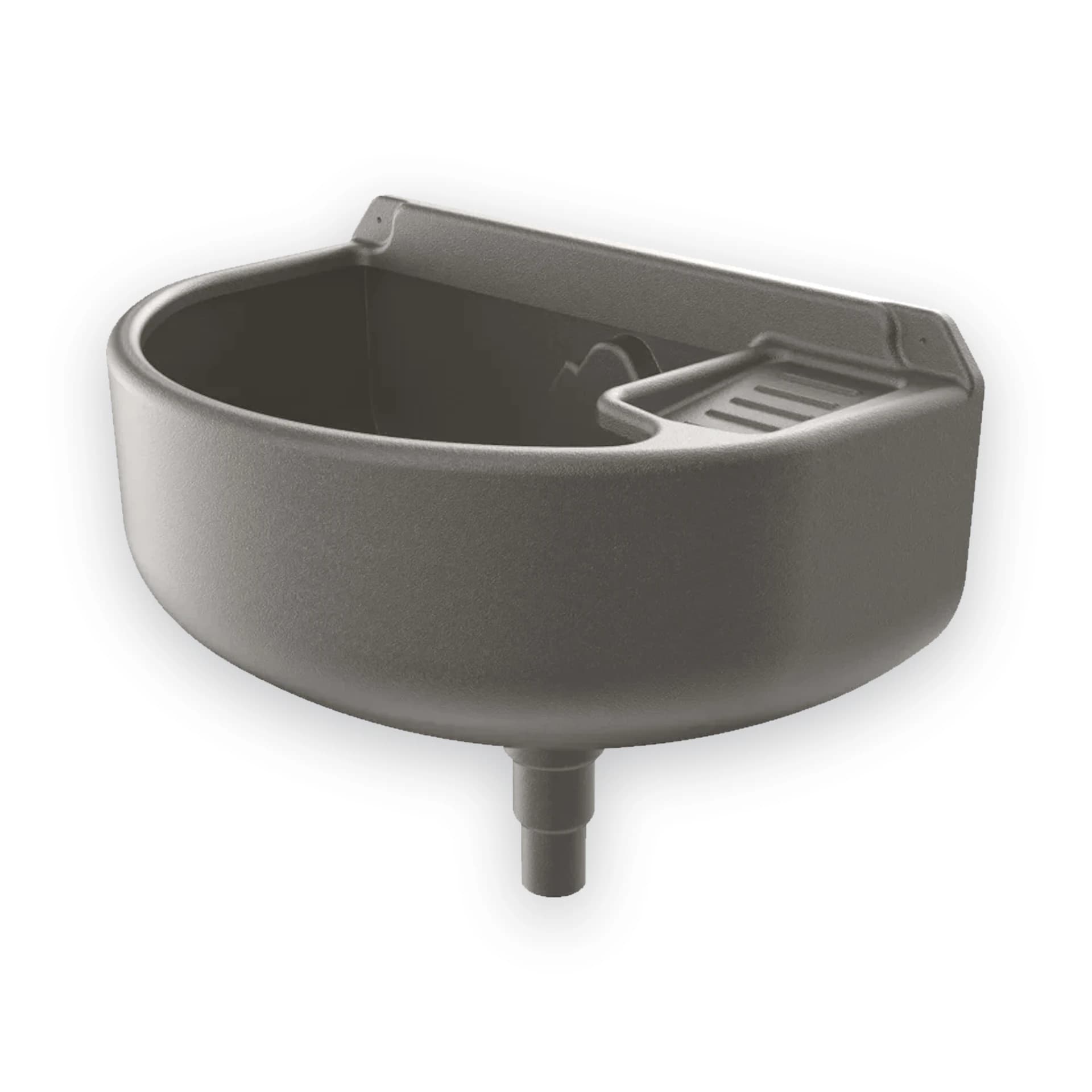
A sink or urinal in a garden cottage must survive winter without cracking and withstand accidental impacts during installation and transport. That’s exactly what Pi-Pi is made for: moulded from LLDPE using rotational moulding – impact-resistant, frost-resistant down to −40 °C, flexible, not brittle.
What makes LLDPE so tough
LLDPE – linear low-density polyethylene – stays flexible even in frost: it absorbs impacts and doesn’t crack where more rigid plastic would shatter in the cold. This is exactly what a sink and urinal need when they have to winter in an unheated cottage or allotment.
Mounting
Mounts on the wall without a plumber and special tools – suitable for both garden cottages and cabins. A drill, screwdriver, or screwdriver may be required.
Temperature range
Technical working range of the material. In practice: retains impact resistance in winter in an unheated cottage and withstands summer heat up to +60 °C.
Wall thickness
Solid seamless wall without welds or joints. Uniform thickness of 4–5 mm across the entire surface – no built-in weak spot.
Product weight
Light to carry and wall-mounted in 5–7 minutes, no special tools needed.
Comparison of LLDPE and PP Materials: Advantages and Disadvantages
Polypropylene (PP) is the most common alternative in this price segment. At first glance, PP seems comparable: rigid, chemically resistant, cheaper as a raw material. But as soon as the urinal or sink faces winter outdoors or in an unheated garden cottage, the difference becomes decisive.
Linear Low-Density PolyethyleneLLDPE · Pi-Pi | PolypropylenePP | |
|---|---|---|
Impact Strength in Frost | High – the material retains elasticity, does not break upon impact | Low – polypropylene homopolymer (standard for rotomoulding) becomes brittle at temperatures below 0 °C, breaking upon impact or drop |
UV Resistance | Polyethylene chain contains no tertiary hydrogen – the weak point where photodegradation begins | Tertiary hydrogen in the PP chain – the point where photooxidation begins at the same level of stabilisation |
Suitability for Rotomoulding | Optimal – wide processing window, uniform melting, seamless monolithic wall | Used, but requires precise temperature control. Narrower processing window increases the risk of surface defects |
Chemical Inertness | Complete – neutral to ammonia, uric acid, and chlorine-containing disinfectants | Good – prolonged contact with concentrated chlorines may cause surface degradation |
Behaviour Under Impact or Vandalism | Deforms without breaking – bends and returns to shape | Brittle fracture – cracks without prior deformation |
Behaviour under the sun over time | Polyethylene retains flexibility; embrittlement under UV occurs more slowly | Embrittles outdoors sooner at a comparable level of stabilisation |
A seamless wall doesn’t break
Pi-Pi is made using rotational molding (rotomolding). LLDPE powder is loaded into a closed mold, which rotates on two axes in an oven at 280–310°C. The melt evenly covers the entire inner surface, forming a solid seamless wall 4–5 mm thick without welds or joints. No weld means no built-in weak spot: that’s why the urinal and sink are so resistant to impacts during installation and transport and last so long in everyday use.
Rotomoulded, not injection-moulded
Pi-Pi is produced using rotational molding (rotomolding), not injection molding. These are two different processes: rotomolding provides a seamless wall 4–5 mm thick across the entire surface of the product. In injection molding, the melt is injected under pressure into the mold, and where its flows meet, weld lines can form – areas that may be weaker than the rest of the wall. In rotomolding, the melt is not injected into the mold but gradually covers it from the inside, so the wall forms entirely without welds or seams.
Compliance and Certifications
Pi-Pi is manufactured in Estonia (EU). Below are details on labeling, material, and procurement documents.
CE Marking
Pi-Pi wall-mounted waterless urinals and sinks are supplied without the CE mark. For tender documentation, we provide a manufacturer’s statement: material, origin (EU, Estonia), and technical specification. This is a product description, not a declaration of conformity under the EU directive.
LLDPE Material
Products are made using rotational molding from purchased LLDPE (linear low-density polyethylene); the material is supplied already colored according to the specified RAL number. Material identification relies on the purchase specification. We do not have the supplier’s technical data sheet or batch analysis certificate – we do not issue certificates for the material and do not document physical characteristics. If your supplier qualification procedure requires such a document, please consider this in advance.
REACH
The urinal and sink are articles in the sense of Article 3(3) of the REACH Regulation (EC) 1907/2006. Article 33 obliges the supplier of an article containing a substance from the candidate list (SVHC) in a concentration above 0.1% by mass to provide the recipient of the article with available information sufficient for safe use – at least the name of the substance; such information is provided to the consumer upon request, free of charge, and within 45 days of receiving the request. We comply with this procedure. We do not make our own statement about the content of SVHC: we do not have the supplier’s compound declaration on the candidate list, so we do not assert the presence or absence of such substances.
RoHS
The RoHS Directive 2011/65/EU applies only to electrical and electronic equipment, so it does not apply to the waterless urinal or the sink: there are no electrical or electronic components in the products. We do not issue a RoHS compliance declaration – it cannot be issued for a product outside the scope of the directive. If RoHS is a point on the tender checklist, it refers to a standard not applicable to this product.
Application in Workplaces
EU Directive 89/654/EEC on the minimum requirements for safety and health at workplaces and national rules on sanitary facilities (ASR A4.1 in Germany, corresponding standards in other countries) are addressed to the employer and set requirements for the premises, not the product. ASR A4.1 compliance at the product level does not exist – neither for us nor for any other manufacturer. The Pi-Pi sink is a passive bowl without water supply, tank, and pump: it does not replace an equipped handwashing station where running water is required by standards. The assessment of a specific workplace is the responsibility of the employer.
Have Questions?
Got a question? Message me – I’ll help you pick the right model for your garden shed or toilet setup and sort out delivery. I respond within one business day.

Mart Tamm
Account Manager for United Kingdom
Have questions about products, pricing, or partnership? Email me directly – I’ll respond personally.