Every construction site in Spain is subject to Real Decreto 1627/1997 on minimum safety and health requirements at construction sites, as well as the general Real Decreto 486/1997 on workplaces. Annex IV of Real Decreto 1627/1997 regulates sanitary facilities: toilets, changing rooms, rest areas. For contractors – general or subcontractors – this is not a guidebook but a basis for ITSS (Inspección de Trabajo y Seguridad Social – Labor and Social Security Inspection) checks and for site access through ESS (Estudio de Seguridad y Salud – Safety Study) and PSS (Plan de Seguridad y Salud – Safety Plan) documents. Non-compliance with Annex IV risks halting work. Below is what is checked and where the waterless urinal meets the requirements.
Requirements of Annex IV Real Decreto 1627/1997
Annex IV, Part A, Clause 15 of Real Decreto 1627/1997 obligates the contractor to provide a sufficient number of toilets and sinks separately for men and women, reasonably close to workplaces, with ventilation and the possibility of hygienic cleaning. Annex V to Real Decreto 486/1997 specifies the practical calculation: one toilet per 25 workers and one sink per 10. Industry recommendations from FLC (Fundación Laboral de la Construcción) and relevant unions (CCOO Construcción, UGT-FICA) specify that on sites predominantly male, some toilets can be replaced with urinals.
On sites with temporary or no sewage connection, these requirements are met by mobile sanitary modules with a holding tank – standard from Sebach Iberia, Algeco, EuroBlock, Kodi.
Calculation of Urinals and Toilets
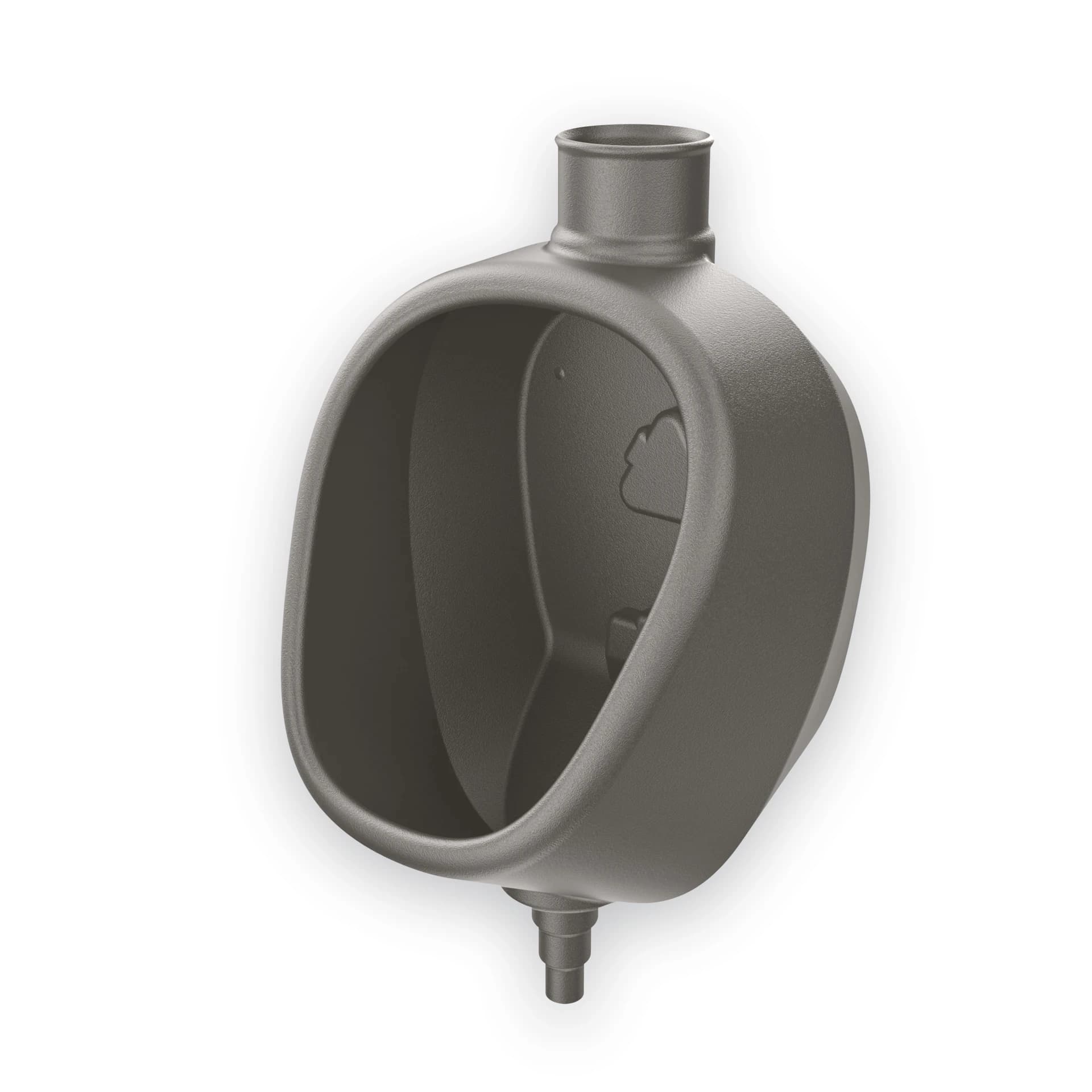
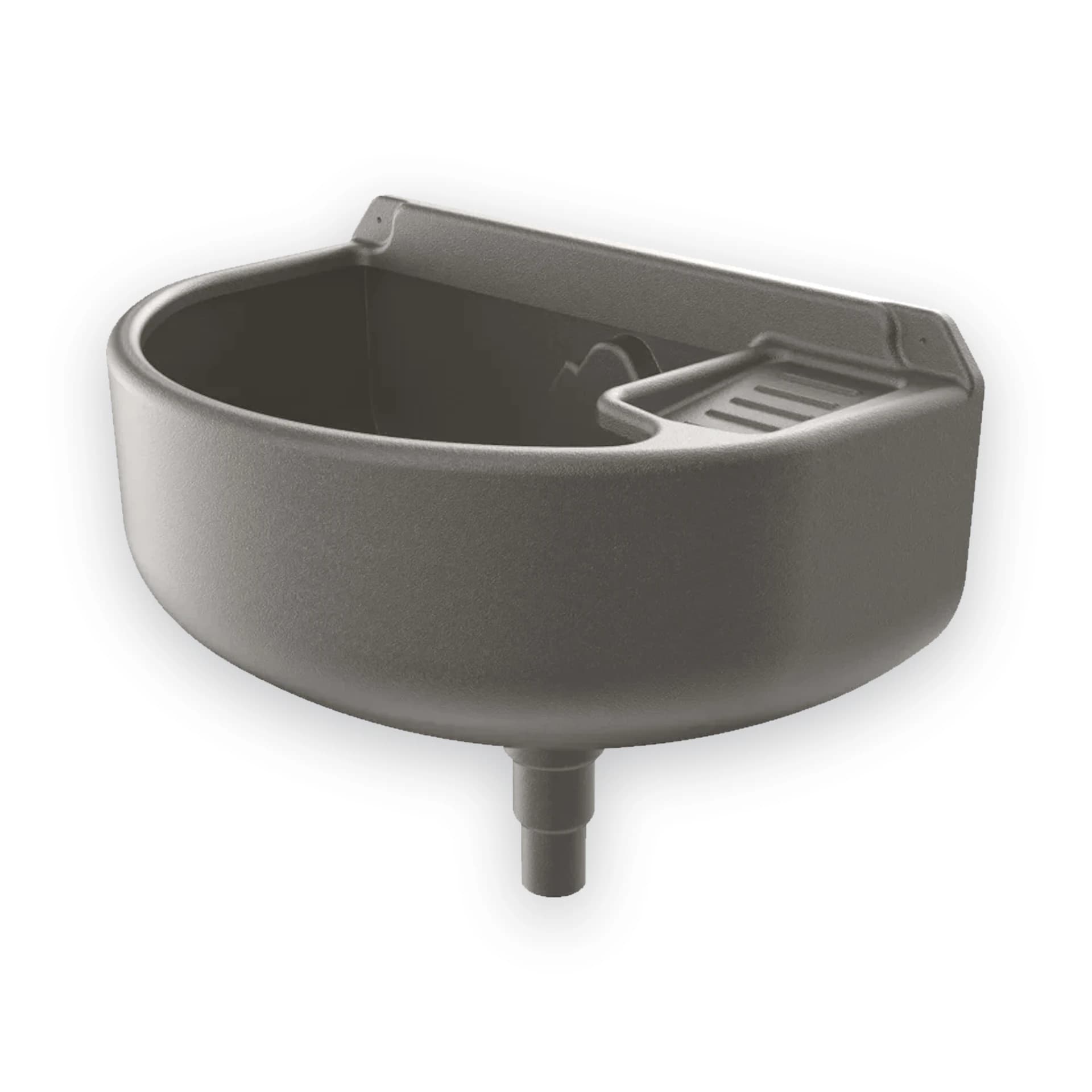
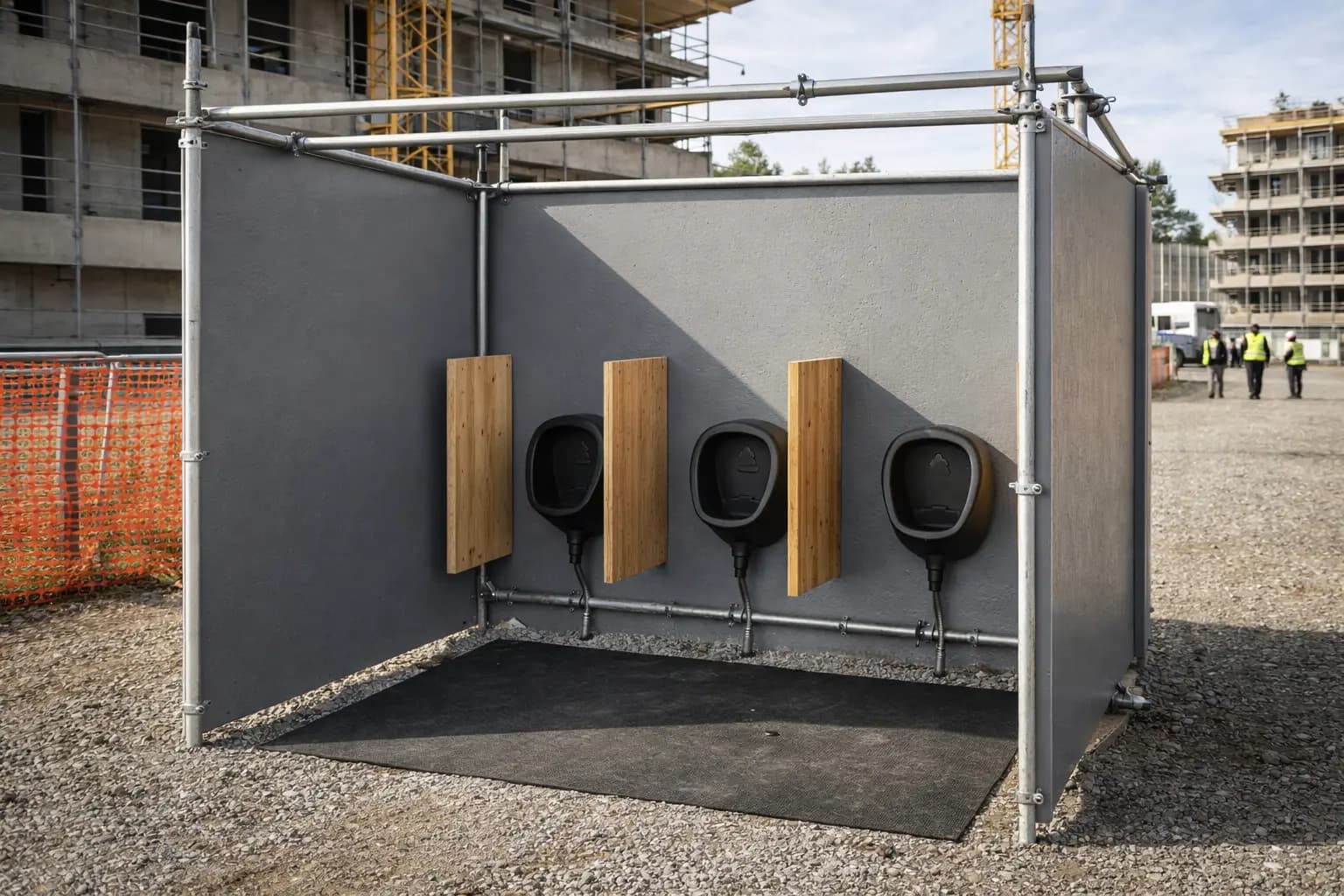
In crews predominantly male – typically in frame assembly, masonry, roofing – one urinal per 15–20 workers handles peak loads and reduces break-time queues. Pi-Pi is mounted on the wall of an existing mobile toilet or inside a site cabin without plumbing modification: a stepped outlet Ø24/32/40 mm connects to a standard tank from any Spanish manufacturer.
ESS, PSS Documents and ITSS Inspections
ESS, prepared by the project organization before work begins, and PSS, developed by the contractor based on it, include a section on sanitary facilities. The standard package from Pi-Pi: technical sheet on LLDPE, REACH/RoHS, photo of installed urinal, connection diagram to the tank. This is sufficient for PSS and ITSS inspection.
UV Resistance for Southern Regions
A limiting factor for Spain is ultraviolet. Construction sites in Andalusia, Murcia, the Valencian Community, Extremadura, and the Canary Islands operate in summer at +35…+40 °C in the sun. A polypropylene urinal with surface coloring degrades in 1–2 seasons: color fades, surface becomes rough, dirt accumulates in micro-cracks, graffiti is hard to clean. LLDPE Pi-Pi contains 2.5% carbon black by weight – UV resistance does not depend on the surface layer.
Frost Resistance for Northern and Mountain Regions
In the Pyrenees, Cantabrian Mountains, Sierra Nevada, parts of Castile and León, and Aragon, construction sites operate in winter at −10…−20 °C. Polypropylene becomes brittle around 0 °C. LLDPE retains elasticity down to −40 °C. For a contractor with a fleet operating across the peninsula, this is one material for all climate zones.
Compatibility with Sebach Iberia, Algeco, EuroBlock
The Spanish market for mobile sanitary module rentals is represented by companies like Sebach Iberia, Algeco, EuroBlock, Kodi, and regional operators. All use tanks with 32 or 40 mm inlets. Pi-Pi’s stepped outlet (24/32/40) connects without adapters.
Delivery to the Iberian Peninsula
Delivery from Pi-Pi (Estonia) to Spain takes 7–10 business days via standard carrier. For project orders of 100 units or more, direct delivery to the contractor’s logistics warehouse or site in Madrid, Barcelona, Valencia, Seville is possible. For the Canary Islands, logistics are quoted separately.
What the Urinal Does Not Cover
Pi-Pi is a component, not a complete solution for Annex IV. The regulation requires a toilet, sink, lighting, and heating in the site cabin. Pi-Pi covers one point – separate urine collection for men standing.
Conclusion
Real Decreto 1627/1997 is the framework within which every construction site in Spain operates. Pi-Pi is tailored to this framework: the material does not degrade from UV in Andalusia and does not crack in winter in the Pyrenees, the outlet is compatible with Sebach Iberia, Algeco, and EuroBlock fleets, documents are ready for PSS and ITSS inspection. Installation takes 5–7 minutes. For calculations for a specific site and project pricing from 100 units, request a quote – we’ll send a calculator and supply terms.