The French portable toilet rental market is made up of national operators and dozens of regional companies from Brittany to Provence. The purchase price of a urinal looks like the main line in the calculation, but over a long horizon the cost of ownership is set by how often units are replaced, how often cabins are pumped out, cabin downtime in peak season and logistics between the depot and the site. Below is a line-by-line breakdown for a rental company with 100 or more cabins.
Six lines of cost
A full calculation covers: the purchase price; how often the unit has to be replaced under intensive rental use; the cost of a replacement (the unit plus the technician’s labour); the number of service visits per year; cabin downtime in peak weeks (summer festivals, the grape harvest, large construction sites); and depot logistics, including storing spare urinals. Comparing on one line alone – the purchase price – tilts the result towards the cheapest option, whether or not it is cheaper to own.
PP and LLDPE in the French climate
France has four broad climate zones: oceanic (Brittany, Normandy), continental (Grand Est, Burgundy), Mediterranean (Provence, Languedoc) and mountain (the Alps, the Pyrenees, the Massif Central). A fleet working across more than one of them meets both strong sunlight and winter frost.
Cold. Unfilled polypropylene homopolymer has its glass transition around 0 °C, and near and below that point its impact strength drops markedly. Impact-modified PP copolymers keep considerably more toughness in the cold, so what matters is the grade on the material datasheet.
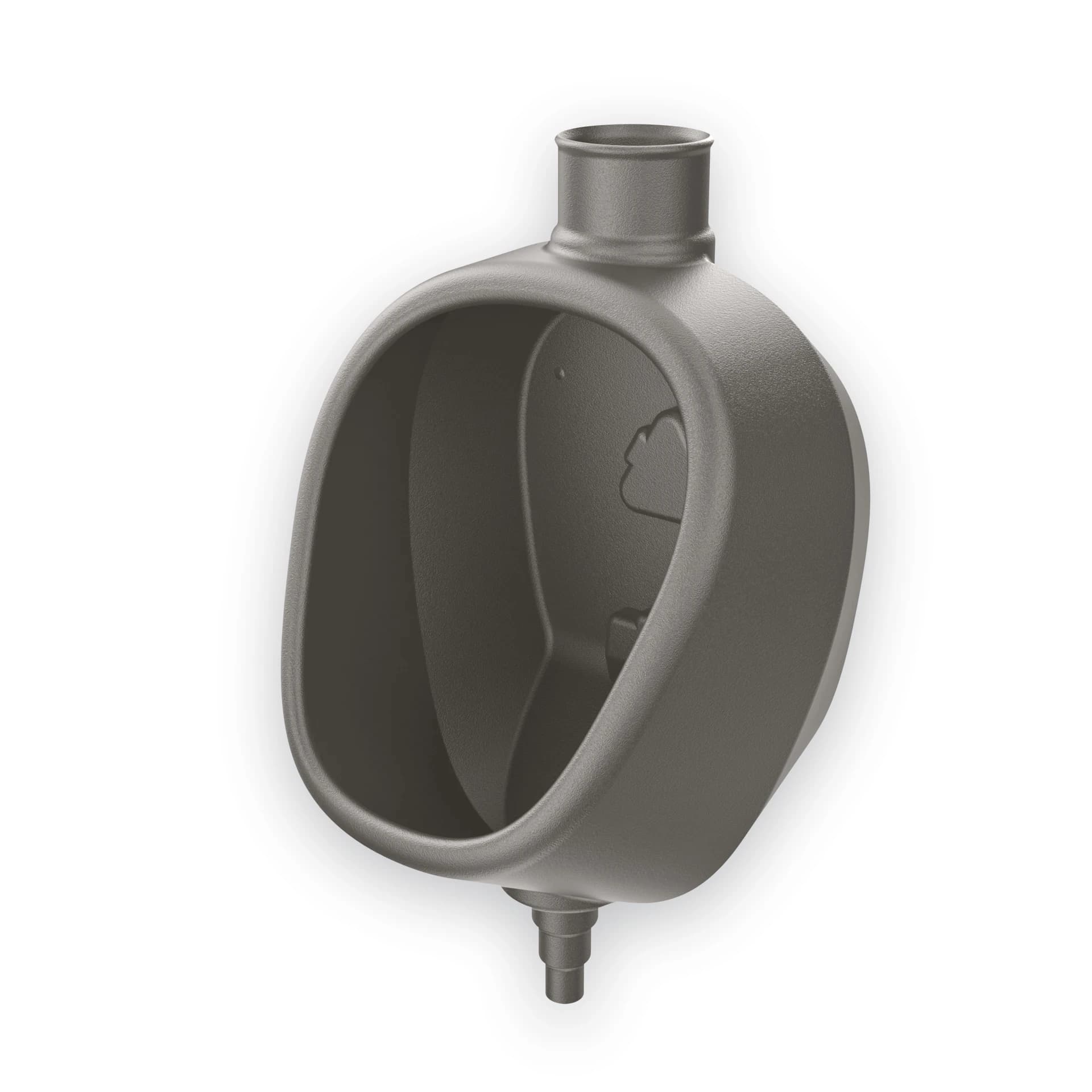
Sunlight. Without stabilisers, polypropylene oxidises under UV faster than polyethylene. In a finished part, the stabilisers and pigment matter as much as the base polymer; Pi-Pi urinals are made from UV-stabilised LLDPE.
Standard and Standard Plus stay flexible and impact-resistant down to −40 °C. How far that changes the replacement rate in your fleet depends on how often units travel, how they are stored and the climate on your sites, so the calculation is best run on your own service log.
How to work it out for your depot
What you need to calculate is not the price tag but the replacement line over the whole ownership horizon. Start with the figures you know for certain: the purchase price of the unit, the cost of a technician’s visit in your regions (higher in Île-de-France, lower elsewhere), the hourly labour rate and the period you are planning the fleet for. Everything else depends on how many times the unit will need replacing over that period. Within the replacement line, the urinal itself is the smaller part: most of the cost comes from the technician’s visit and labour.
Pump-out
On French sites, pump-out is often scheduled once a week on a busy construction site and once every two weeks at events; the actual schedule depends on the contract and the load. If the urinal drains into a separate container rather than the cabin tank, the tank fills more slowly and the interval between pump-outs can grow.
Downtime in peak season
Replacing a urinal in March, before the season starts, is a planned job. The same replacement in July, at the height of the festival and construction season, can cost rental days on that cabin. That is why the service log should record not only how many replacements there were, but when.
Logistics between depot and regions
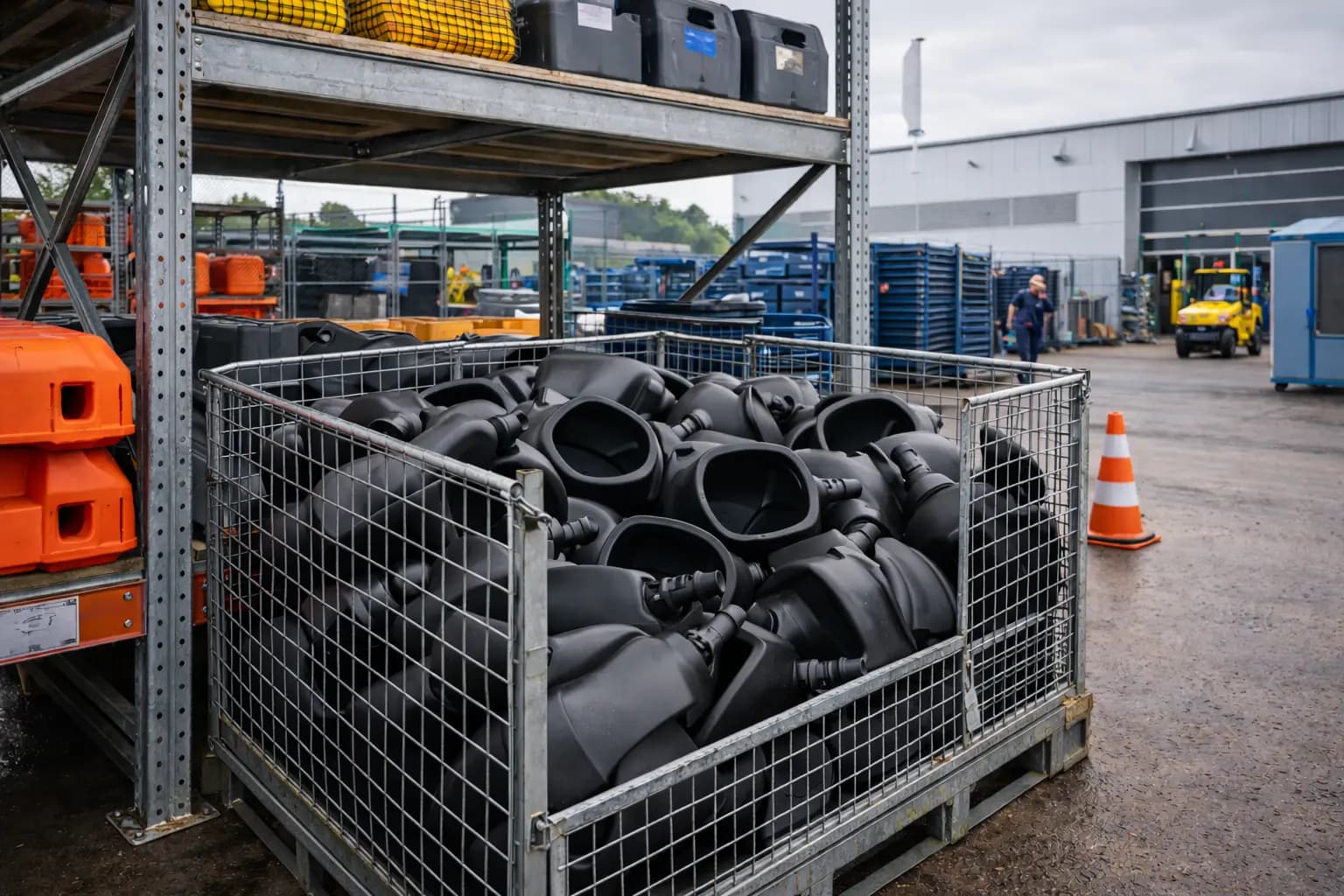
A French rental company usually keeps spare urinals at the depot. The fewer replacements you make, the slower that stock is used and the less capital sits on the shelf. Delivery from Pi-Pi (Estonia) to France takes 7–9 days.
Compatibility with a mixed fleet
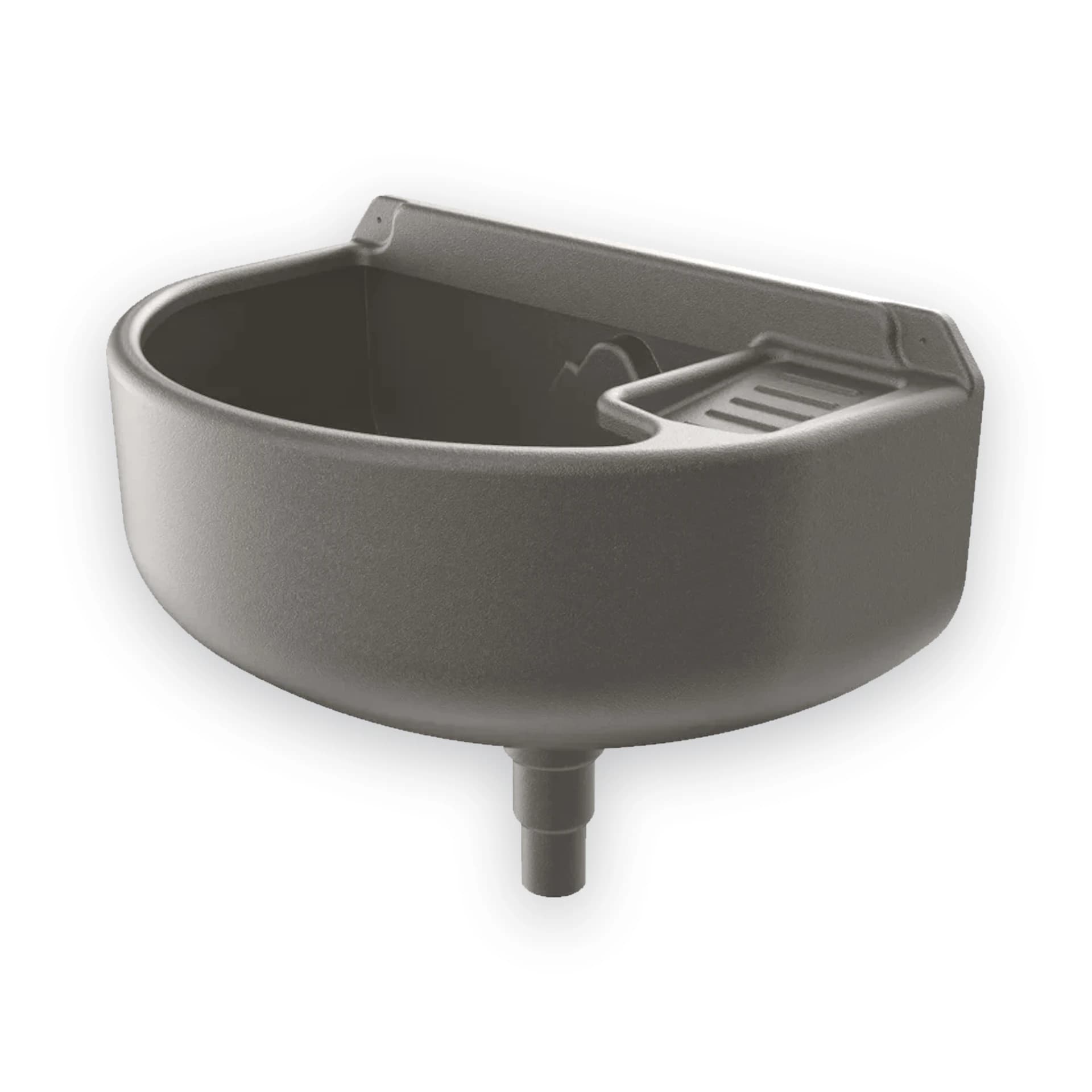
The stepped Pi-Pi outlet, Ø24/32/40 mm, fits hoses and fittings of these diameters, so in a mixed fleet one model often suits cabins from different manufacturers. Check the inlets on your own cabin tanks first – a sample lets you test the fit before a large order.
When the cheapest option pays
On one-off projects, after which the cabin is written off, the replacement line is close to zero and the purchase price decides. For that kind of use, Pi-Pi is more product than you need.
Conclusion
For a rental company working for more than one season, the difference in cost of ownership comes down to the replacement line: units, technician visits, their labour and cabin downtime in peak season. Take the replacement rate from your own service log and compare. Pi-Pi sends a sample so you can test it in your own depot conditions before a large order; on a wholesale order, the cost of the sample is deducted from the quote. For project volumes, Pi-Pi prepares individual supply terms.