Out on the plot your hands are forever caked in soil: you weed a bed, prick out some seedlings, dig up the potatoes – and then you trudge back to the house to rinse them under the hose or a watering can, trailing mud all along the path. Yet there is usually water on a plot already: a rain butt for watering, a jerrycan, a tank by the greenhouse. All that’s missing is somewhere to feed that water in and somewhere for the dirty water to go. Here’s how to set up a proper spot to wash your hands and rinse your produce right by the beds – with no mains water, no drainage and no plumber.
Why an Ordinary Sink Won’t Work on the Plot
A ceramic or steel sink is built for two pipes: a water supply and a drain into the sewer. On a plot you have neither, and nobody is going to run them across the vegetable patch just to rinse a carrot. So people end up washing the soil off ‘with a can over a basin’: pouring with one hand, washing with the other, gritty water running down over their feet.
A waterless sink comes at it from the other end. It isn’t tied to a mains supply or to drainage – it plugs into the water source you already have on the plot. In short: the water is yours, from a butt or a tank; the drain is ours.
How It Works
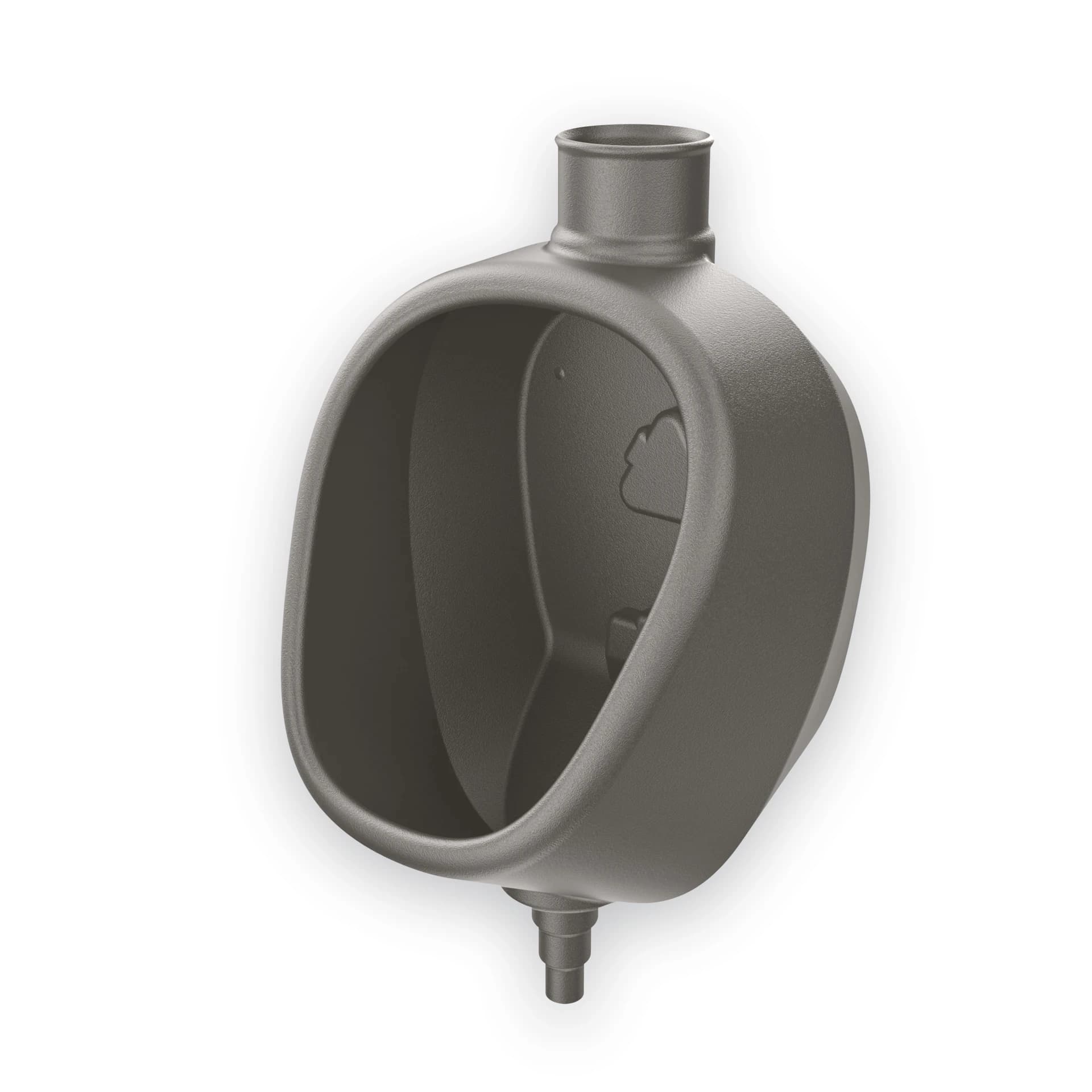
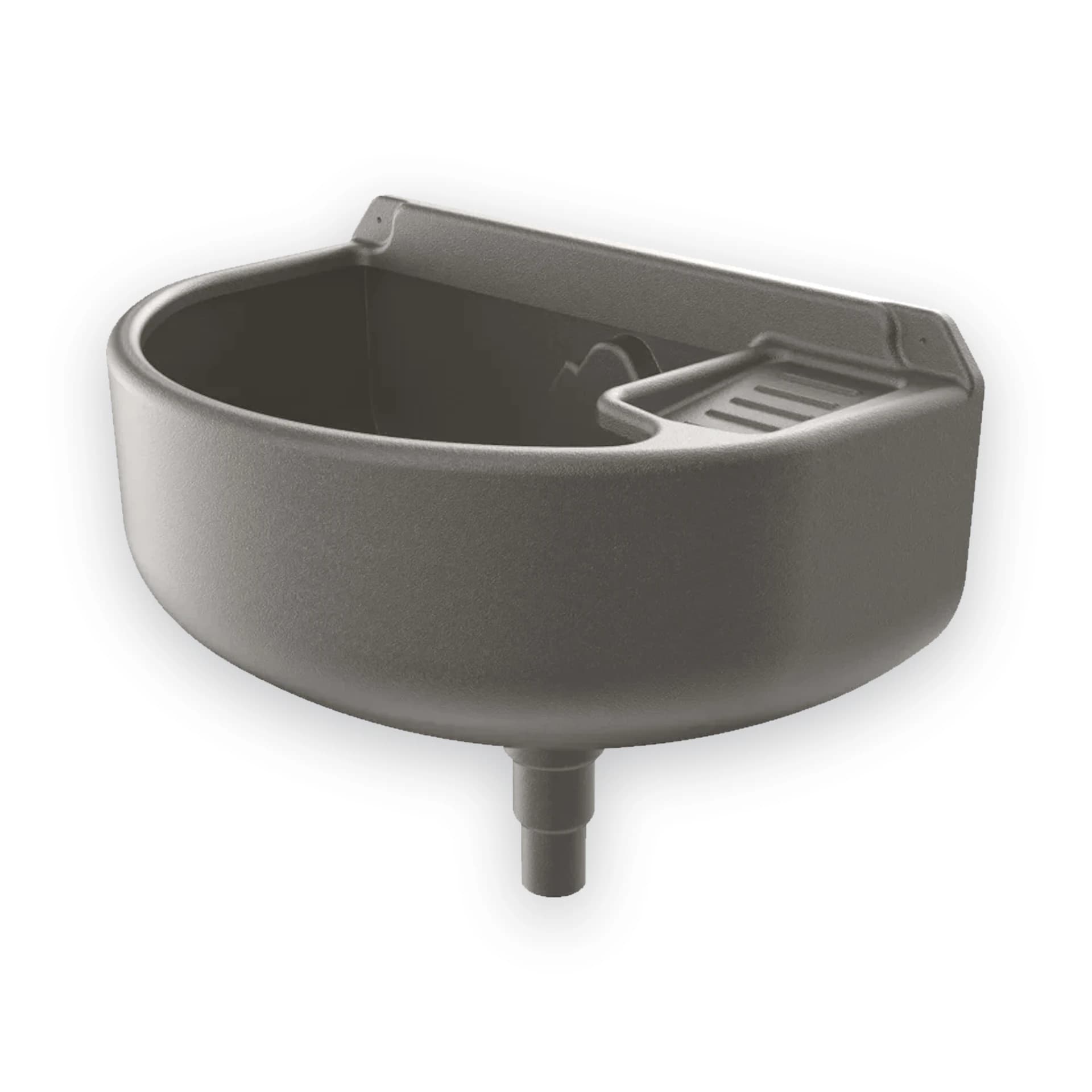
The Sink is a wall-mounted LLDPE bowl weighing about 1.4 kg. It hangs on screws on the wall of a shed, a greenhouse, a fence, or on a post next to the beds. Underneath there’s a stepped 24/32/40 mm outlet: fit a hose of the right diameter and drop it into a bucket, a jerrycan or a tank. The water runs down by gravity, on its own. No pump, no wiring, no trap – there’s nothing here to break.
‘Where’s the Water From, If There’s No Tap?’
On a plot a water source is nearly always within reach: a rain butt for watering, a tank by the greenhouse, a jerrycan on the bench. Stand any of those containers beside or above the bowl – with a simple little tap, or just scoop from it with a mug. The bowl doesn’t dictate where the water comes from: its job is to take your stream, let you wash, and carry the dirty water away below.
That separation is exactly what gives you the freedom. Want warm water in spring or autumn? Pour in some that’s been warmed in the sun or from the kettle. Need more? Put out a bigger butt. The sink will go along with it.
‘Where Does the Dirty Water With the Soil and Grit Go?’
Down, through the wide outlet and hose, into whatever container you’ve put underneath: a bucket, a jerrycan, a tank. There’s no narrow trap and no pump to clog up with sand and clay – the path is simple and wide, so water with soil in it passes straight through and drops into the bucket. Once it’s full, carry it out and tip it wherever your hand-washing water usually goes. If it’s just water with soil, no soap and no household chemicals, you can generally pour it onto a bed or the compost – as far as your local rules on draining water on a plot allow. Want to hold back the coarser sand and clay? Fit a removable coarse-strainer mesh at the outlet so the sediment doesn’t end up in the jerrycan.
‘Can I Rinse Vegetables and Greens in It?’
Yes – rinsing the soil off root veg, onions or a bunch of greens right by the bed is handy, so you’re not carrying it all indoors and leaving trails of mud. One caveat: this is not a drinking or food tap. The sink only supplies and drains water; its quality is entirely down to your source – the butt, the tank or the jerrycan. Washing off caked soil is what it’s for; everything beyond that rides on your water and is your responsibility. Vegetables and greens that will be eaten are best given a final rinse at home with clean water.
‘Won’t It Crack in the Shed Over Winter?’
A shed usually isn’t heated, and that’s a worry of its own: ceramic cracks in the frost, and cheap polypropylene turns brittle at around 0 °C already. The Pi-Pi bowl is made of LLDPE – a material that stays flexible in the cold down to −40 °C, so an empty bowl winters happily in an unheated shed. One important caveat about the water: the bowl itself doesn’t mind the frost, but the water in the butt, the tank and the hose needs to be drained for winter – frozen water will split any container. The sink makes no promise of working with water in it in a hard frost; the point is that empty, it takes the winter in its stride.
A Passive Sink or a Station With a Tank and Pump
There are ready-made wash stations: a cistern up top, a pump, water ‘like from a tap’. That’s a different product for a different job, and it needs an electricity supply you won’t find at the far end of the plot. A passive sink is simpler: you supply your own tank and drain it for winter, and there’s nothing in it to break or freeze. If you want pressurised water from a built-in cistern, get a station; if you want a dependable way to wash the soil off your hands and drain the dirty water where there’s neither a pipe nor a socket, get the passive bowl.
On a plot with an outhouse, composting or separating toilet, a sink like this sits right next to it – so you can wash your hands afterwards without going back into the house.
Where to Hang It and Which to Get
The best spot is by the greenhouse door, on the shed wall or on a post next to the beds, so the hose reaches the bucket and the water butt stands close by. The straight wall-mounted Sink suits a flat wall; if it’s easier to make use of a corner of the building, the same range includes the corner Sink Corner.
In Short
To wash the soil off your hands and rinse your produce on the plot, you don’t need mains water or drainage. A wall-mounted bowl, your own butt or jerrycan of water, a hose into a bucket below – that’s enough, and the dirty water with soil in it, provided there’s no soap or household chemicals in it, can usually go back onto a bed – where that’s allowed. It’s a passive design with no pump and no trap: nothing to break, and in the frost the LLDPE doesn’t crack the way ceramic or brittle plastic does.
Take a look at the Sink Corner to gauge the dimensions and the outlet for your hose. Still have questions about fitting it on your particular plot – ask about installation, and we’ll help you work out how to hang it and what to use for the drain.