A waterless urinal works without a cistern and without a water connection, so caring for it differs from a conventional ceramic one. The questions are the same whether you own a garden plot, buy units for cabins, or run a construction site: how to fix it to the wall, how to clean it, where the odour comes from, and what to do in winter. Below is a step-by-step guide to installing, cleaning and maintaining the Pi-Pi urinal, without unnecessary theory.
Installation in Minutes
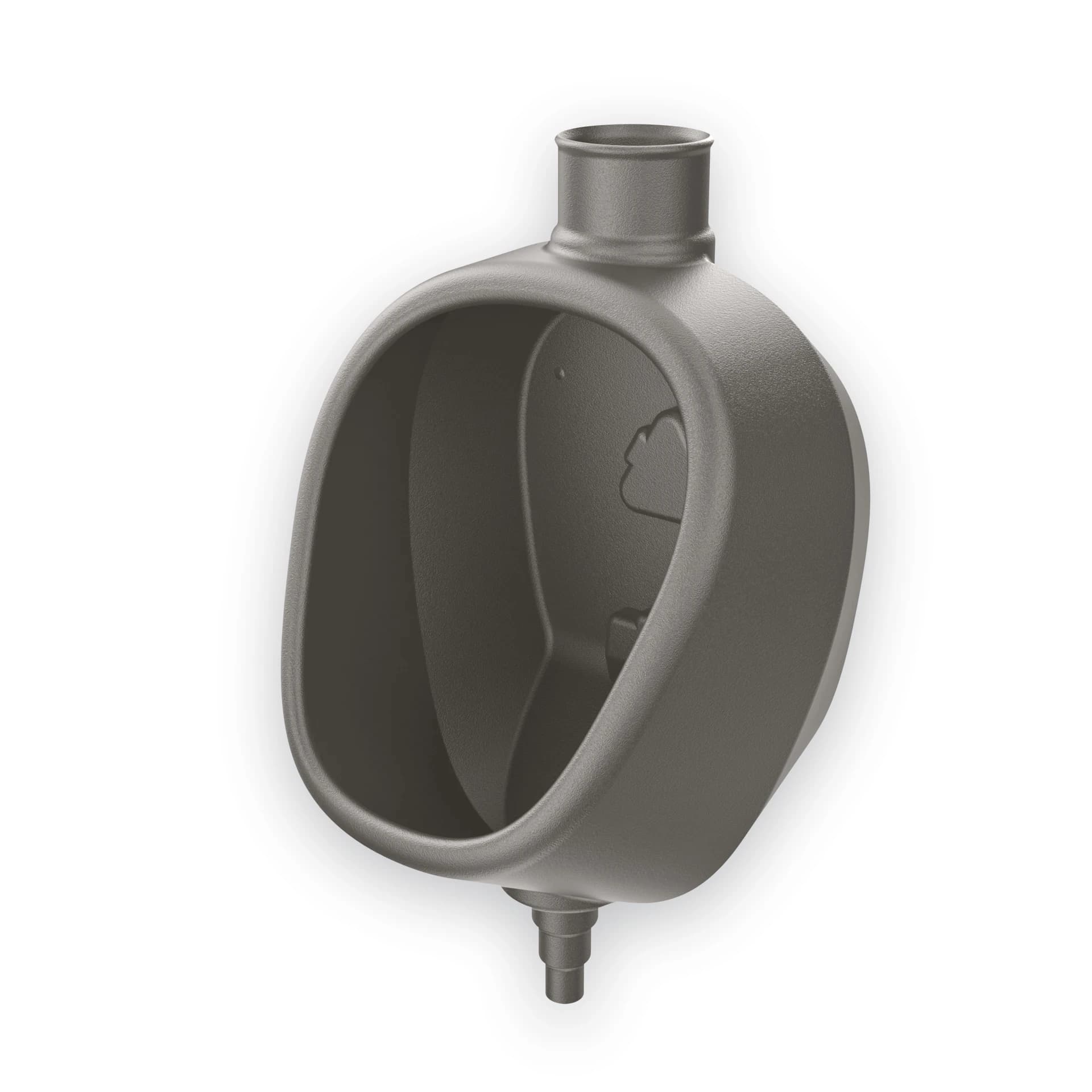
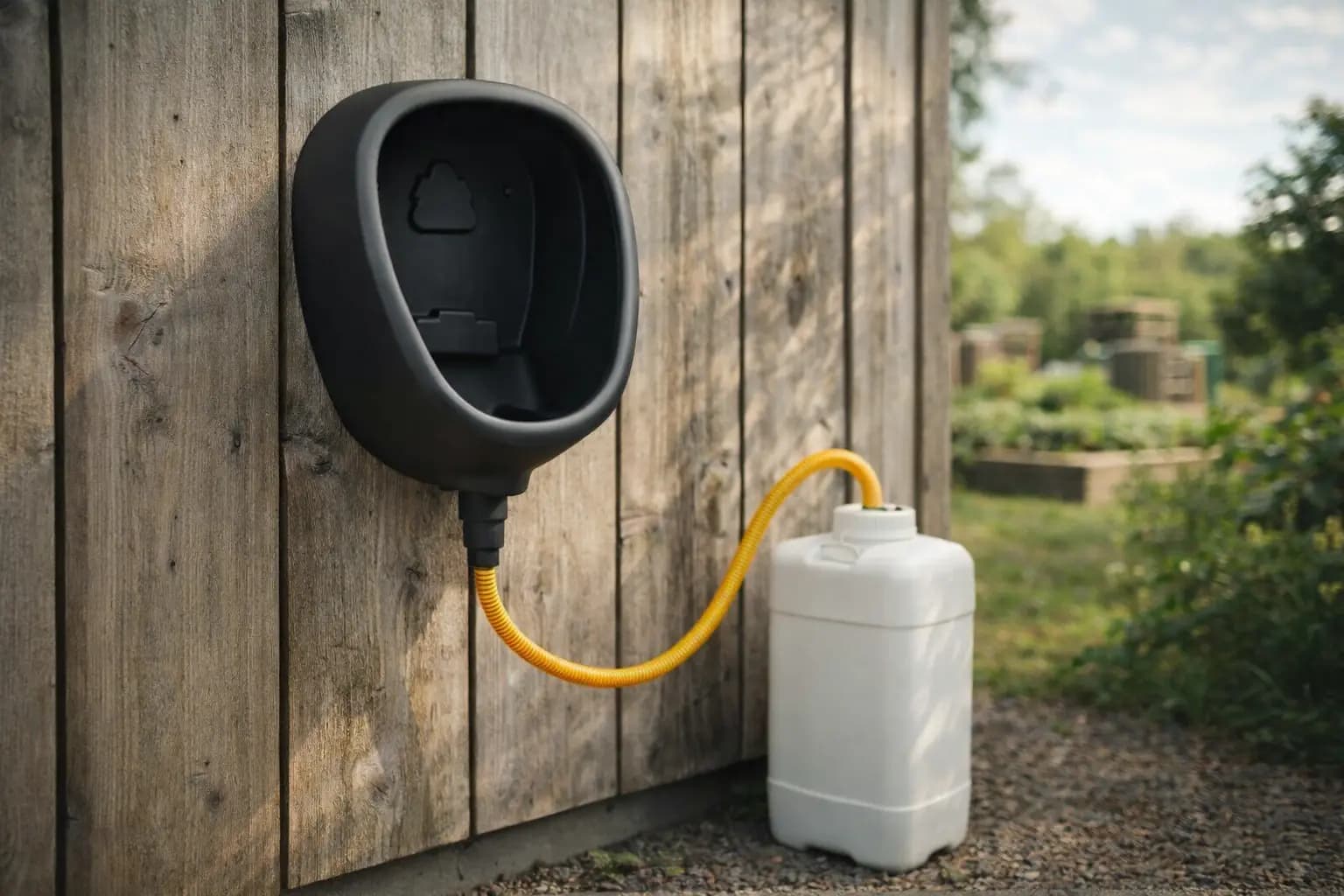
Pi-Pi is moulded from LLDPE and weighs about 1.4–1.5 kg, so it holds on any wall – timber, concrete, the wall of a mobile cabin, or the OSB panel of a garden shed. The procedure: mark the holes through the rear lugs, drive in the screws (into concrete via a wall plug), and hang the body. The mounting height follows the main user’s height, usually 60–65 cm from the floor to the lower edge.
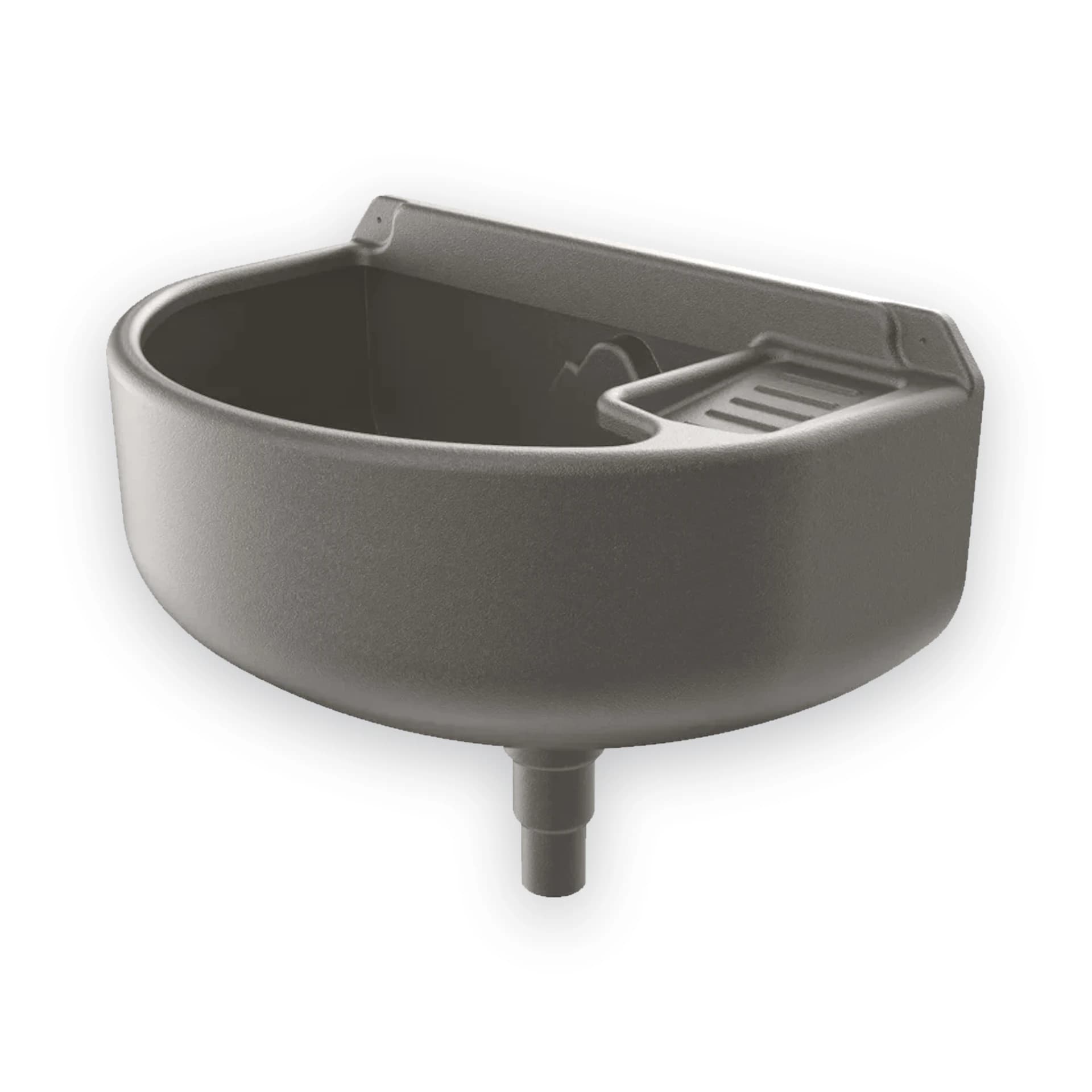
The drain connects to the stepped outlet Ø24/32/40 mm. An ordinary garden hose or corrugated pipe of the matching diameter slips on without adapters and runs into a 10–20 litre canister, the cabin’s shared tank, or a drain. The whole installation takes 5–7 minutes and needs no special tools – just a screwdriver or drill-driver. There is no water to connect: by design the urinal runs dry.
Daily Cleaning Without Water
The LLDPE bowl is smooth and non-porous, so dirt does not work into the surface. For daily care it is enough to wipe the bowl with a damp cloth or, if water is nearby, rinse it from a bottle or watering can. Only a little water is needed – this is not a pressure flush, just rinsing droplets off the walls.
Do not use abrasive powders or stiff brushes: they leave micro-scratches that then trap residue. A soft sponge or cloth is enough – smooth polyethylene cleans easily.
Weekly Cleaning and Tackling Scale
Once a week (more often with heavy use) it is worth cleaning the bowl and the top of the outlet with a limescale remover. An ordinary household sanitary cleaner or a citric acid solution works: it dissolves the mineral scale that causes the characteristic odour. Apply the cleaner, leave it for a few minutes, then rinse off with a little water.
Odour in a waterless urinal almost always comes not from the bowl itself but from dried urine salts in the outlet and canister. That is why rinsing the outlet weekly matters more than cleaning the bowl. The Standard Plus model with a Ø70 mm ventilation port additionally vents the assembly and reduces the risk of stale odour in a closed cabin.
Maintaining the Drain and Canister
Empty the canister or tank as it fills – into compost, a drain, or the sewer depending on the site. After emptying, rinse the canister with water: the main odour source is the residue on its walls, not the fresh liquid. Once a month, check the hose for kinks and blockages: the stepped outlet is designed for free flow, and a blockage usually forms in the hose rather than in the bowl.
Do not pour chlorine or strong disinfectants into the canister if the contents go to compost – they kill the breakdown process. For hygiene, a water rinse and periodic citric acid treatment are enough.
Winter Storage
LLDPE stays flexible down to −40 °C, so the urinal itself copes with the cold in winter and does not need to be taken off the wall. The winter risk is not the body but the water in the hose and canister: when it freezes it expands and can split the container. Before the frosts, drain the hose and canister dry. The Pi-Pi body withstands a range from −40 °C to +60 °C without removal or covering.
What Not to Do
Do not connect water to the urinal – it runs dry, and that is its advantage, not a limitation. Do not clean with abrasives – the smooth surface cleans with a soft sponge. Do not pour aggressive chemicals in if the drain goes to compost. Do not ignore the outlet and canister when hunting for an odour source – the bowl is almost always clean, and it is the residue in the drain path that smells.
Conclusion
Caring for a waterless urinal comes down to three simple things: tool-light mounting with no plumber, regular cleaning of the bowl and outlet with mild products, and draining the water from the path before the frosts. The Standard and Standard Plus models with a ventilation port are equally simple to maintain. Choose a model and place an order in the urinals catalogue.