The Bulgarian portable toilet rental market includes construction sites in Sofia and along the Black Sea coast, summer festivals, agricultural work, and municipal events. Operators earn from the turnover of their fleet: the longer a unit stays on-site without servicing and the less downtime it has, the higher the margin. A waterless urinal is a component that directly impacts both metrics. Below is how to add it to your fleet and what it changes in the economics.
Where the Urinal Saves in the Rental Model
A standard portable cabin with a tank combines male and female use into one reservoir. The tank fills up faster, meaning the vacuum truck is dispatched more often. Each dispatch in Bulgaria involves fuel, driver time, and disposal fees at treatment facilities. A separate waterless urinal diverts the main share of liquid from the common tank: men use the urinal, and the cabin with the toilet fills up much slower.
The result for the operator: fewer pump-outs, less water used for rinsing, and longer intervals between servicing a single point. For a fleet of dozens of units, this is direct savings on service logistics – a cost that usually eats up a large part of the operational margin.
Compatibility with Any Cabins in the Fleet
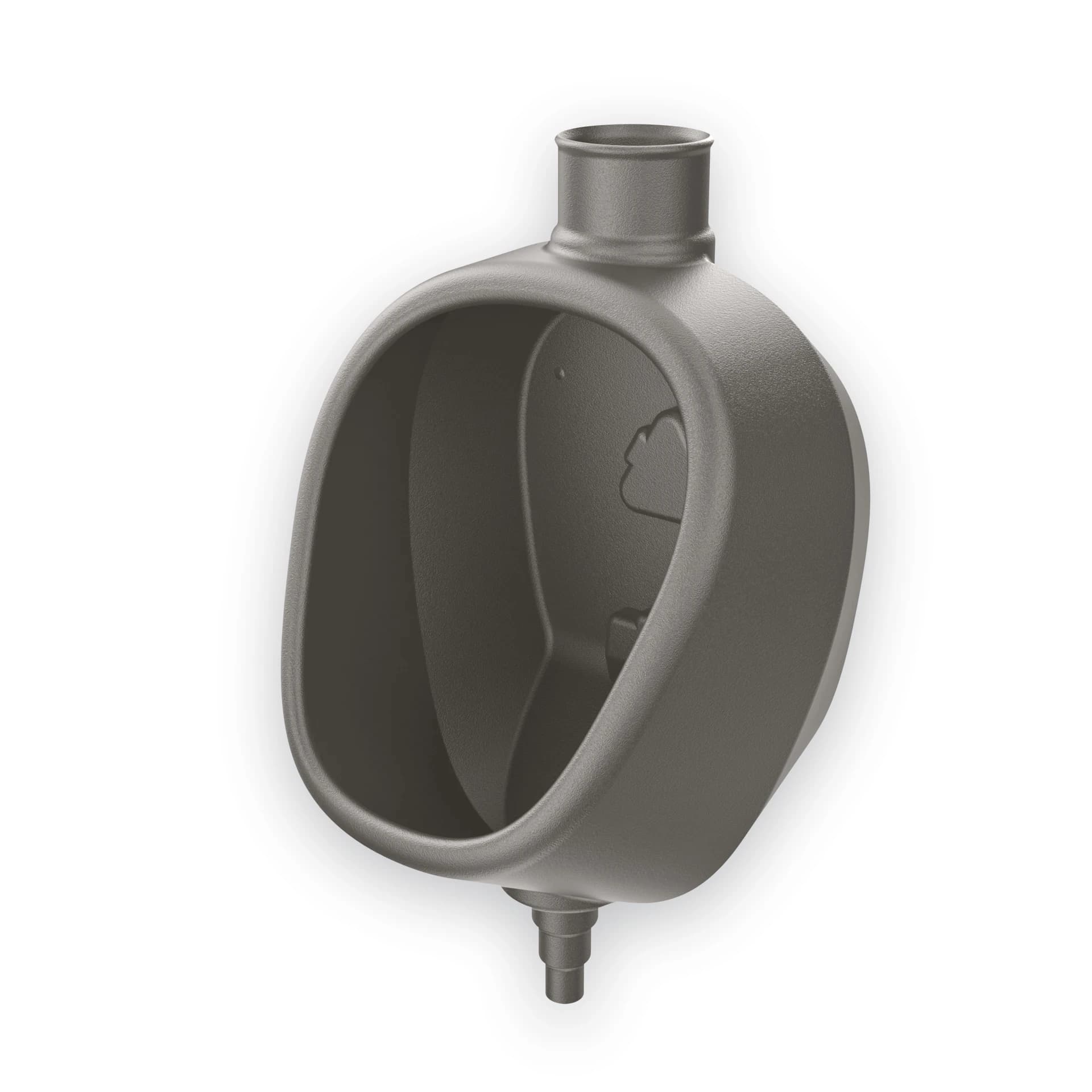
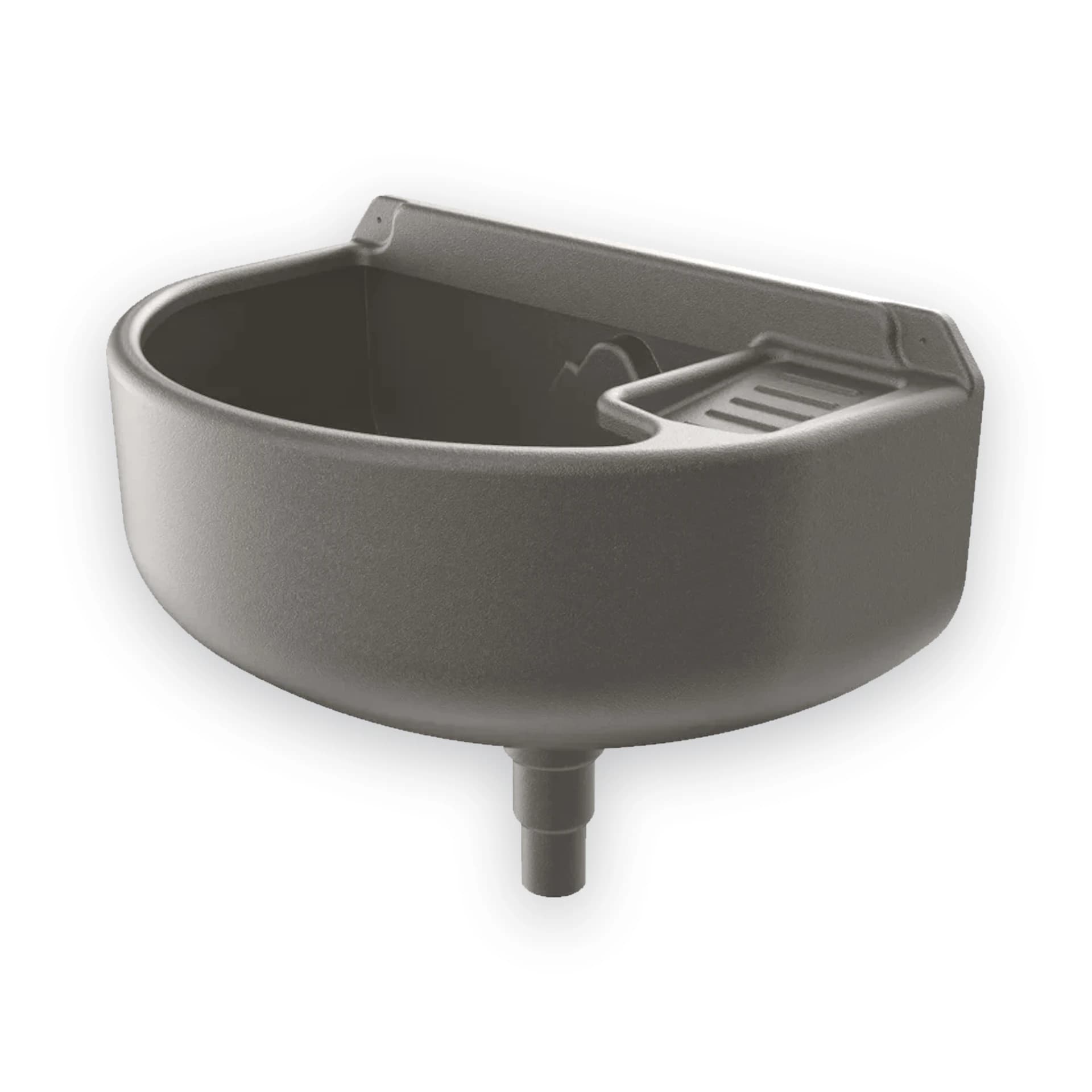
The main practical question for an operator with a mixed fleet: will the urinal fit what is already on-site? Pi-Pi mounts on the cabin wall without cutting into existing plumbing. The stepped outlet Ø24/32/40 mm connects with a regular hose or canister without adapters and fits cabin models from various manufacturers – Chinese, Polish, Italian.
This means there’s no need to purchase special cabins ‘for the urinal.’ The unit is added to the existing fleet: on the wall, drain to a canister or the common tank, 5–7 minutes of work per unit, no special tools required. Installing Standard or Standard Plus with a Ø70 mm ventilation port does not require cabin re-equipment.
Material in Intensive Rental Conditions
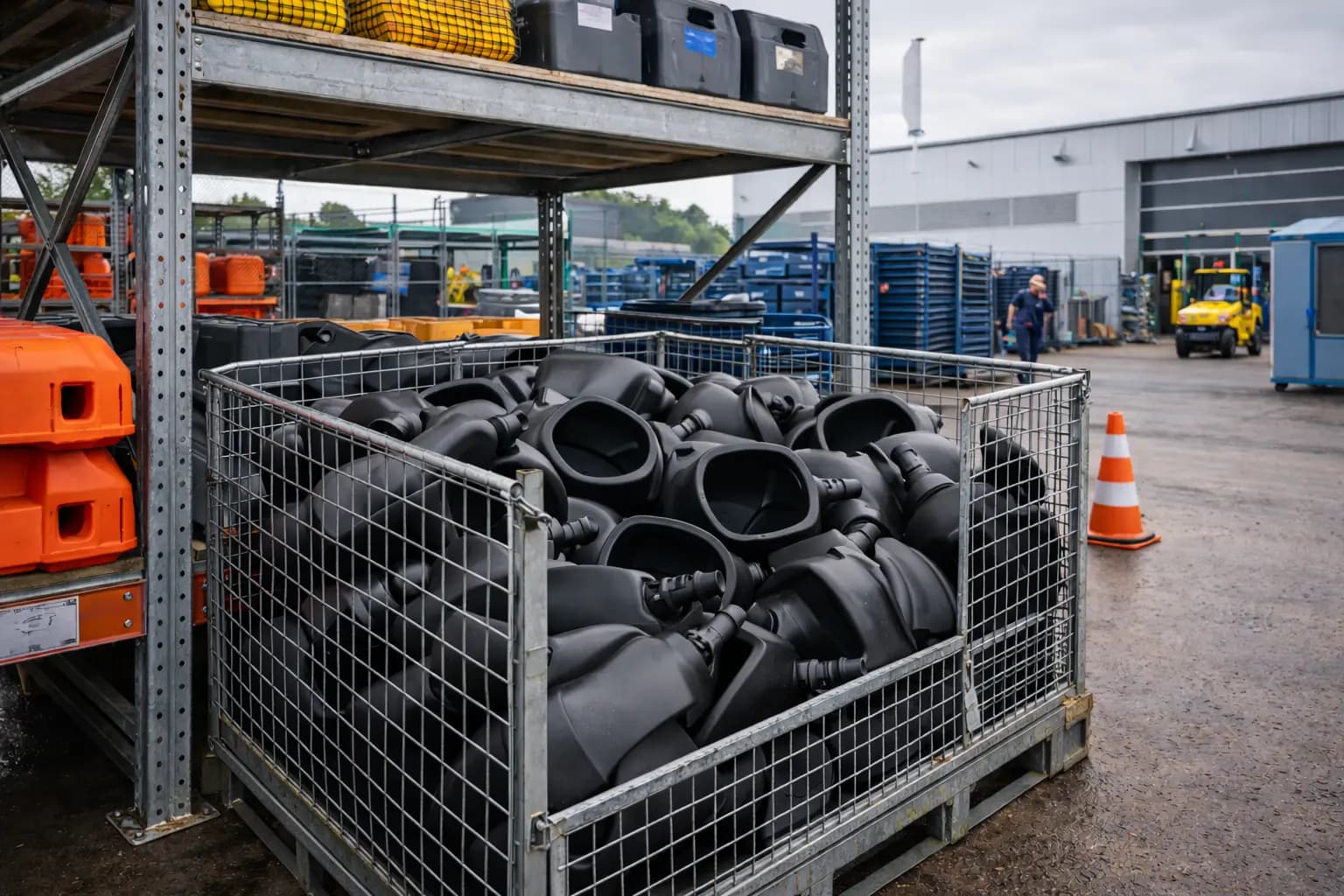
A rental fleet is a tough environment: transportation between sites, loading with a crane-manipulator, winter storage outdoors, summer heat on the coast. Pi-Pi is made from LLDPE – linear low-density polyethylene – and remains flexible from −40 °C to +60 °C. The material does not crack in the cold upon impact: cheap polypropylene has a glass transition temperature around 0 °C, and below it, impact is no longer absorbed by deformation. Under ultraviolet, polyethylene oxidizes slower than polypropylene, and UV stabilisers are mixed into the product mass, not applied on top, so this protection cannot be wiped off with the surface layer.
Therefore, under the same conditions, LLDPE lasts longer than polypropylene.
What It Brings to Unit Margin
Combine three effects. First – fewer pump-outs and less water, meaning lower operational costs for servicing a point. Second – longer intervals between dispatches, meaning higher cabin availability for rental and less downtime during peak season. Third – fewer unscheduled replacements on-site, meaning more predictable costs for the replacement fund. Together, this increases the net margin on each rented unit without raising the rental rate for the client.
For an operator competing on the daily rental price, this is a way to improve economics without making the offer more expensive on the market.
How to Start Without Risk
Before retrofitting the entire fleet, it makes sense to test the unit on a few cabins under real conditions of your service route. Pi-Pi sends a sample; on a wholesale order, its cost is deducted from your quote. Project prices apply for purchases from a batch – we will send a calculation for a specific fleet volume upon request.
Conclusion
A waterless urinal in a portable toilet rental fleet is not an additional option for the client but a tool for reducing the operator’s operating costs: fewer pump-outs, less water, longer service intervals, fewer unscheduled replacements. Compatibility with any cabins allows it to be added to the existing fleet without purchasing new units. If you rent out portable toilets in Bulgaria and want to calculate the effect for your fleet – discuss terms for B2B and the public sector.