
LLDPE or PP – which material is better for the garden shed?
For an unheated building, garage, and plot, LLDPE is better: unfilled PP homopolymer becomes brittle around 0 °C, while LLDPE remains flexible down to −40 °C. Pi-Pi urinals and sinks are made from LLDPE: see in the catalog waterless urinals and plastic sinks.
What happens to plastic in cold temperatures
Polypropylene and polyethylene look similar but behave differently in the cold. Unfilled PP homopolymer loses impact resistance around 0 °C, which is before real winter frosts set in. The specific grade may vary, so check the temperature range stated by the manufacturer.
LLDPE remains flexible and impact-resistant in cold temperatures down to −40 °C. For a building that is not heated in winter, this determines the choice of material.
How to identify the material of the product
To avoid guessing, check three things:
- The material name in the description. For Pi-Pi plastic urinals and sinks, it’s LLDPE (linear low-density polyethylene).
- The stated temperature range. For Pi-Pi, it’s −40 … +60 °C.
- The marking on the product, if present. In the triangle of arrows, low-density polyethylene, which includes LLDPE, has the code 4 (PE-LD), high-density polyethylene has 2 (PE-HD), and polypropylene has 5 (PP).
If a seller states ‘frost-resistant plastic’ but doesn’t specify the material or temperature range, it’s worth clarifying what exactly is meant.
What if winters are mild
Frost is not the only reason to choose a flexible material. The product on the wall gets bumped, dropped during installation, and transported in a box at any time of year. Here too, flexibility and a seamless wall are important: Pi-Pi has a solid wall, 4–5 mm thick, without welds or joints. Therefore, in a warm climate, LLDPE is chosen for its impact resistance during installation and everyday use, not just for frost resistance.
What’s next
If you’re interested in polyethylene specifically, read about the differences between its types in the answer LLDPE or HDPE. How the product behaves in winter in practice is discussed in the answer about winter operation.
Suitable Models
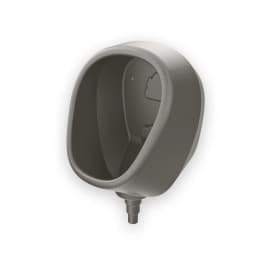
Pi-Pi Standard
Closed-top body – the simplest way to add a standing urinal to a shed or cabin that doesn’t need a vent.
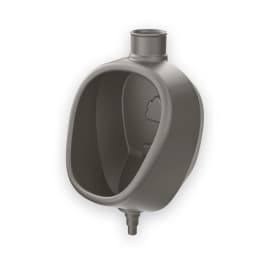
Pi-Pi Standard Plus
Top port Ø70 mm connects directly to the standard ventilation of a composting toilet – for a closed cottage, allotment, or campervan where ventilation is needed.
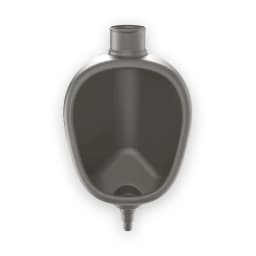
Pi-Pi Standard Corner
Corner shape plus top port Ø70 mm for ventilation – standing urinal even in the tightest cottage.
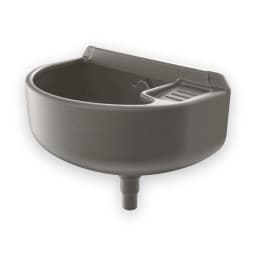
Pi-Pi Outdoor Sink
Durable plastic sink for allotments, garages, and workshops – impact-resistant and frost-proof. Comes with a soap shelf.
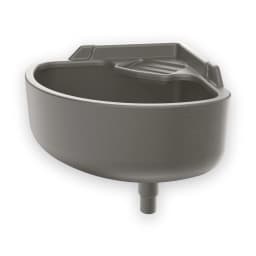
Pi-Pi Outdoor Corner Sink
The same durable plastic sink, but for corners – to save space in tight workshops or cabins.
Related Questions
Have Questions?
Got a question? Message me – I’ll help you pick the right model for your garden shed or toilet setup and sort out delivery. I respond within one business day.

Mart Tamm
Account Manager for United Kingdom
Have questions about products, pricing, or partnership? Email me directly – I’ll respond personally.