
How does a waterless urinal work without water or electricity?
Urine flows by gravity through an outlet into a closed container or dry toilet tank: no water, pump, or electricity needed. The urinal is wall-mounted, and a hose directs urine downward. You can explore the models in the waterless urinals catalog.
How it works step by step
- The wall-mounted bowl receives the liquid.
- It passes through a metal mesh filter down to the outlet.
- A stepped outlet Ø24/32/40 mm directs it into a hose or pipe.
- The hose directs the liquid into a container: a canister, compost reservoir, or separating toilet tank.
Everything relies on gravity, so the hose must go downward, and the container must be below the outlet.
Why flushing is not needed
There are no drives or moving parts in the body, so there is no tank, pump, or electricity that require water or power. The liquid does not accumulate in the bowl but immediately goes into the container, so there’s nothing to flush. Maintenance is as simple as wiping the smooth surface.
Where to place the container
The container should be below the outlet. The drain can be directed into a canister, compost reservoir, or sewer. The Standard instructions show, for example, a Ø40 mm pipe to the sewer and a Ø40 mm hose led through the wall outside into a canister. Empty the container in advance, not waiting for it to fill up, and place it back.
Together with a dry or composting toilet
The urinal complements a dry, composting, or separating toilet, not replacing it. Urine goes separately, so the toilet fills up more slowly and stays drier. More on the benefits of such a pair is in the answer why have a urinal next to a composting toilet. If ventilation is needed indoors, choose a model with a Ø70 mm port; details are in the answer about odor.
What is needed for installation
You need a wall, hose, and container. Installation takes 5–7 minutes and requires no plumber, more details in the answer about installation. The Pi-Pi sink works on the same gravity principle: you supply water to it yourself from an external container, and it has no built-in tank or pump.
Suitable Models
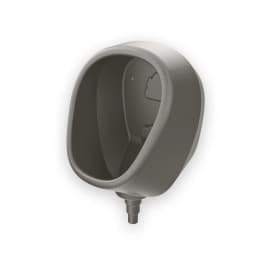
Pi-Pi Standard
Closed-top body – the simplest way to add a standing urinal to a shed or cabin that doesn’t need a vent.
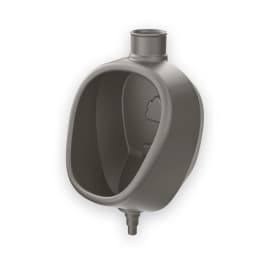
Pi-Pi Standard Plus
Top port Ø70 mm connects directly to the standard ventilation of a composting toilet – for a closed cottage, allotment, or campervan where ventilation is needed.
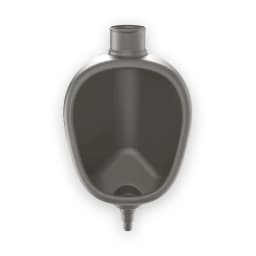
Pi-Pi Standard Corner
Corner shape plus top port Ø70 mm for ventilation – standing urinal even in the tightest cottage.
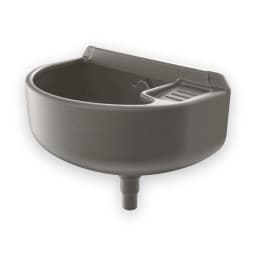
Pi-Pi Outdoor Sink
Durable plastic sink for allotments, garages, and workshops – impact-resistant and frost-proof. Comes with a soap shelf.
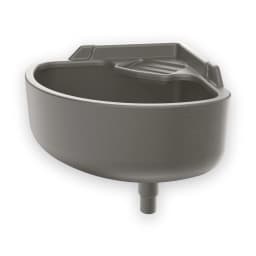
Pi-Pi Outdoor Corner Sink
The same durable plastic sink, but for corners – to save space in tight workshops or cabins.
Related Questions
Have Questions?
Got a question? Message me – I’ll help you pick the right model for your garden shed or toilet setup and sort out delivery. I respond within one business day.

Mart Tamm
Account Manager for United Kingdom
Have questions about products, pricing, or partnership? Email me directly – I’ll respond personally.