
Why use a urinal if there is a composting or separating toilet?
The waterless urinal collects urine separately from the toilet: less liquid enters the dry, composting, or separating toilet, so it fills up more slowly and stays drier. The urinal complements the toilet and does not replace it: next to it, not instead of it.
What changes when the liquid goes separately
From the urinal, the liquid goes through a hose into a separate canister or the liquid container of your system. Less liquid enters the toilet: the container fills up more slowly, and the contents remain drier. How much slower depends on the toilet design, the number of users, and family habits: the difference is most noticeable with a toilet without liquid separation and where the toilet is used standing up.
Wet contents are the most unpleasant part of maintaining a dry toilet, and separate liquid collection helps the most with this.
Who notices this especially
- a family where several men and boys use one toilet;
- a cottage where more people gather on weekends than on weekdays;
- those who host guests and do not want the toilet to fill up faster;
- owners of a small cabin or motorhome: for the corner, there is Standard Corner.
How it looks in maintenance
Now you have two containers, but both are easier to service. The liquid canister is easy to remove, empty, and rinse; how often this is needed depends on its volume and the number of users – more details in the question how often to empty the urinal canister. You empty the toilet container less often.
If ventilation is needed, the Standard Plus and Standard Corner have a Ø70 mm port on top, which connects to the toilet’s ventilation channel. The Standard has a closed top – for a cabin or cottage where no exhaust is needed.
The urinal does not replace the toilet
The urinal is designed for standing use, and you still need a toilet for solid waste. Pi-Pi is installed next to systems like Trelino, BOXIO, Kildwick, and Separett; how to check the connection to yours is explained in the question is Pi-Pi compatible with Trelino, BOXIO, or Kildwick.
Where to start
- Check if your toilet has a separate outlet or liquid container.
- Choose a model: Standard with a closed top or Standard Plus with a Ø70 mm port for ventilation.
- Select a hose for one of the outlet stages: 24, 32, or 40 mm.
- Hang the urinal on the wall: installation takes 5–7 minutes, without a plumber and special tools.
A typical weekend
On Friday evening the family arrives at the plot, and by Sunday several people have used the same dry toilet. With a urinal on the wall, the liquid goes into its own canister, so the toilet container takes in less liquid and stays drier.
Suitable Models
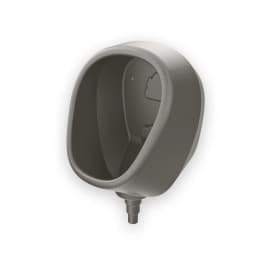
Pi-Pi Standard
Closed-top body – the simplest way to add a standing urinal to a shed or cabin that doesn’t need a vent.
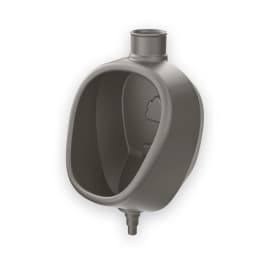
Pi-Pi Standard Plus
Top port Ø70 mm connects directly to the standard ventilation of a composting toilet – for a closed cottage, allotment, or campervan where ventilation is needed.
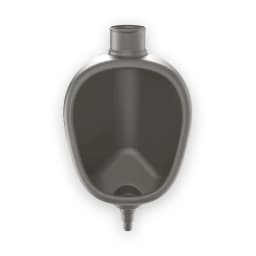
Pi-Pi Standard Corner
Corner shape plus top port Ø70 mm for ventilation – standing urinal even in the tightest cottage.
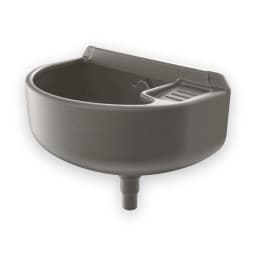
Pi-Pi Outdoor Sink
Durable plastic sink for allotments, garages, and workshops – impact-resistant and frost-proof. Comes with a soap shelf.
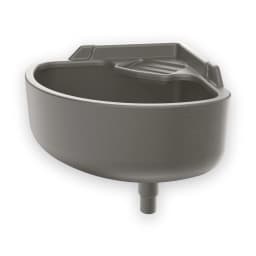
Pi-Pi Outdoor Corner Sink
The same durable plastic sink, but for corners – to save space in tight workshops or cabins.
Related Questions
Have Questions?
Got a question? Message me – I’ll help you pick the right model for your garden shed or toilet setup and sort out delivery. I respond within one business day.

Mart Tamm
Account Manager for United Kingdom
Have questions about products, pricing, or partnership? Email me directly – I’ll respond personally.