
Is the Pi-Pi sink suitable for a garage or workshop without plumbing?
Yes, the Pi-Pi sink for a garage or workshop requires neither plumbing nor sewage: it hangs on the wall, you supply water from your container, and the used water drains passively through a hose into a bucket or canister. This is a passive sink without a built-in tank, pump, or tap.
What is needed for the sink to work in a garage
- Water source: a container with a tap installed above the level of the bowl, or a canister from which you manually pour water.
- Hose for a stepped outlet Ø24/32/40 mm.
- Container for collecting used water: a bucket, canister, or suitable drain.
You choose the water source, hose, and container yourself: they are not included in the supply package. A metal mesh filter is included, and there is a soap shelf at the top of the bowl.
Dirty hands, oil, paint
In a garage and workshop, you have to wash not only hands. Everything you rinse off collects in the container under the sink, so monitor its volume and empty it in time. Dispose of water contaminated with oils, paint, and other substances according to your municipality’s regulations. What can be used to clean the sink itself is described in the question what products can be used to clean the urinal and sink.
Cold garage in winter
The sink does not crack in frost down to −40°C, so an unheated garage is not a problem for it. How to prepare containers and hoses for winter is discussed in the question will the sink withstand winter in a cold garage or garden cottage.
Tight workshop: corner model
If there is little space along the wall, the Outdoor Corner Sink fits in the corner: dimensions 295×310×295 mm, weight 1.4 kg. The straight sink is wider, 380×310×245 mm; check the current availability of models on the Pi-Pi plastic sinks page. Installation takes 5–7 minutes, without a plumber and special tools; the mounting is selected for your wall.
How it differs from a sink with a tank and pump
The Pi-Pi sink has no built-in tank, pump, heating, or tap: water flows passively from an external container into the bowl and further through the hose. In return, you get a lightweight sink that doesn’t shatter like ceramics, doesn’t rust, and doesn’t depend on electricity. Where the used water goes is detailed in the question where does the water from the sink without plumbing go.
Suitable Models
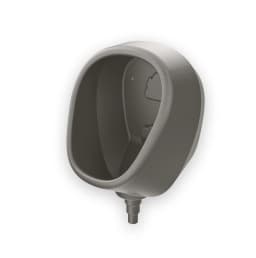
Pi-Pi Standard
Closed-top body – the simplest way to add a standing urinal to a shed or cabin that doesn’t need a vent.
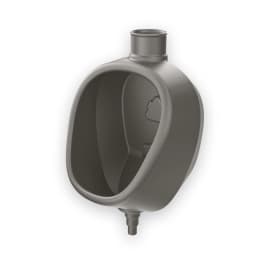
Pi-Pi Standard Plus
Top port Ø70 mm connects directly to the standard ventilation of a composting toilet – for a closed cottage, allotment, or campervan where ventilation is needed.
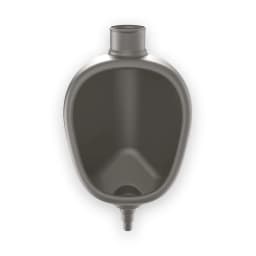
Pi-Pi Standard Corner
Corner shape plus top port Ø70 mm for ventilation – standing urinal even in the tightest cottage.
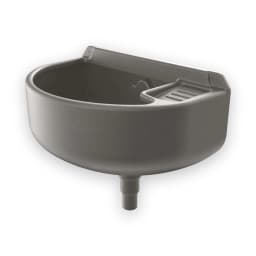
Pi-Pi Outdoor Sink
Durable plastic sink for cottages, garages, and workshops – shatterproof and frost-resistant. Comes with a soap shelf.
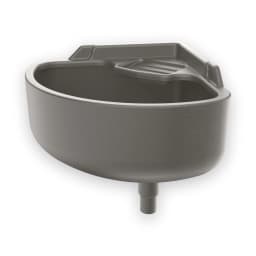
Pi-Pi Outdoor Corner Sink
The same durable plastic sink, but for corners – to save space in tight workshops or cabins.
Related Questions
Have Questions?
Got a question? Message me – I’ll help you pick the right model for your garden shed or toilet setup and sort out delivery. I respond within one business day.

Mart Tamm
Account Manager for United Kingdom
Have questions about products, pricing, or partnership? Email me directly – I’ll respond personally.